Unitree Goes Left, Fourier Goes Right: The "Coming-of-Age Ceremony" of Humanoid Robots
At the end of 2025, a test video of Unitree robots caused quite a stir in the global tech circle. Even today, in mid-January 2026, the aftereffects of this event still linger, and it has even sparked more in-depth reflections within the industry.
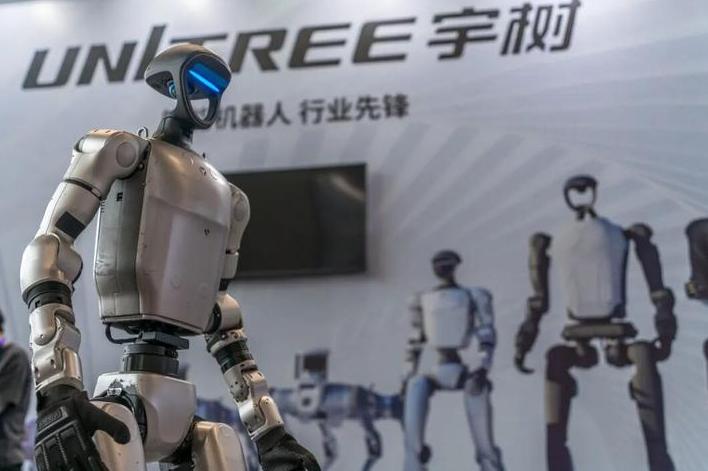
In the video, when the G1 robot was mimicking a human engineer performing fighting moves, perhaps due to signal delay or a momentary glitch in its judgment logic, it suddenly and rigidly kicked the engineer with a flying kick as it turned around. Although Elon Musk's emoji in the comment section turned this incident into a humorous episode in the tech world, for those who have been closely following the robotics industry, this kick was far more than just an embarrassing moment.
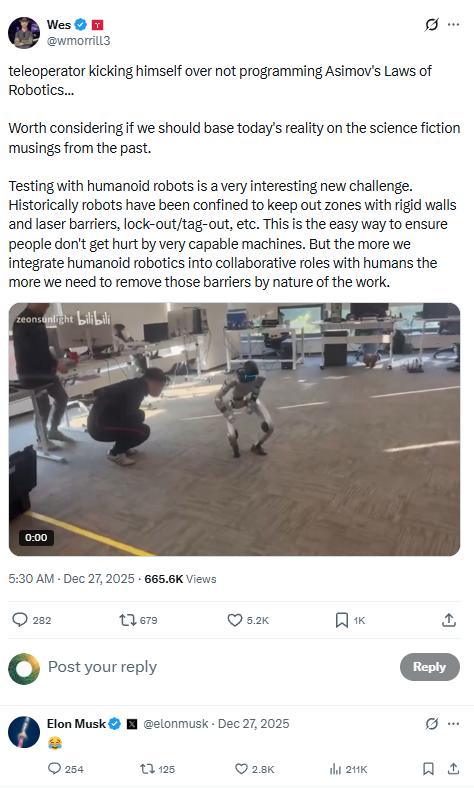
If we don't just view this incident as an internet meme but examine it in the broader context of the beginning of 2026, we can discover a long-neglected industry metaphor: In the past few years, the industry seems to have been overly obsessed with making robots run faster and jump higher, while to some extent neglecting the necessary sense of physical propriety for them to be human companions. If this kick landed on a strong engineer, it might just cause pain, but what if it were an elderly person or a child?
With these questions in mind, I visited Fourier in Shanghai a few days ago. The most significant inspiration from this visit was not how perfect the company is, but that it showed me another survival logic in the industry beyond "extreme sports." On one hand, there are the "athletes" constantly pushing the physical limits, and on the other hand, there are the "conservatives" emphasizing medical rehabilitation backgrounds. These two distinct technological genes are jointly shaping the future of the industry. This flying kick at the end of 2025 might just be the turning point for the industry to move from an era of flashy displays of skills in its wild growth phase to an era of mature applications in 2026.
01
The Game between Athletic Performance and Interaction Safety
Looking back at the industry hotspots in the past year, whether it was the 100-meter sprint races or the dazzling backflips, the narrative of humanoid robots has been largely dominated by "athletic ability." Objectively speaking, this conforms to the law at the initial stage of technological development. Manufacturers like Unitree have made amazing breakthroughs in motor performance and joint torque, endowing humanoid robots with unprecedented explosive power and showing us the upper limits of performance that a mechanical body can achieve.
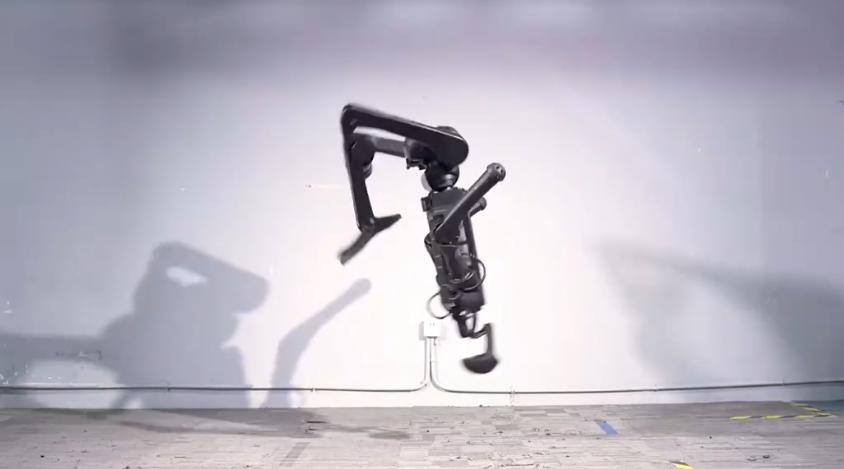
However, when the G1 kicked the engineer and when the H1 accidentally knocked down a running companion during a running test, we were forced to start thinking about a more serious question: What exactly does a robot's "strength" mean?
With the support of existing large models, robots' "brains" already have amazing decision-making abilities, and their visual systems allow them to clearly see the world. But at the execution level of physical interaction, high explosive power without fine feedback control can easily turn into an uncontrollable risk. The current industry situation is that while most robots are pursuing dynamic performance, their bodies still lack a delicate sense of perception of the physical world, that is, a force feedback similar to human pain perception.
To put it simply, they have the strength, but they may not know how to control it.
This phenomenon reflects an engineering dilemma: Pursuing extreme dynamic performance often means tolerating a certain degree of radical control. And pursuing extreme safe interaction may require compromising on the movement speed. But this flying kick has objectively reminded the entire industry that simply stacking athletic capabilities does not directly equal marketable product power. Future robots need not only the explosive power of a steel body but also a nervous system that can sense environmental resistance and know how to restrain itself upon contact.
02
Thoughts on Another Technological Gene
During my visit to Fourier in Shanghai, I felt a technological temperament completely different from that of the "extreme performance school." Compared with the geeky style that emphasizes disruptive innovation, this place is more like a rigorous laboratory. It's not hard to understand this difference by looking at its resume - before venturing into humanoid robots, this company had spent a decade in the rehabilitation medical field.
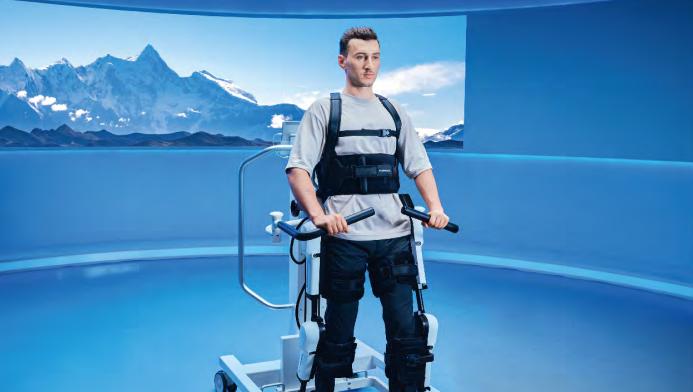
This genetic difference has led to different creation logics between the two. In the traditional industrial robot field, if the movement of a robotic arm deviates, the worst result is just crushing a few parts, which is recorded as a loss in the financial statements. But in the rehabilitation medical field, robots are directly worn on patients' bodies. Even the slightest deviation in force control can mean a medical accident for patients undergoing rehabilitation.
In a hospital, a wrong application of force can cost lives.
This is not a question of which is better or worse, but a matter of different starting points. While most players in the industry are still competing in terms of speed and height, players like Fourier, representing the "application school," are trying to introduce medical device-level safety standards into the humanoid robot field. Their focus is more on whether robots can sense the state of humans upon contact and make gentle responses.
At the visit site, it could be seen that they have placed the research and development focus on the popularization of tactile perception. The injection of this "bottom-line thinking" is an important cognitive supplement for the robot industry, which is still in its wild growth stage. It's worth noting that a similar logic of prioritizing safety and perception is also emerging in some service robot and industrial collaborative robot teams. This is no longer the idiosyncrasy of a single company but an inevitable trend as the industry moves deeper into the application stage.
03
The Return of Aesthetics and Affinity
In addition to the internal safety logic, the external form of robots is also a key factor in determining whether they can be accepted by human society. If you carefully recall that flying kick video, apart from the out-of-control movement itself, the exposed wires, protruding joints, and the rough industrial appearance of the robot also subconsciously bring a sense of psychological oppression.
For geeks, this mechanical feeling may represent toughness, but if we switch the scenario to a family living room, facing the elderly and children, this design is obviously inappropriate. Technological products should not be cold, which means that technology must have visual and psychological affinity.
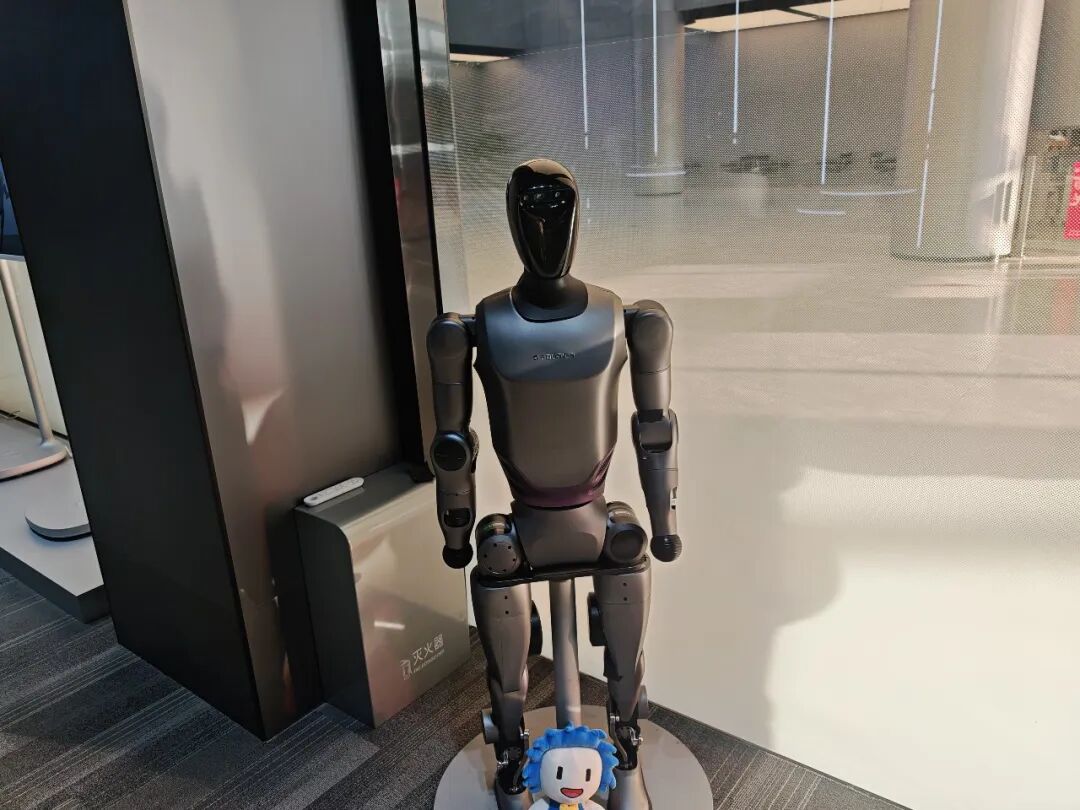
In Fourier's exhibition hall, the design concept of the GR-2 provides a good observation sample. The World Intellectual Property Organization recently included this product in its "Century of Design Registrations: 1925 - 2025." Rather than an accolade for its technology, it's more of an endorsement of its design concept. It uses an internal wiring design, hiding all the lines simulating blood vessels and nerves inside the body. Its height ratio and joint shape also strictly follow the principles of bionics.
This attention to design represents a new trend in the industry: Robot design is no longer just about serving function stacking but has started to consider the feelings of "people." Whether it's the Care-bot concept proposed by Fourier or other manufacturers' emphasis on rounded appearances, it shows that everyone has begun to realize that the goal of robots should not stop at being tools but should also be partners that can integrate into the family environment. Aesthetics and affinity are becoming a key link in crossing the uncanny valley effect and bringing robots from the laboratory to the living room.
04
2026: The Coming-of-Age Ceremony of Convergence
In 2025, many institutions predicted it to be the year when humanoid robots would start to gain mass popularity, but reality has proven that there is still a long way to go from a demo to a product. Standing at this mid-January 2026 time point, looking back at that flying kick by Unitree and the exploration of safety perception by manufacturers like Fourier, my biggest feeling is that this industry has finally started to grow up.
"Growing up" means no longer being one-sided. Previously, robots were more like talented sports students, mainly showing off their athletic talents. And now, the industry is striving to grow into a mentally mature adult. We can see that the performance school has started to pay attention to stability, and the application school has started to improve its athletic ability. This kind of integration is the sign of the industry's maturity.
The path Fourier is taking, bringing the rigor of rehabilitation medicine into this fast-paced field, provides a reference sample for the industry regarding "safety and perception." Of course, this path also means higher engineering complexity and a slower iteration rhythm, which seems a bit clumsy in the era of traffic supremacy. But as the kicking video has warned, if the underlying logic of safety and interaction is not resolved, the faster robots run, the further they will be from our real needs.
The popularization of humanoid robots will ultimately not be a one-man show of single-point technology but the result of the in-depth integration of algorithms, craftsmanship, design, and the supply chain. When high-performance motors meet sensitive perception sensors, and when extreme athletic ability meets decent appearance design, the evolution of robots can truly move from showy skills to practical use.
05
Finally
Let's go back to that flying kick mentioned at the beginning of the article.
This kick shattered our blind worship of black technology at the end of 2025 and forced the industry to face a real question: What kind of robot do we really need?
The answer may not lie in a single product of a single company but in the common evolution of the entire industry. We need Unitree to explore the upper limits, and we also need Fourier to hold the bottom line.
In the vision where technology is always warm, future robots should not just have cold parameters. When sensors become sensitive, when design becomes soft, when they have both the power to protect people and the tenderness not to hurt them, we will truly enter the golden age of humanoid robots.
This article is from the WeChat official account "Technology Must Be Warm," written by Ba Lang, and is published by 36Kr with authorization.