Looking back at CES 2026, several core trends need to be grasped.
On the one hand, AI hardware innovation begins to emphasize practicality; on the other hand, it starts to transform more vertically segmented product categories.
This year, the hardware explosion stimulated by the popularization of AI has continued to boost the popularity of CES. Compared with last year, the scale of CES 2026 has seen a slight expansion, with the total number of exhibitors increasing by 100 to 4,100. Robots and AI glasses remain the top attractions at the event. In addition, more hardware products are integrating AI capabilities, giving rise to new product categories such as AI pets with mobility, various recording and monitoring devices, as well as smart flower pots and smart display robots.
Another obvious change is that although the number of Chinese exhibitors has decreased compared with last year, Chinese companies have become more prominent at CES 2026. An American observer believes that compared with European and American companies, Asian companies have performed more strongly at CES 2026. Among them, it is Chinese companies, rather than Japanese or South Korean ones, that are leading the show.
If Chinese companies want to lead the new round of consumer electronics innovation, going global is an inevitable choice.
By comparing the CES innovation products that domestic and foreign media focus on, it can be found that Chinese media pay more attention to AI-related innovations, while American media focus on products that can truly bring changes to people's lives. Correspondingly, the different needs between Chinese users and overseas users are also creating more segmented opportunities for Chinese companies.

We would like to regard CES 2024 as the first year when AI inspired the ambition for hardware innovation, which showed infinite expectations for AI; CES 2025 was less ambitious and more practical, with some demand verifications completed for products from AI glasses to AI pets in the past year; by CES 2026, on the one hand, AI hardware innovation begins to emphasize practicality; on the other hand, it starts to transform more vertically segmented product categories.
With the theme of "Defining the Physical Boundaries of AI", CES 2026 presented not just a few tentacles reaching into the physical world, but a comprehensive AI exploration of the physical world that connected the dots. Although TechCrunch still believes that this year's manufacturers are still throwing AI products at the wall to see what sticks, as there are more AI products and the wall is getting bigger, the probability of something sticking is also increasing.
This is a future supported by more and more pillars. We believe that in the process of AI spreading into the physical world, four trends are becoming clearer.
Trend 1: AI Enters the Physical World and Needs to Do Practical Things
"Physical AI" is undoubtedly the most core keyword at CES 2026. As a long-time advocate of this concept, Jensen Huang, the CEO of NVIDIA, said in his speech that the "ChatGPT moment" in the robotics field has arrived. "Breakthroughs in physical artificial intelligence - models that can understand the real world, reason, and plan actions - are opening up brand-new application scenarios."
To this end, NVIDIA has not only launched the more advanced Rubin architecture but also demonstrated its open-source artificial intelligence models and tools in the Alpamayo series. Compared with the Blackwell architecture, the Rubin architecture has a 3.5-fold increase in the running speed of AI model training tasks, and the cost of generating inference tokens can be reduced by up to 10 times. Alpamayo can not only receive sensor inputs and control the steering wheel, brakes, and acceleration but also reason about the actions to be performed.
NVIDIA is betting that in the physical world, more AI applications will require more computing power. The self-driving taxis that NVIDIA aims to support are a product category that has been put into small-scale applications and is expanding. In addition, embodied intelligence and smart glasses are also categories with the potential for large-scale applications. From small-scale trial to large-scale application is a process from performance and demonstration to actual work.
At CES 2026, we can see that the market's requirements for embodied intelligence are shifting from performing somersaults for show to truly entering practical scenarios. LG's CLOiD and Switchbot's Onero H1 both demonstrated the action of picking up clothes from elsewhere and throwing them into the washing machine. Hyundai Motor and Boston Dynamics showed the working ability of the Atlas robot on the logistics production line.
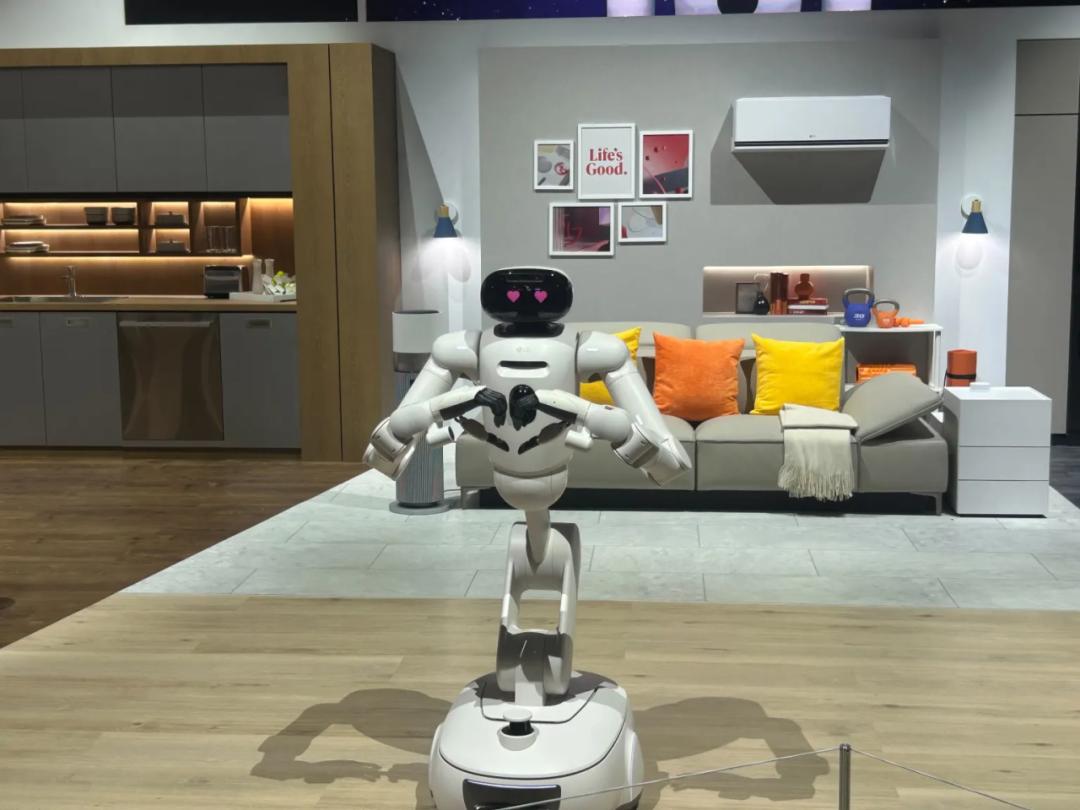
CLOiD
Of course, CES 2026 is also an important showcase for China's embodied intelligence industry. In addition to Switchbot, companies such as Zhipu, Zhongqing, and Unitree have all demonstrated their products. Chinese robot manufacturers are also starting to show the practical application effects of robots beyond fighting and dancing. Zhongqing demonstrated the ability of the T800 to accurately grab objects and complete complex operations. Zhipu is also emphasizing the application of the Elf G2 on the factory production line.
Smart glasses are showing their ambition to enter the mass market. Smart glasses manufacturers such as Rokid, Thunderbird Innovation, Quark, Inmo, and MicroLight Technology have all participated in CES, and companies like XGIMI and Dreame have also launched their smart glasses products. Compared with last year, this year's smart glasses products are more mature. In addition to emphasizing a lightweight and portable design for daily wear, more functions have been realized, such as the use of Google Maps and Alipay.
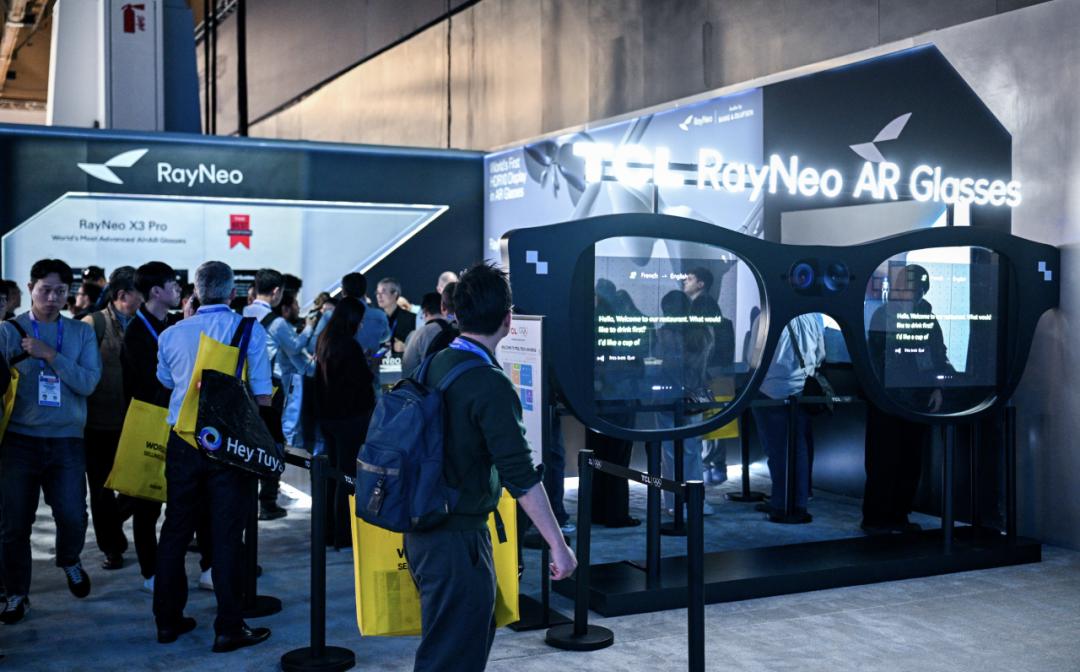
In terms of product definition, smart glasses manufacturers are also trying to make new breakthroughs. Thunderbird Innovation has launched the Thunderbird X3 Pro Project eSIM, the first binocular full-color AR glasses supporting the eSIM function. Without relying on a mobile phone or Wi-Fi, it can independently complete functions such as making calls, real-time AI conversations, real-time translation, and online streaming. MicroLight Technology has released the full-color AR smart glasses Xuanjing M6, with a modular design that allows users to upgrade the core optical components without replacing the whole device.
Trend 2: The Competition for the "Second Brain" Welcomes More Competitors
Another trend during CES 2026 is the emergence of AI recording devices. Companies such as Plaud, Vocci, SwitchBot, Subtle, and Nirva have all brought their AI recording products, which come in the forms of rings, earphones, and pendants. The basic function of these AI recording products is recording, but they can also monitor the user's voice, store the effective data in a personal database, and retrieve it when needed, becoming people's "second brain".
Vocci's product is in the form of a ring, which can record sounds within a 5-meter range and has an 8-hour battery life. It also comes with a protective case for charging. According to Vocci, this product will start shipping after the first quarter, with a price not exceeding $200. The main selling point of Subtle's earphones is accurate recording in noisy environments supported by an AI model. Nirva's AI jewelry can record audio throughout the day and provide communication suggestions to users based on the recordings.
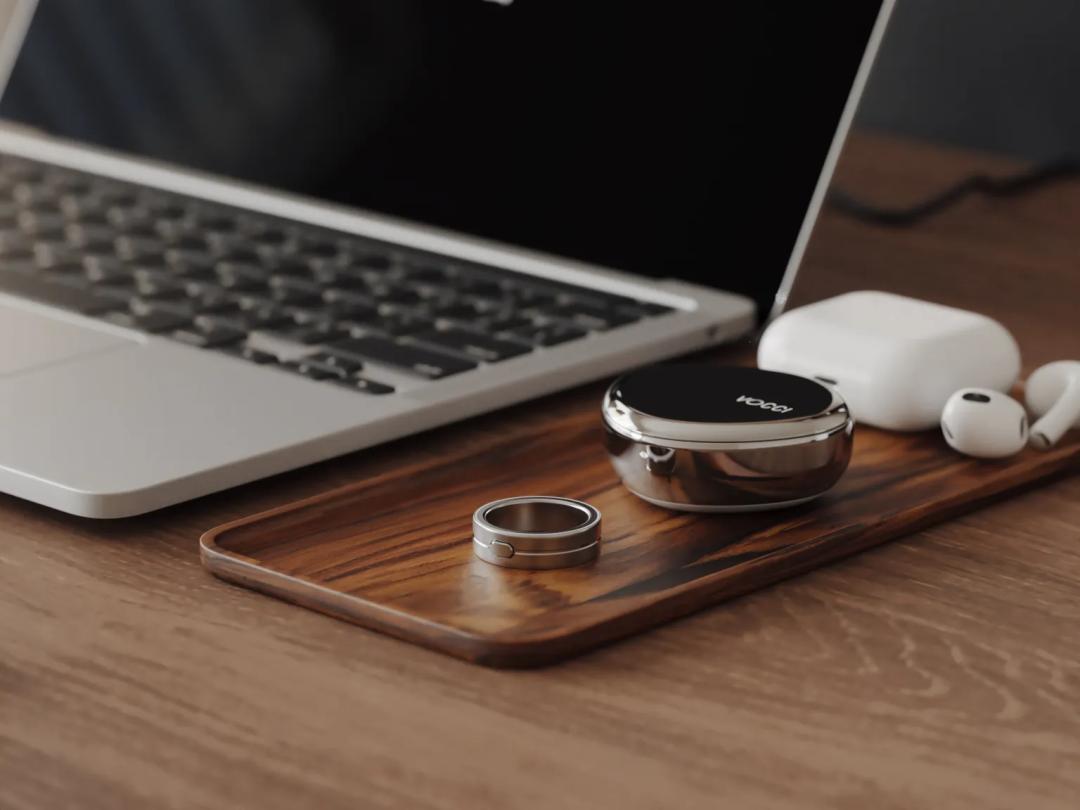
Vocci
SwitchBot's AI MindClip and Plaud's NotePin S both come in the form of pendants. The NotePin S has physical buttons compared with the previous generation of NotePin products, supporting functions such as voice recording, key marking, text note-taking, picture synchronization, and AI-generated meeting summaries. The AI MindClip weighs 18g and can record voice information in the user's daily life and work meetings, and convert these conversations into summaries, to-do lists, and a personal audio memory database.
Before the opening of CES 2026, DingTalk and Dedao also launched their own AI recording devices. These devices combine software and hardware, using AI capabilities to convert recordings into personal data for organization and accumulation, which can complement the human brain and record information that the brain might miss. However, accurate recording alone may not be enough to win in the upcoming competition.
In addition, AI recording devices are taking advantage of the time when smart glasses are not yet popular. Theoretically, smart glasses with both visual and auditory capabilities are more qualified to become the "second brain" than AI recording devices. Here we need to mention Google's demonstration of smart glasses again - the glasses can clearly record a series of the user's involuntary actions, and with vision, this kind of recording will be more accurate.
Trend 3: The Segmented Opportunities of AI Can Nourish More Enterprises
Beyond strategic entry-level products, AI is also bringing more opportunities to transform vertically segmented fields. For example, when a desk lamp is combined with AI, it can become a smart AI sleep lamp, with AI actively controlling the light and sound based on photosensitive and millimeter-wave radar data; when a camera is combined with AI, it can support the user to search for "people in red jackets" or "delivery trucks" by voice and provide AI subtitles; when a screen is combined with AI, it can adjust itself according to the user's posture.
Two relatively large vertically segmented fields we have noticed are AI pets and AI imaging. AI pets are a continuation and upgrade of last year's AI toy boom. This time, we have seen more AI pets with mobility. FrontierX demonstrated two spherical robots still in development, a service pet named Vex that focuses on recording and interaction functions, and Aura, which serves humans and provides emotional companionship.
OLLOBOT also brought the AI home companion robot OlloNi. It has multi-modal active AI perception capabilities, which can capture the daily moments of family members in real-time, sense their emotional fluctuations, and display pixel-style dynamic expressions on the digital screen. Ecovacs also brought a robot pet named Lilmilo, which has the appearance of a furry pet and a camera on its nose for interaction with humans.
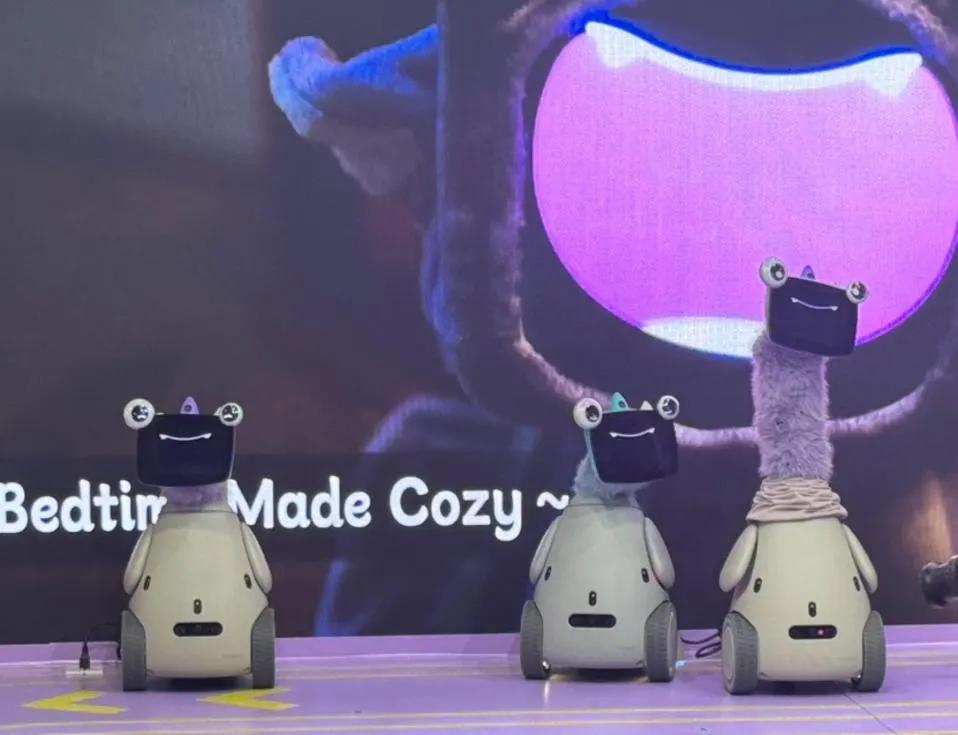
OlloNi
When communicating with Mengyou Intelligence, they also mentioned the idea of creating more diverse AI pets for the home scenario. It seems that in the future, there will not only be a butler-type robot in the family that can throw dirty clothes into the washing machine, but also a group of silicon-based pets circling around people.
However, there is also some not-so-optimistic news. Samsung has indefinitely postponed the product launch plan of its AI home robot Ballie.
AI imaging has attracted more attention due to the competition between DJI and Insta360, and more entrepreneurs have entered the field last year. At CES 2026, some innovative AI imaging products were also demonstrated. Honor showed the Robot Phone, a gimbal-equipped mobile phone with AI capabilities. Photon Jump demonstrated the 8K AI small sports camera LEAPTIC Cube, which can provide AI assistance for shooting, operation, and other shooting scenarios.
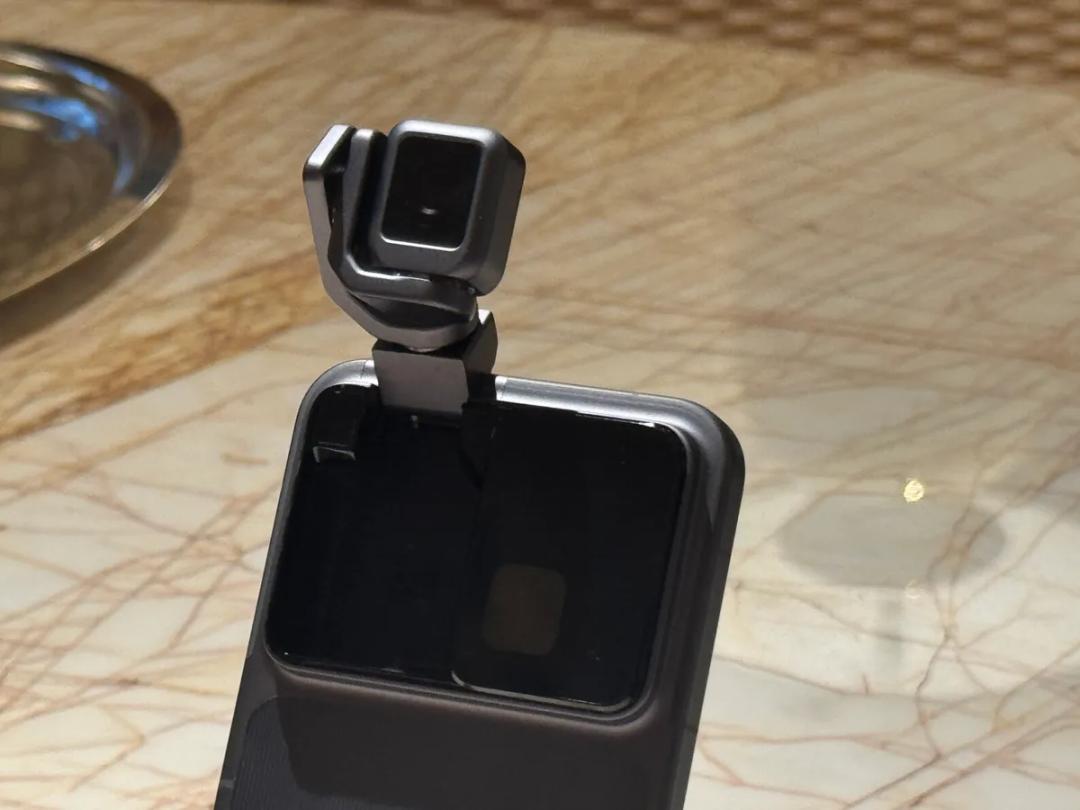
Robot Phone
Trend 4: Good Connectivity is Still Essential in the AI Era
In the process of AI integrating into everything, how to connect everything remains very important. In overseas reports on CES 2026, Matter is a core keyword. Editors will pay attention to the access status of different smart devices to Matter. For example, the support of IKEA's lamps for Matter will make editors very excited.
In 2026, when AI hardware is booming, it is still not easy to ensure smooth device connectivity.
Matter was initiated by technology giants such as Apple, Google, and Amazon in collaboration with the Connectivity Standards Alliance (CSA) in 2019, originally named Project CHIP and renamed Matter in 2021. Its goal is to break the fragmentation of the smart home market by unifying the application layer protocol, allowing users to control devices from different brands with a single application or voice assistant, simplifying the user experience and reducing compatibility costs.
Only devices that can be more easily connected can give accurate responses to AI. In the physical world, what AI needs to do is not to chat with people anytime and anywhere or help people edit photos on the TV, but to control the progress of the physical world through communication between humans and AI. Protocols like Matter are a better choice for users to build the physical connection capabilities of AI at a low cost, but it may encounter various insurmountable barriers in China.
Domestic companies are mostly researching how to use AI to connect devices within their own ecosystems. Hisense demonstrated a kitchen suite at CES 2026, where AI drives the kitchen appliances to work together. When the user selects a recipe and takes out the ingredients from the refrigerator, the oven will start preheating, and the dishwasher will start cleaning the utensils needed for cooking. Lenovo's Qira also emphasizes working across devices and platforms, providing users with suggestions from a larger system perspective.
One More Thing
AI is the future, but beyond AI, there are still many other beautiful sceneries. While we are paying attention to the changes that AI brings to hardware, there are still people using non-AI technologies to transform our lives.
Lego, which participated in CES 2026 for the first time, presented a smart brick that can sense the distance, color, direction, and movement speed between smart building blocks through sensors and interact with other smart bricks and the environment. For example, this smart brick can simulate the sound of an X-Wing flying. This kind of small idea greatly increases the interactive properties and playability of Lego.
Another innovation that surprised me is the smart nail polish system iPolish made of color e-paper. I have seen BMW's color-changing car shell, color-changing clothes, and color-changing phone cases before, but none of them are as practical as color-changing nails. Through a device, nails made of color e-paper can display 400 colors. In the future, it may even be able to display different patterns. This is really an interesting idea.
