Three AI revolutions revealed at CES 2026: from glasses to robots, and then to home industries
On the first day of the 2026 CES, Las Vegas gave the global technology industry a clear answer: AI is no longer just a tool but is becoming the "underlying operating system" of human life.
Jensen Huang, the CEO of NVIDIA, pushed this judgment to a climax with his 90 - minute opening speech at the beginning of the year. He proposed that "the 'ChatGPT moment' of physical AI is about to arrive" - artificial intelligence is moving from the virtual world to the physical world.
From information interaction, home life to transportation and industrial systems, a clear trend emerged at the CES: AI is truly being integrated into the physical world and real - life scenarios from its virtual capabilities.
Just four hours after Jensen Huang's speech, Lisa Su, the head of another major chip giant AMD, came up with a counter - view. She directly announced that humanity is about to enter the "yottabyte computing era." The performance of AI chips is expected to increase a thousand times in the next four years.
The most direct observation of 36Kr at the CES is that AI will be ubiquitous.
It can be seen that our way of information interaction is at a turning point. The explosive growth trend of smart glasses in 2025 will continue, and some brands have even shouted the slogan "Why does the next phone have to be a phone?" According to incomplete statistics, more than 50 AI and AR glasses manufacturers have flocked to the market. Rokid launched its new AI smart glasses, Rokid Style, which is claimed to be "the lightest full - function AI glasses on the market." INMO's new product, INMO GO3, not only has a fashionable and distinctive appearance but also continuously iterates in functions such as translation.
When AI truly enters our daily lives, our home - life scenarios will also be reconstructed. Elon Musk has announced on social media the mass production of brain - computer interfaces, and the cyber life seems to be becoming a reality. LumiMind, a Chinese brand in neuro - technological innovation, made its debut at CES 2026 and released its first real - time brain - wave sleep regulator, LumiSleep, whose original technological breakthroughs have won multiple international awards. Teeni.AI of Tinglixiong has developed an AI portable robot for teenagers to assist their growth. KeYikeji's desktop assistant robot enables everyone to have a dedicated work assistant.
Human life has never been so close to "intelligence" as it is today. Yunjing and Ecovacs brought a series of blockbuster new products, which have unprecedentedly improved the home - cleaning experience. Service robots are evolving towards the era of "embodied intelligence." BroadLink has solved the problem of the "ecological island" in smart homes and brought intelligence to household appliances.
Looking at the broader picture, AI continues to play a role in fields such as automotive transportation and industrial manufacturing. Autel Robotics is using AI to provide solutions for future automated charging and robot inspections. Black Sesame Technologies has achieved in - depth iteration and full - scale application in the field of assisted - driving chips.
2026 is the first year of AI technology integration and industrialization. The AI industry is undergoing a grand leap from "capability" to "embedded productivity." Almost all kinds of manufacturers are focusing on specific scenarios, exploring the application of technology in the last mile, and truly integrating AI into the physical world and real - life scenarios.
Through this CES, we can catch a glimpse of the new lifestyle in the next decade or even longer. Every vertical field in consumer electronics, such as chips, displays, home appliances, and transportation, will undergo significant changes due to AI.
Information Interaction is Being Rewritten: Smart Glasses are Moving Towards "Phone - Independence"
If the past few decades were defined by "phones as the information entrance," then at CES 2026, smart glasses showed the possibility of taking over for the first time.
More than 50 AI/AR glasses manufacturers collectively appeared at the exhibition. Lightweight design, all - day wearability, and multi - modal interaction have become the industry consensus. "The next phone may not necessarily be a phone" is no longer just a slogan.
Judging from the data, the trend is quite clear: the global smart - glasses market experienced explosive growth in 2025, and IDC predicts that it will reach the inflection point of large - scale development in 2026. China has become one of the most important innovation and consumption markets.
At this CES, Chinese manufacturers were particularly prominent.
AR/AI glasses companies such as Xreal, Vuzix, and Even Realities are expected to showcase new, lighter glasses with real - time subtitle display functions at CES 2026. XREAL announced an extended strategic partnership with Google during this CES and was identified as the main hardware partner for Android XR. In 2026, the two sides will cooperate to launch the smart glasses Project Aura, introducing Android XR to optical see - through devices. This is also one of the important signals for Google to re - enter the smart - glasses market and compete strongly with Mate.
Amid this wave of lightweight design and experience upgrading, Chinese manufacturers are undoubtedly the pioneers.
At the Rokid booth at the CES in Las Vegas, a life - sized installation of Rokid AI glasses became the focus of the whole venue, attracting many people to take photos. On December 29, 2025, Rokid announced that a giant pair of glasses would appear at CES 2026. Even though everyone knew the news in advance, they were still visually shocked when they saw it.
At the CES, Rokid Glasses were officially unveiled. As one of the world's lightest full - function AI + AR glasses currently in mass production, they look almost the same as ordinary glasses and weigh only 49 grams, so there will be no obvious sense of oppression even when worn all day. These glasses are equipped with a Qualcomm AR1 chip, supporting functions such as taking photos and videos, intelligent prompting, translating 89 languages, real - time navigation, AI Q&A, glance - to - pay, and meeting minutes in all scenarios. They also allow users to call different large AI models, so that the interaction experience is no longer limited to a single algorithm framework.
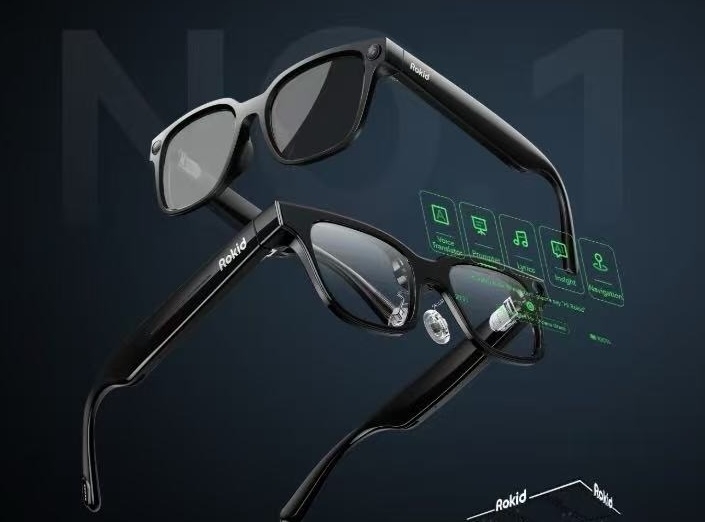
In the pursuit of lightweight design, Rokid is still constantly exploring. They also released a new AI glasses product for the overseas market at the exhibition: Rokid Ai Glasses Style. Users can use these glasses to listen to music, translate, navigate, and get AI answers, and they weigh only 38.5 grams. In the process of smart glasses becoming consumer - grade products and even the next - generation super - hardware, weight and wearing experience are important issues that all manufacturers must solve.
Currently, Rokid's products have been sold to 115 countries, accumulating more than 100,000 active users, and the daily wearing time can reach 8 hours. This Chinese startup is always at the forefront of the industry in both technology and market, constantly expanding the imagination space for smart - glasses products.
Yingmu Technology, founded in 2020, has always adhered to the development of lightweight, integrated "AI + AR" smart glasses. At this CES, Yingmu's new product, INMO GO3, made its overseas debut, and INMO AIR3, a product that has been proven successful in the Chinese market, was also presented to overseas users. INMO AIR3 sold out on the first day of its release during the 618 promotion last year.
As a 1080P wireless integrated AI + AR glasses product currently in mass production, INMO AIR3 is equipped with the self - developed IMOS 3.0 spatial operating system, integrating AI semantic interaction, spatial computing, and multi - screen collaboration capabilities. INMO AIR3 also supports core functions such as virtual large screens and AUTO AI assistants and has been widely used in high - frequency daily scenarios such as office work, entertainment, socializing, and transportation. This product is also regarded as an important product path towards the next - generation mobile intelligent terminal.
INMO GO3 has made further breakthroughs in aesthetics and detailed functions.
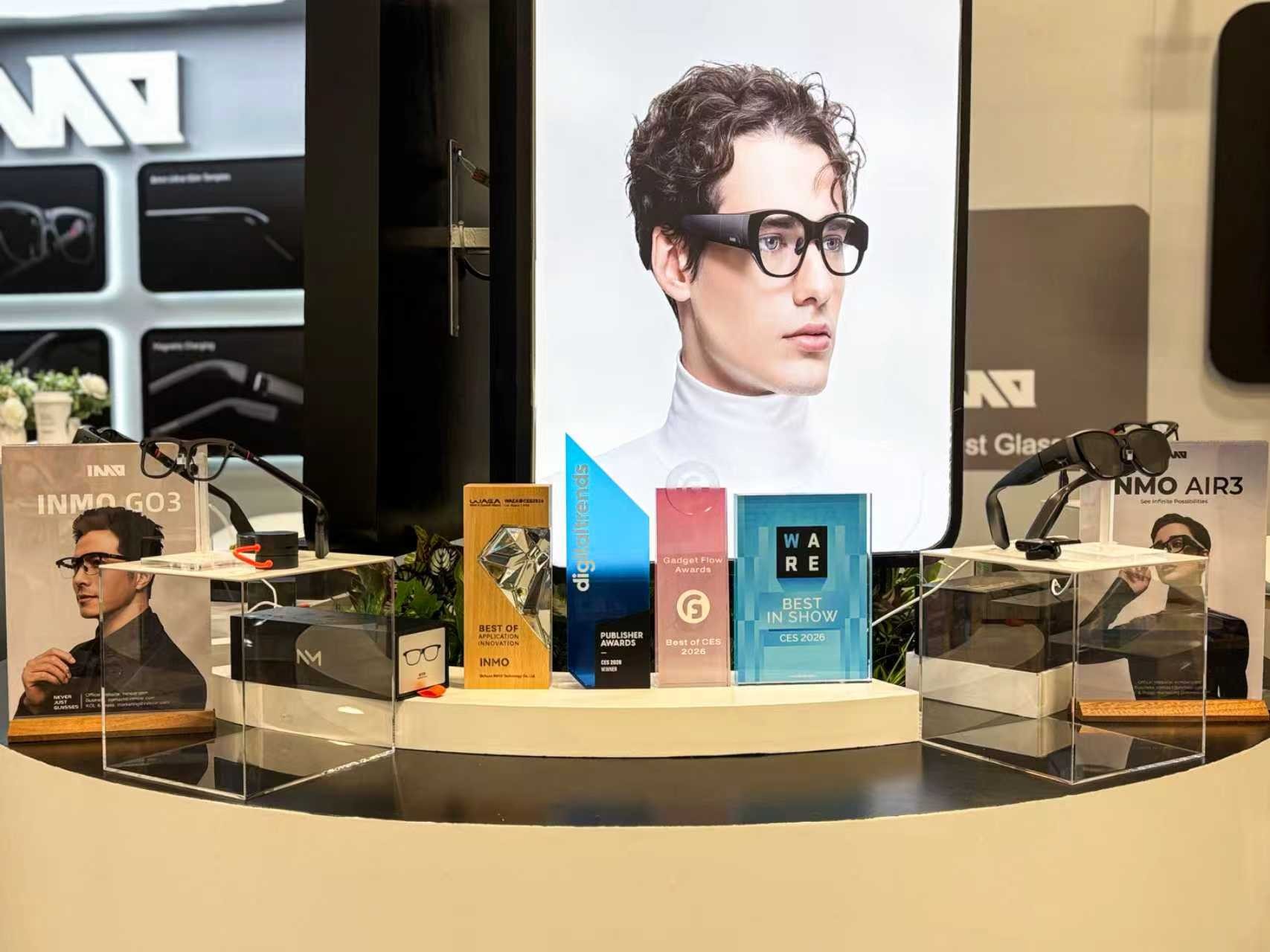
The most obvious pain point in the smart - glasses industry is product homogenization, with a high degree of similarity in functions and appearance. As a benchmark for the aesthetics of AI glasses, INMO GO3 uses a pure CNC five - axis precision carving process on its hardware and is equipped with 8 - mm smart - glasses temples, completely getting rid of the traditional image of "bulky and ugly black frames" of smart glasses. In the future, it is planned to launch different frame shapes and color schemes on a quarterly basis, making smart glasses a fashionable item.
At the same time, INMO GO3 is the first smart glasses in the industry to achieve real - time two - way dialogue translation. Currently, the target languages have increased from more than 40 in the previous generation to 261, with a translation accuracy of 98%. During the translation process, through the INMO Speaker clip - on speaker and AI voice - imitation technology, the dialogue can be translated into the other person's native language, and the tone, intonation, and emotion of the speaker can be replicated.
While most manufacturers are still struggling with the time - difference data of simultaneous interpretation, INMO GO3 already has a more personalized, scenario - based translation "intelligent agent" with a certain emotional expression, bringing a smoother experience closer to barrier - free communication between people.
After the rapid start - up phase in 2025, the smart - glasses industry is now becoming a large - scale track with stronger certainty and broad prospects in terms of technology, products, market, and investment feedback. The smart - glasses market in 2026 may enter the stage of differentiated development and even start the elimination round.
AI Becomes an Extension of Humans in the New Era: From Cleaning, Growth to Sleep and Work
At CES 2026, another main theme of AI is to fully integrate into people's daily lives rather than just existing on the screen.
Cleaning appliance companies have ambitions that are no longer limited to the floor of the home. They are evolving from two - dimensional to three - dimensional space, from being "cleaning tools" to "organizing and storage tools," and are capable of handling all complex home - cleaning scenarios, from indoor cleaning to outdoor lawn and pool cleaning. There are stair - climbing vacuum cleaners, even flying vacuum cleaners, and lawn - mowing robots with robotic arms.
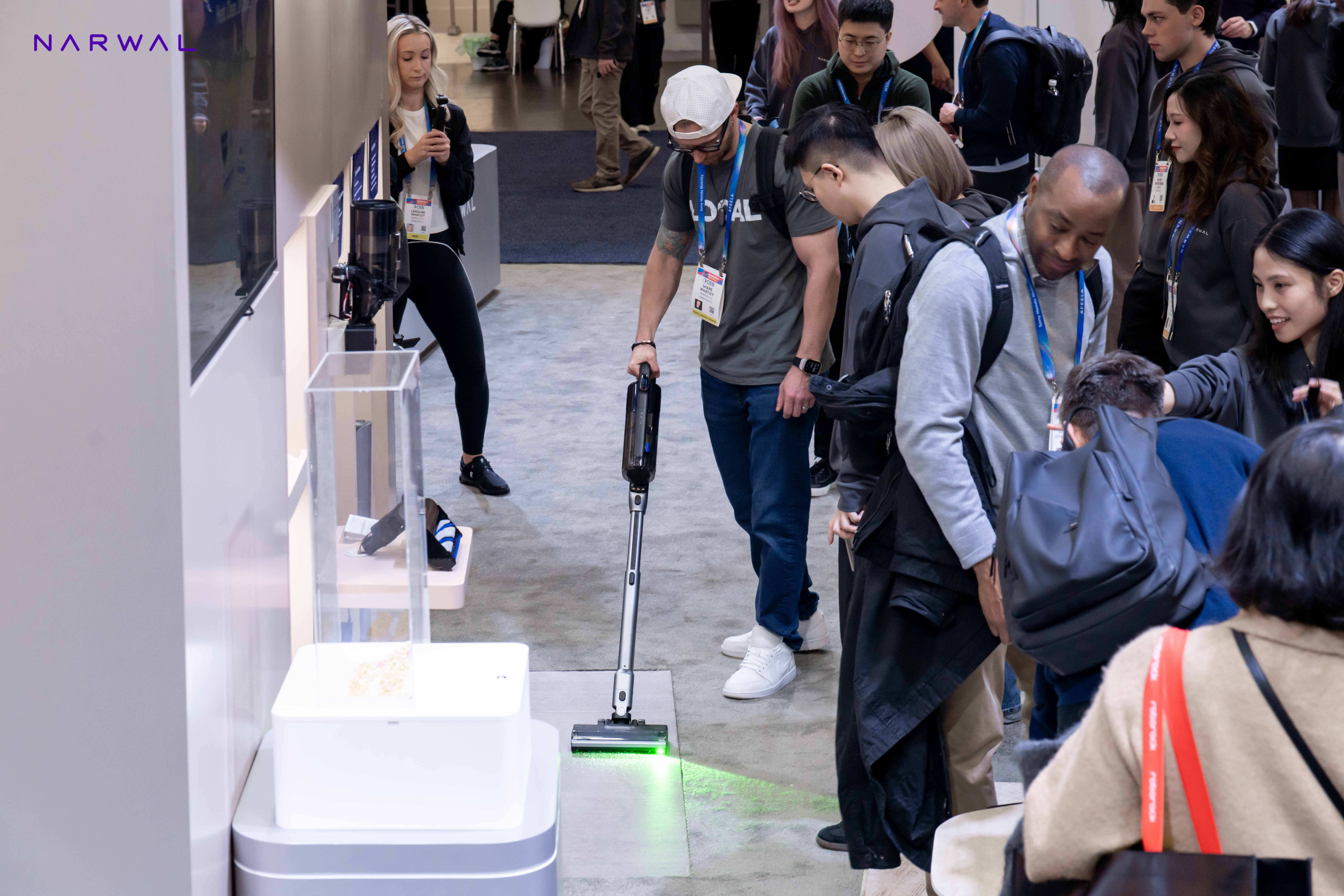
Ecovacs and Yunjing upgraded their flagship vacuum cleaners at this CES. The roller of Ecovacs' constant - pressure live - water floor - mopping robot is 50% longer than the previous generation, reaching 26 centimeters, covering a larger area in a single mopping operation and greatly improving the cleaning efficiency. Yunjing's new - generation vacuum cleaner can recognize more objects, supports mother - and - baby and pet modes, switches to ultra - silent mode when approaching the baby's crib, and can quickly find the family pet.
In addition, Yunjing showcased more new product lines. Keeping its own pace, Yunjing has maintained a rare sense of calm in the aggressive smart - cleaning track. Starting from the extension of the technical path and consumer demand, it is gradually expanding its business boundaries. The flagship robot vacuum cleaner unveiled this year has powerful object - recognition and scene - intelligent adaptation capabilities, covering two exclusive modes for pet care and baby care and an AI floor - labeling function.
Chinese brands not only aim to dominate the home - cleaning scenario but also have an absolute advantage in the garden scenario, which is not very familiar to Chinese people but almost every European and American user has to deal with. During the CES, Kumat Technology officially released the latest market report issued by Frost & Sullivan, which shows that Kumat Technology ranked first in the global sales of boundary - less lawn - mowing robots from July 2024 to June 2025.
Naturally, Kumat Technology's booth at the CES attracted a lot of attention. Its new product matrix in 2026 was also fully unveiled for the first time, including the LUBA 3 AWD flagship model equipped with a three - integrated positioning system, the SPINO S1 Pro pool - cleaning robot that can automatically return to the charging station, and it officially announced its entry into the larger commercial lawn - mowing market.
We have seen that AI has opened up a new cognitive scope for people's growth and life.
Teeni.AI of Tinglixiong, founded in 2021, is an innovative enterprise focusing on the multi - modal large - model portable intelligent agent for the youth market. This Beijing - based enterprise made its debut at the CES, presenting its new AI portable robot for teenagers, Mooni Pro, to global users. Teeni.AI of Tinglixiong doesn't want to create "just another children's AI hardware" but is trying to find the implementation form of the next - generation AI agent, creating a new digital world for post - 2010 children, making AI step out of the dialog box and enter the real world to play a role in teenagers' daily exploration and growth.
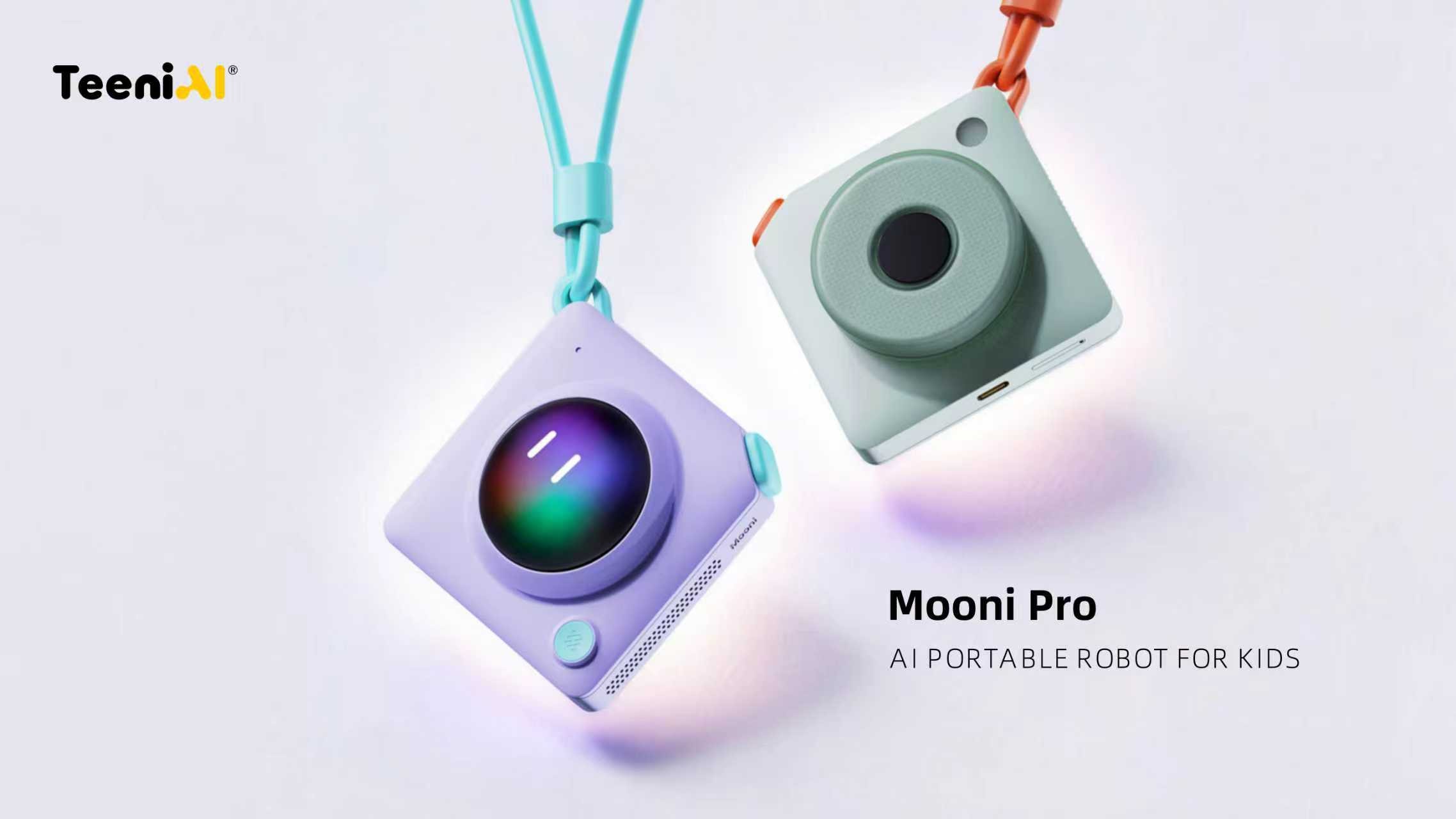
The uniqueness of Mooni Pro lies in its ability to directly understand the real environment of teenagers through the camera and voice. The role of children's AI should not be to replace parents, nor should it confine children to the screen. Instead, it should serve as a medium between children and the real world.
A good AI portable robot needs to understand what children are saying and provide more inspiring and in - depth feedback. When a child uses Mooni Pro to record things and moments around them, those seemingly unconnected life fragments, such as an unforgettable outing or a favorite object, can be encoded and decoded by Mooni Pro into content that children can understand. These contents will be accumulated as growth records for recollection, providing new and continuously updated materials for family parent - child communication.
Starting from companionship and understanding, compared with traditional dialog - based AI with scattered communication and one - way information input, Mooni Pro helps children form a way of perceiving the world. It doesn't make decisions for children or explain the world to them but allows children to understand the world from their own perspective in a way of growing together.
The integration of AI allows children to understand the world in a more individualized way, which is an essential part of personal growth. As people grow into adulthood and face various troubles and burdens in life, sleep problems gradually become a daily pain point. According to the data from the "2025 China Sleep Health Survey Report," 300 million people in China have sleep disorders.
At the CES, LumiMind, a Chinese neuro - technological innovation brand focusing on brain health, officially released its first consumer - grade product, the LumiSleep real - time brain - wave sleep regulator, bringing good news to people with sleep disorders.
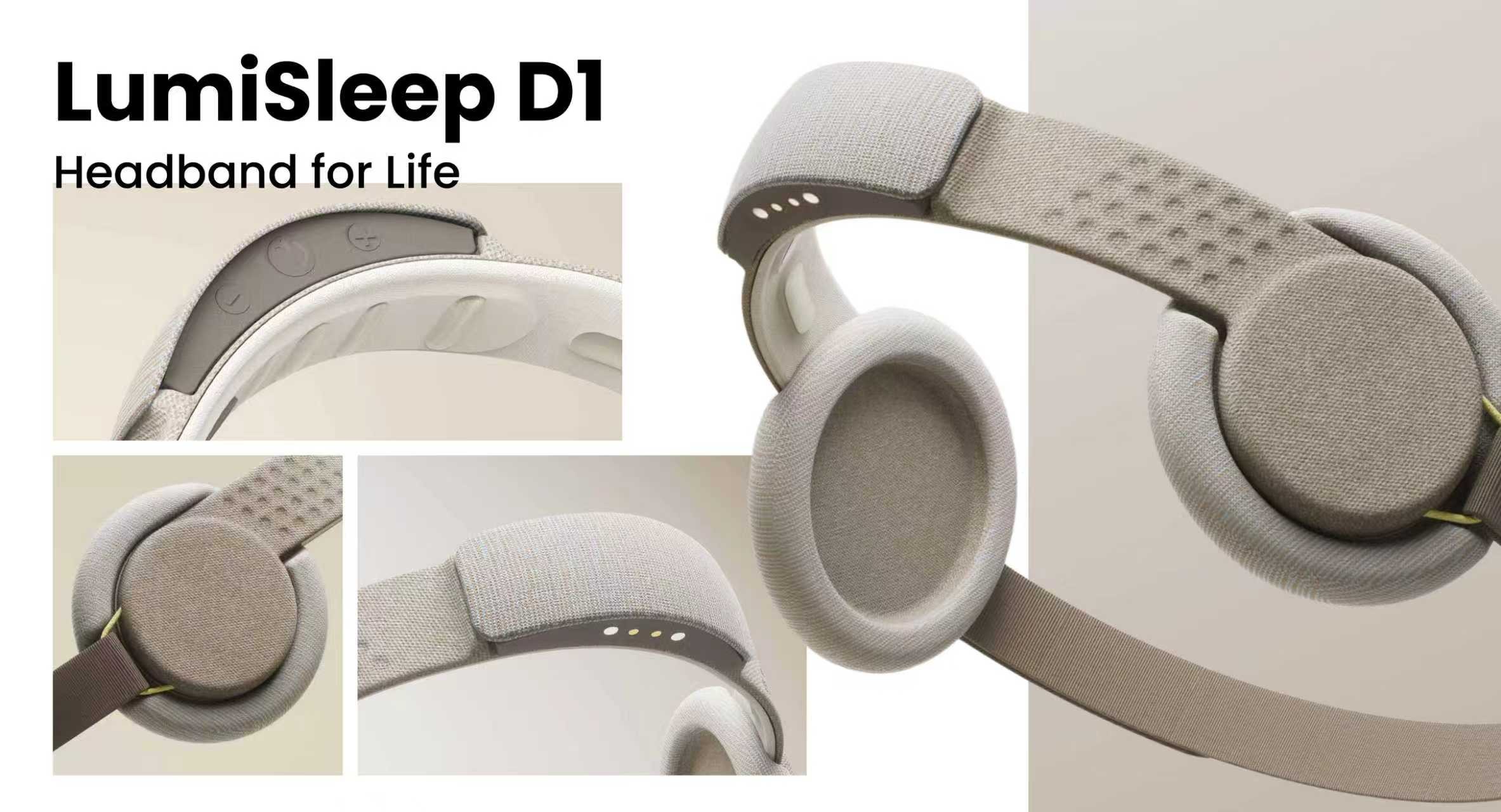
LumiMind is a subsidiary brand of the Yansi Brain - like Artificial Intelligence Research Institute, which focuses on artificial - intelligence brain - computer interfaces. The core technology behind it comes from the institute's years of basic research in brain - wave decoding and non - invasive brain - computer interfaces. Through the study of a large amount of real brain - wave data, the institute has identified