AI starts to have fun: folding clothes, giving haircuts, and being pets. These cutting-edge tech gadgets at CES 2026 are really wild!
In the glamorous Las Vegas, CES 2026 has been in full swing for three days.
The largest reporting team in the history of Lei Technology has arrived in Las Vegas, USA, and is bringing you on - the - spot, in - depth and three - dimensional professional reports.
Although it's still winter in China at this time, the desert in Nevada is crowded with media, geeks and technology practitioners from all over the world. Braving a time difference of several hours, people walk 20,000 to 30,000 steps in the exhibition hall every day, surviving on the not - so - delicious exhibition fast food, Red Bull and coffee. There's only one purpose:
To see what will completely change our lives in the next few years.
As the global consumer electronics' vane, CES every year is a feast for global technology enthusiasts. There are not only innovative black technologies that lead industry trends, but also never a lack of "weird products" that amaze people.

(Image source: Lei Technology)
This year's CES 2026 is no exception. A batch of products that seem full of creativity but are hard to understand have made their collective appearance. They either challenge the privacy boundary or focus on novel experiences. They are the "non - mainstream" products at the exhibition, but also highly topical.
As usual, we shuttled between LVCC and Venetian. In the exhibition area of over 2.5 million square feet, we dug out the strangest, coolest and most interesting new gadgets for you. Next, let's take a look at these impressive and novel exhibits!
Can it even do the laundry folding? LG launches a household chore robot
Doing household chores is probably one of the biggest pain points for humans.
Although we've long had washing machines to solve the trouble of doing laundry, dryers to solve the trouble of drying clothes, and sweeping robots to clean the floor, "folding clothes" has always been the missing last link in home automation.
Taking out a bunch of messy clothes from the dryer, sorting, smoothing, folding and storing them may only take a dozen minutes for humans. But for robots, dealing with fabrics of different materials is a nightmare - level difficulty.
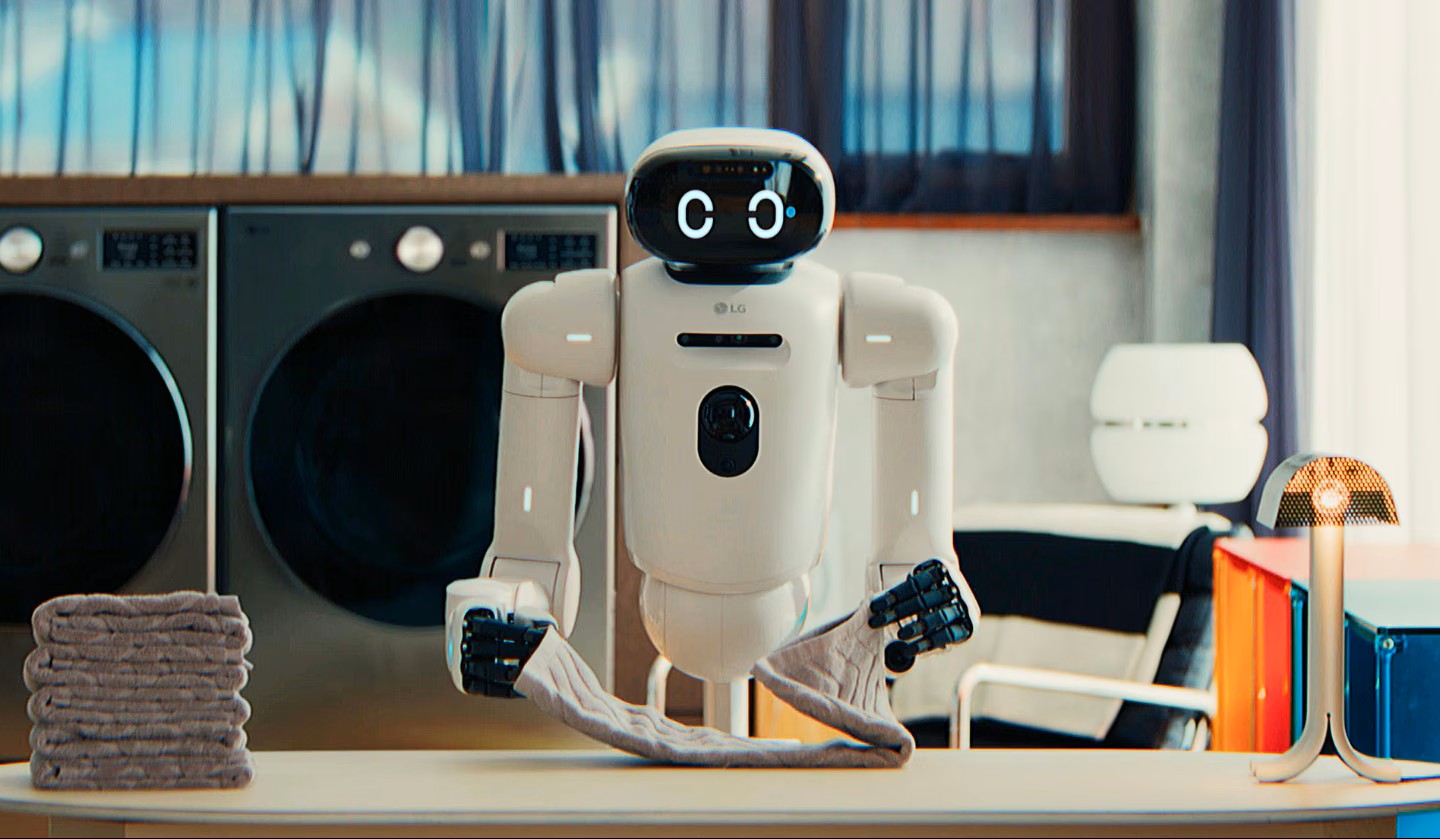
So, at this year's exhibition, LG brought a real household chore terminator - LG CLOiD.
(Image source: LG)
This is no longer the kind of round - shaped robot that just bumps around randomly. CLOiD looks more like a human, or rather, it has an upper body.
LG gave it a face with rich expressions, enabling CLOiD to communicate with humans through spoken language and "facial expressions". Coupled with flexible mechanical arms and a wheeled base, it really gives the feeling of coming out of a Pixar animation.
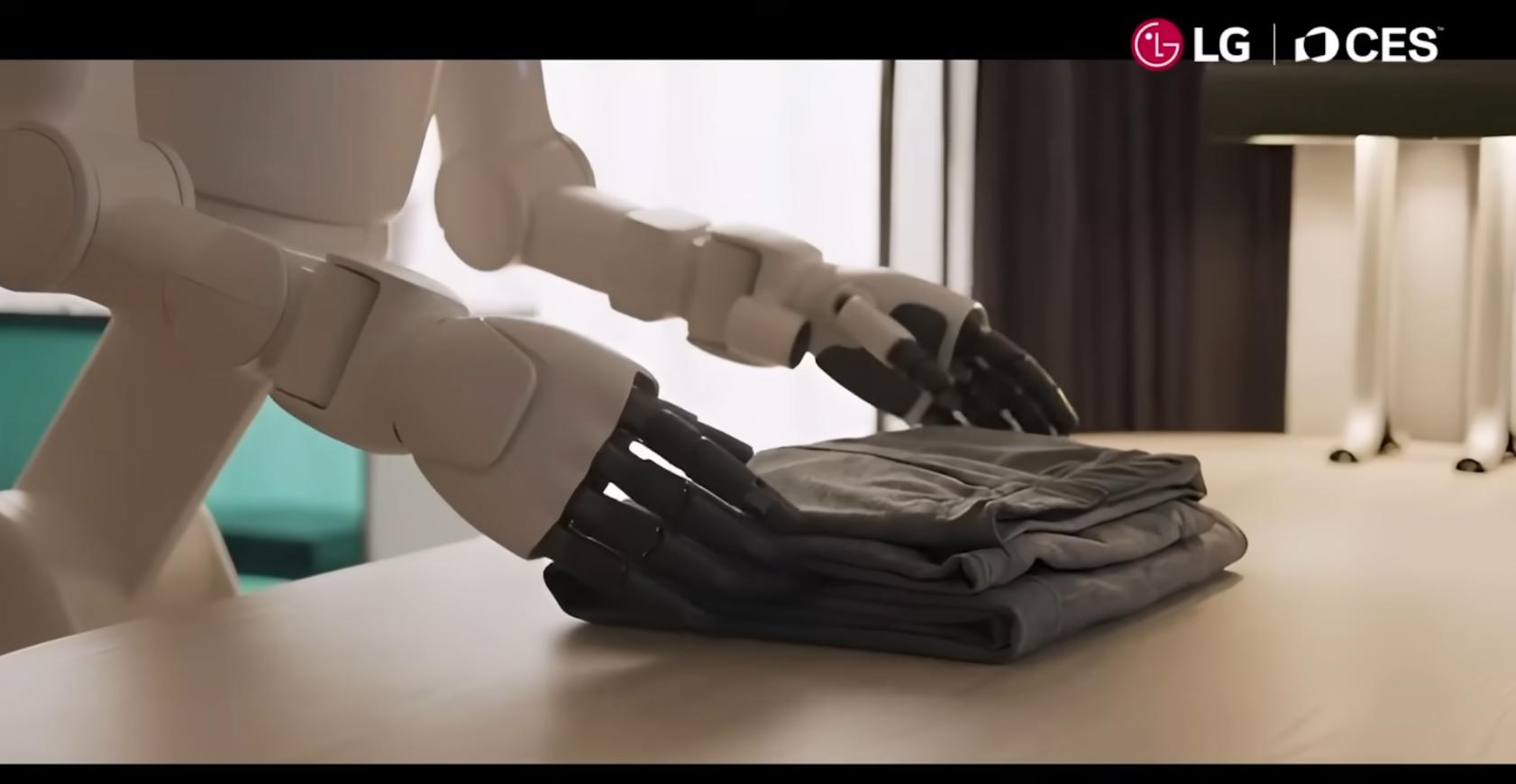
Previously, robots were like "blind men feeling an elephant". Given a piece of cloth, they might not be able to tell whether it was a rag or a shirt. But CLOiD is different. LG claims to have trained it with tens of thousands of hours of household task data. In the official video demonstration, it can easily complete the entire process of washing, drying and folding clothes.
(Image source: LG)
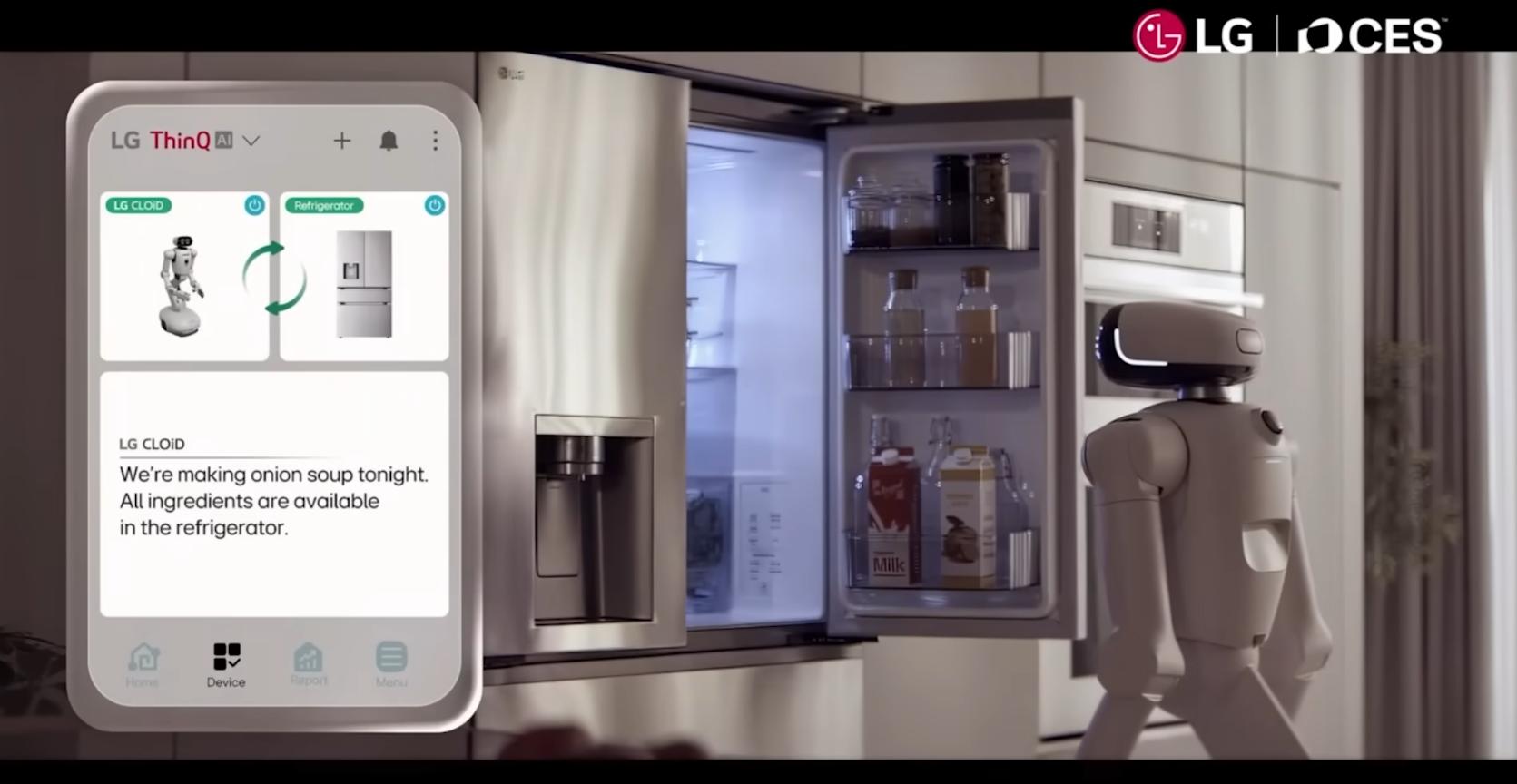
Moreover, through seamless connection with the LG ThinQ ecosystem, CLOiD can initiate remote communication with users through the app. Based on its understanding of users' lifestyles, it can actively call on LG's home appliances, thus performing a series of operations such as taking milk from the fridge and putting croissants in the oven to prepare breakfast.
(Image source: LG)
For lazy people and bachelors, all this seems too good to be true.
However, don't be in a hurry. After all, it's a new thing, and the current drawbacks are obvious. You know, in LG's on - site demonstration, the robot only demonstrated the process of taking a towel from a human hand and putting it into a washing machine with an automatically opened door, and it actually took nearly half a minute.
For a human, it probably takes less than five seconds to just throw it in.

(Image source: LG)
Secondly, for the convenience of movement, CLOiD adopts a wheel - foot design. Leaving aside the possible impact of indoor height differences, the official introduction clearly states that "the torso can tilt to adjust the height, enabling the robot to pick up objects from knee - high and above".
In other words, if something small drops on the ground, it's your turn to serve the machine.
Fortunately, LG's staff also said that currently this is still a proof - of - concept machine, and it may take some time before it is truly mass - produced for household use. But in the face of the vision of "completely liberating hands", I think this direction is definitely right.
Good news for lonely people: Vitas Vbot launches a "free - ranging robotic dog"
After seeing the "person" that does household chores, let's take a look at the "dog".
In the past few years, Boston Dynamics made robotic dogs popular, and then domestic companies like Xiaomi and Unitree Robotics also followed suit, making a big stir.
But to be honest, this has little to do with ordinary consumers. Most robotic dogs on the market are actually just "advanced remote - controlled toys". You need to hold the controller and watch it walk, afraid that it will hit the wall or fall into a pit. An average person will get tired after playing with it for just ten or so minutes.
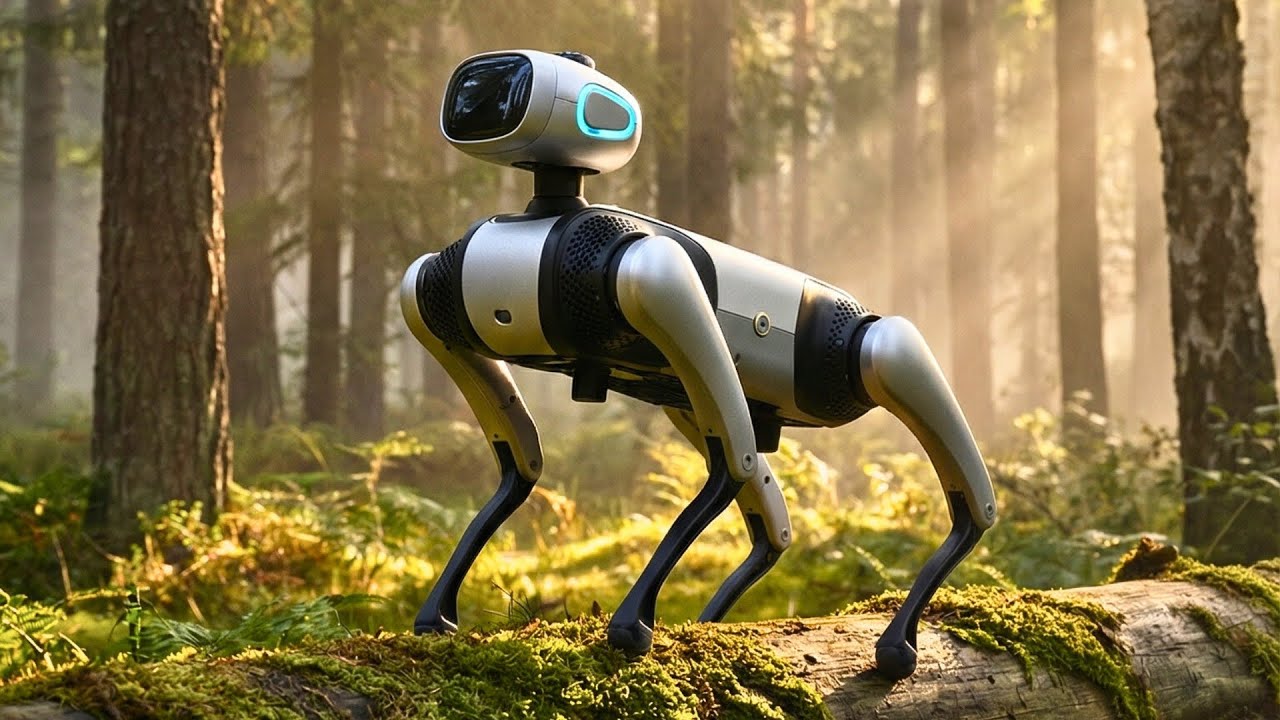
But the Vbot shown by Vitas is different. It claims to be the first truly "free - ranging" AI robotic dog.
(Image source: Vitas)
In terms of design, Vitas does look more like a dog than many general robotic dogs - at least it has a basic canine shape. It has a head that can display emotions, a simple and round body, and can even be used with a leather cover. This is indeed different from the industrial - style or toy - like design of other quadruped robot products, and it even has a certain sense of affinity.
In terms of function, Vbot combines VLM and VLA technologies, which convert images and videos into structured, language - based understanding, and then transform visual and language inputs into physical movements.
This allows users to complete object binding, relationship understanding and constraint expression through natural language and vision without a remote control. The robot can then feedback its status and intentions through body movements, light signals, expressions and sound effects, thus transforming the interaction from command - based to collaborative, and making it possible for robots to enter daily life.
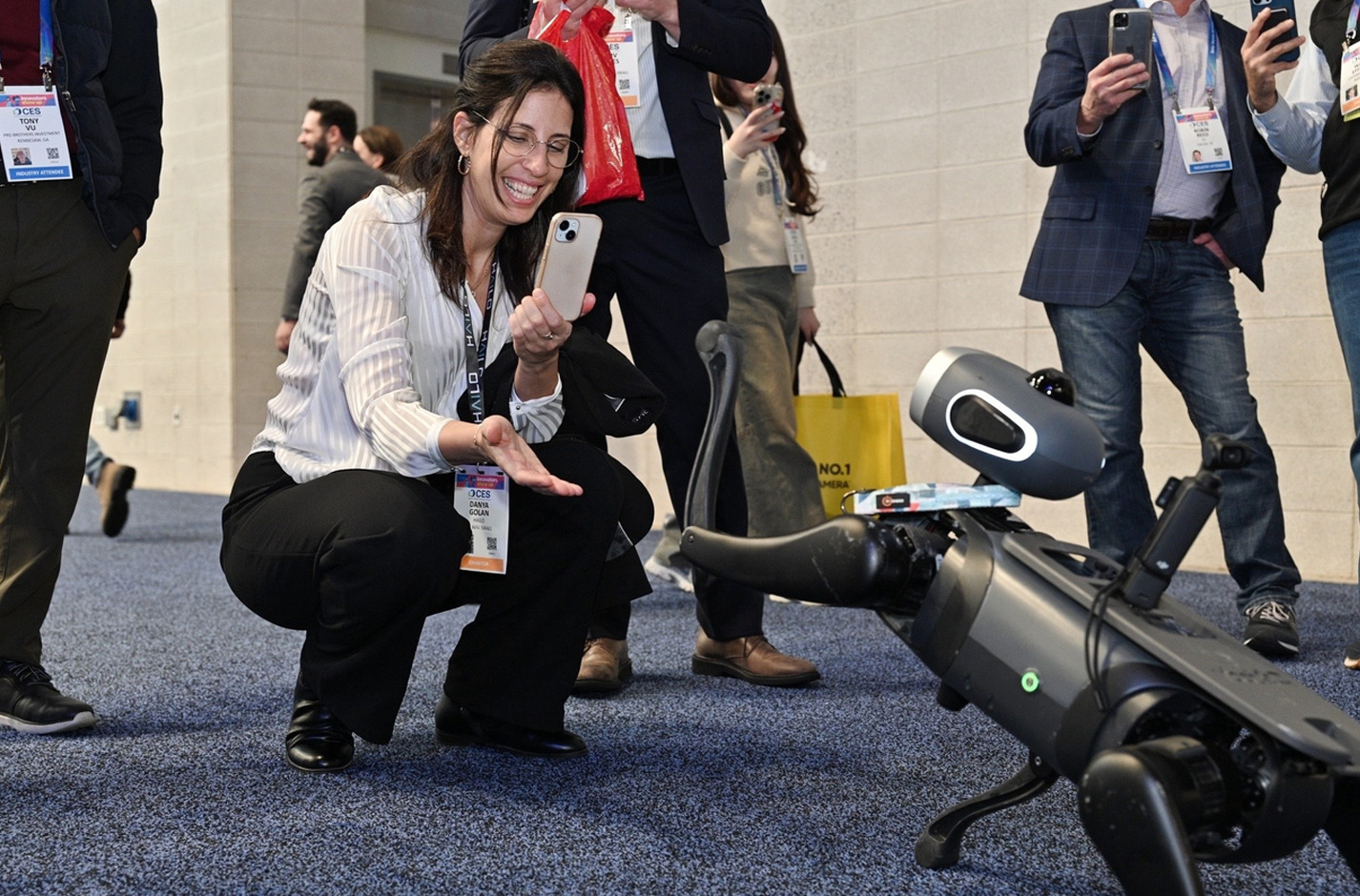
(Image source: fortune)
The on - site demonstration at the booth was very interesting. In an environment like CES where people are coming and going, Vbot can not only shuttle freely but also interact naturally with exhibitors. It can trot over like a real dog and perform pet - like actions such as reaching out and sitting down, which really gives a vivid feeling.
The cool thing is that it can guard the house. If it detects a stranger breaking in or an elderly person falling at home, it will immediately notify you through the app.
In my opinion, apart from the nearly ten - thousand - yuan price and the battery life problem that is unlikely to be solved quickly. For those who want to keep a pet but are afraid of the hassle, or are allergic to dog hair, or often travel on business and can't take care of a living creature, Vbot is really a pretty good "alternative".
Moreover, it will never poop on your floor.
Glyde: An AI barber, no need to rely on others for a haircut
If you think the above robots are still a bit far from daily life, then the next one might hit the nail on the head.
For many men, going to the barber shop every month is not only expensive, but more importantly, it's a bit like a "gamble". You never know what kind of haircut the barber will give you. When you say "just trim it a little", he might just shave your head, and you'll have to wear a hat for the next month.
Kcool from Shenzhen brought a smart hair clipper called Glyde to the CES site, claiming to enable everyone to get the haircut they want.

(Image source: X)
Before using it, you need to select a haircut style in the supporting app, which has various popular slick - backed styles, crew cuts and fade haircuts.
After selecting the style, put on the positioning mask and then start cutting.
Equipped with a series of sensors, adjustment wheels, protective devices and movable parts, Glyde can achieve fool - proof hair cutting. When you move the clipper on your head, the AI will automatically control the retractable length of the blade according to the selected haircut style.
For example, if you want a fade haircut where the hair gets longer towards the top. As you move the clipper upwards, when it reaches the area where the hair needs to be left longer, the blade will automatically retract.
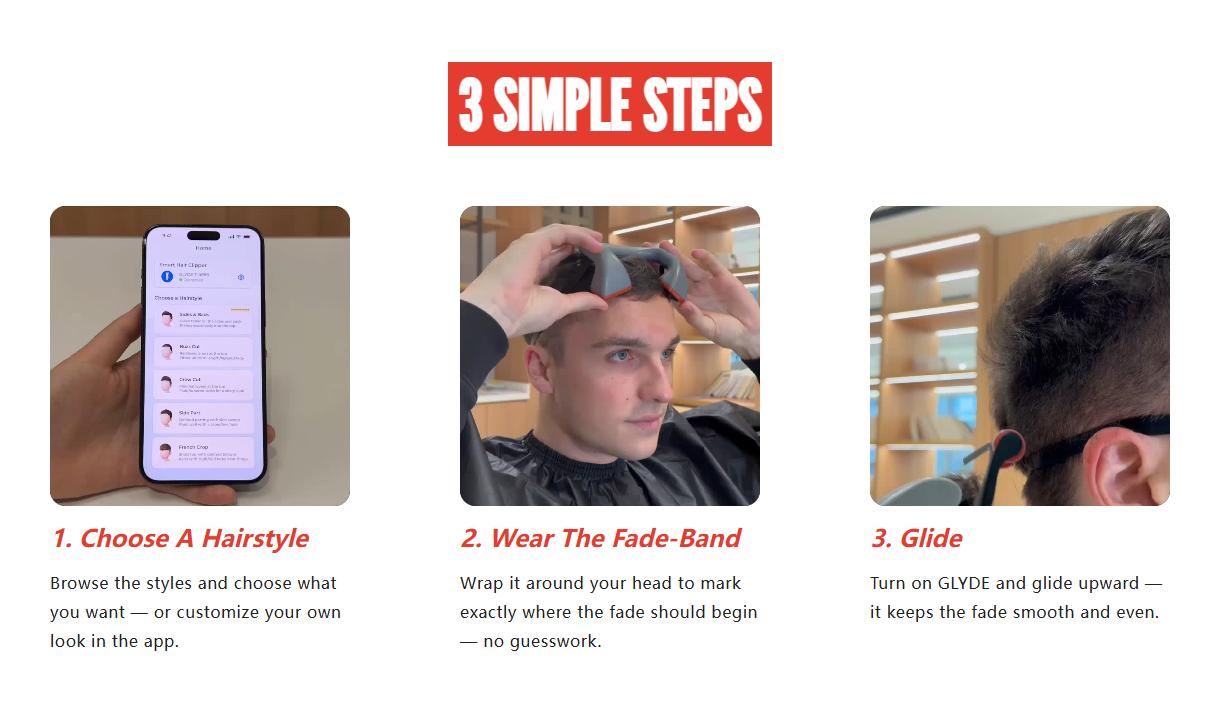
(Image source: Glyde)
The most amazing thing is its "anti - clumsy mechanism". If your hand slips, or you move the clipper near your ear, or to an area where you shouldn't cut, the blade will immediately retract and stop vibrating, preventing you from shaving your hair too short or scratching your scalp. This way, even those without haircut experience can try complex styles.
It should be noted that this thing can't cut hair automatically. You still need someone to help you move the clipper on your head.
Currently, Glyde is only available for pre - sale overseas. Obviously, this product is not designed for users who often go to barber shops, but for overseas families that pursue cost - effectiveness and often do DIY haircuts at home.
In my opinion, although it may not revolutionize the hair - styling industry, it might reduce a lot of "failed" bowl cuts given by moms.
The ultimate minimalist desktop gadget: HP Keyboard PC, making computing power "portable with keys"
At CES 2026, the veteran PC manufacturer HP did something of a renaissance here.
At first glance, the HP EliteBoard G1a might seem like an ordinary Logitech or Cherry office keyboard. But when you look at the back and see the row of interfaces and cooling holes, you'll realize its true identity - it's a complete computer with the entire host stuffed into the keyboard.
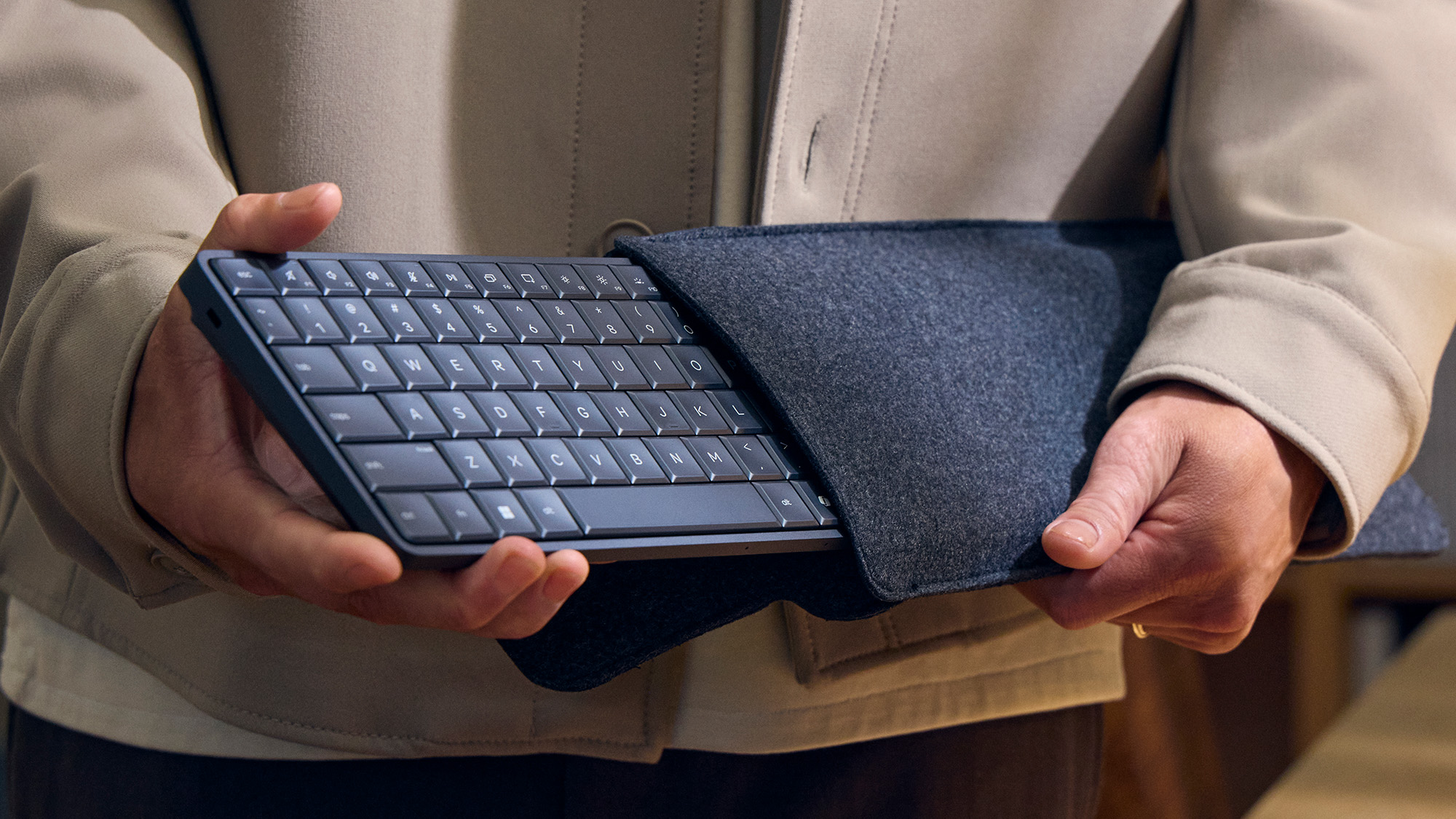
(Image source: HP)
The whole body is only 12 millimeters thick, and the weight is controlled at around 750 grams, which is even lighter than two bottles of Coke.
I know this may not be a new concept. Old - school players might think of the Commodore 64 from the 1980s, and new geeks might think of the Raspberry Pi 400.
But this time, HP is not just playing around. It really wants to turn this form into a mass - produced productivity tool.
Firstly, it doesn't cut corners due to its small size. You can choose the Ryzen AI 7 350 PRO at most, with a built - in NPU computing power of up to 50 TOPS. The memory can be expanded to 64GB, and the hard drive can be a 2TB SSD. It's not just for writing documents; there's no problem with video editing or running codes either.