Lego has stuffed a computer into its building blocks, which is the biggest evolution in half a century.
Unexpectedly, one day at the Consumer Electronics Show (CES), the amazing product wasn't from the familiar faces like Samsung or Lenovo, but from the world's most famous toy factory - Lego.
This new product called "Smart Bricks" is part of Lego's "Smart Play" vision: Lego has integrated a microcomputer into the building blocks. When it senses other blocks with NFC tags, the entire set of Lego bricks comes "alive."
The first batch of smart brick toy sets introduced to the world is based on the classic IP "Star Wars" and will be officially launched on March 1st this year.
For Lego, this might be the most important evolution since the launch of the classic minifigures in 1978.
A "Living" Brick
Lego has announced three main components of its "Smart Play" this time:
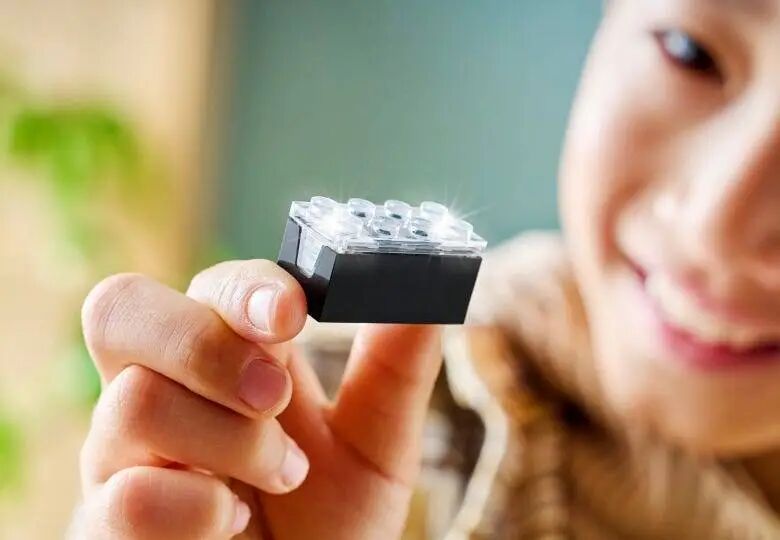
- Smart Brick, the core component, a microcomputer stuffed into Lego's classic 2x4 brick
- Smart Tag, which tells the Smart Brick how to interact through NFC
- Smart Minifigure, the classic Lego minifigure with an NFC tag inside
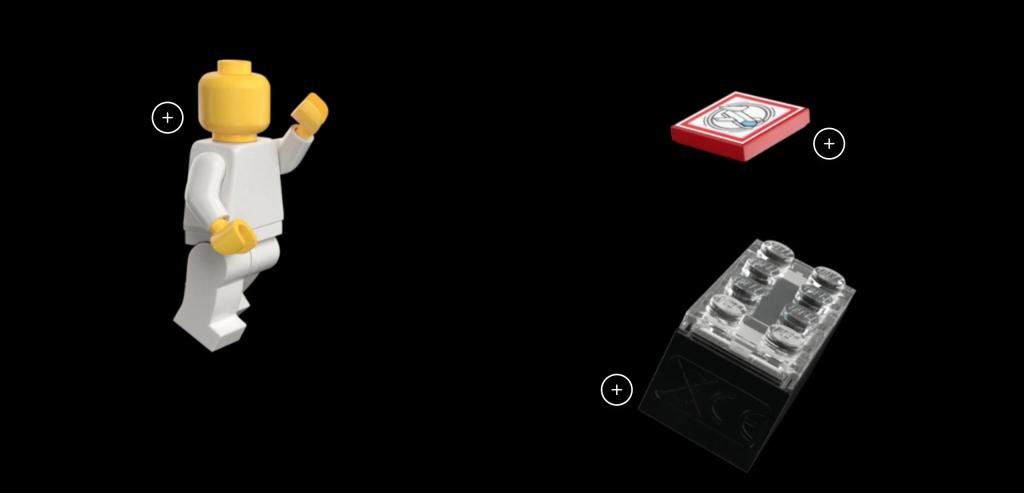
It's a bit one - sided to say that the Smart Brick is just a computer. In fact, it contains lights, speakers, light sensors, inertial sensors, microphones, and Bluetooth Mesh modules inside.
It can be understood that a relatively complete Raspberry Pi is stuffed into this tiny brick.
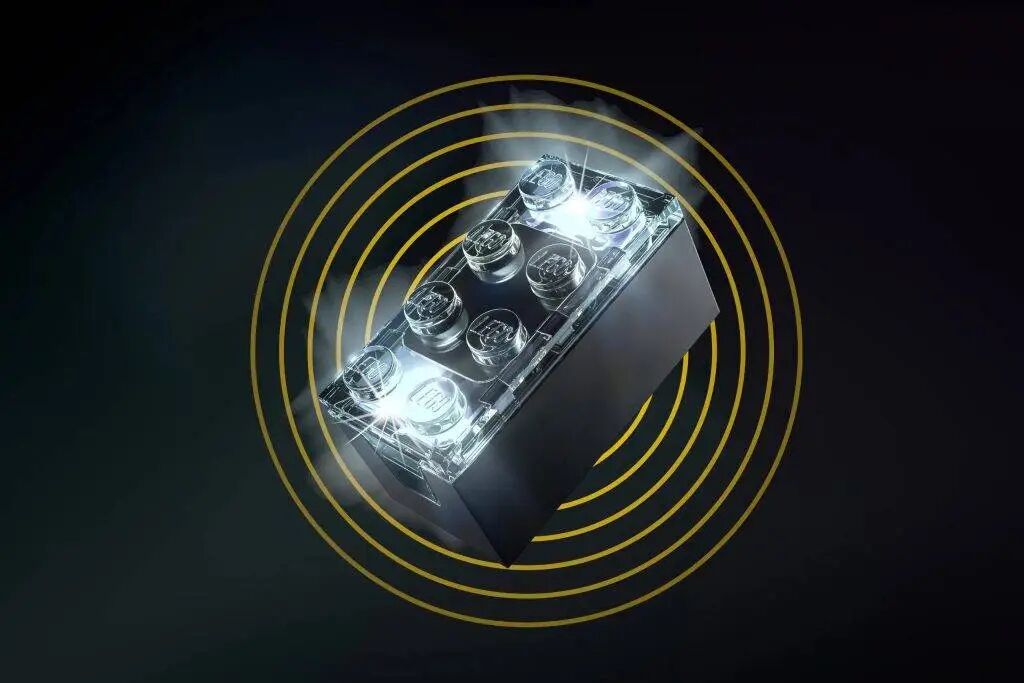
Put simply, the function of the Smart Brick is very similar to the "Rat Talisman" in the animation "Jackie Chan Adventures," having the ability to bring toys to life - though it can't make the bricks actually move. It mainly gives Lego bricks "life" through flashes and sounds.
Lego said that this smart brick system is the result of six years of active development by the company. They hope that all the small components can interact with each other, rather than just revolving around a large core brick robot.
Different from some of Lego's previous electric brick toys that require battery replacement, the Smart Bricks use a wireless charging solution. One charging pad can charge multiple bricks, which is not only safer but also cleverly hides the "technical" nature of the bricks.
(It's actually true to say that Lego achieved multi - device charging on one pad before Apple...)
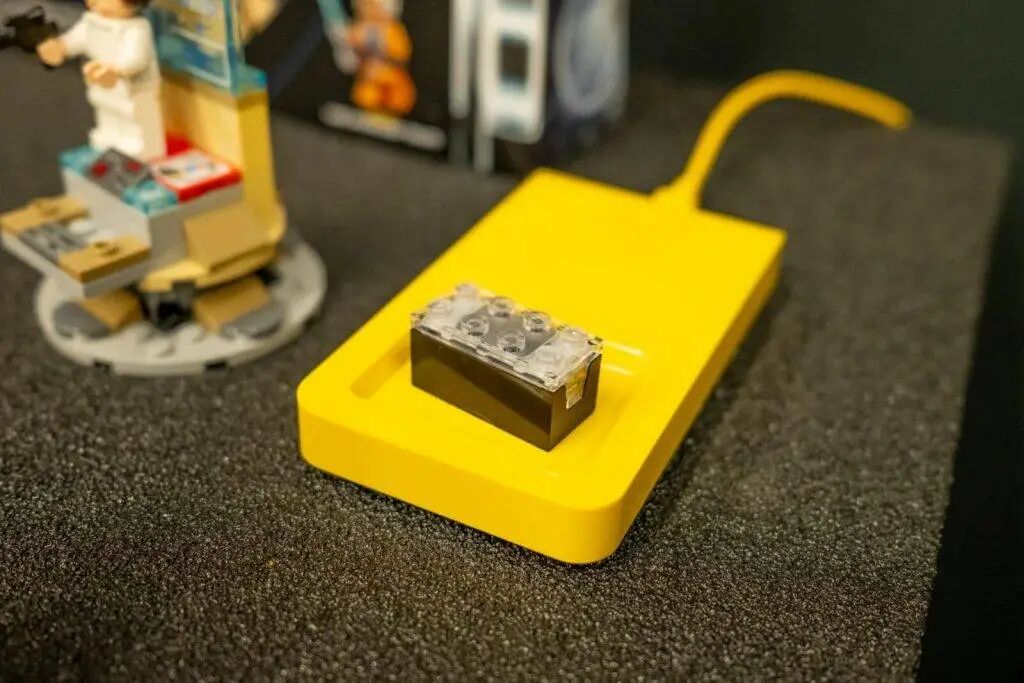
Image source: Gizmodo
Lego didn't design a "power button" for the Smart Bricks. They are activated by shaking and will enter standby mode after long - term inactivity. Lego claims that the battery can support 45 minutes of intense play and can remain idle for a long time, but it's best to charge it once every six months.
To let the Smart Brick know whether it's installed on an airplane or a car, the "Smart Tag" is indispensable - it's like an NFC sticker on the brick, instructing the Smart Brick to make the correct response. Each tag has a pattern to inform users of its function.
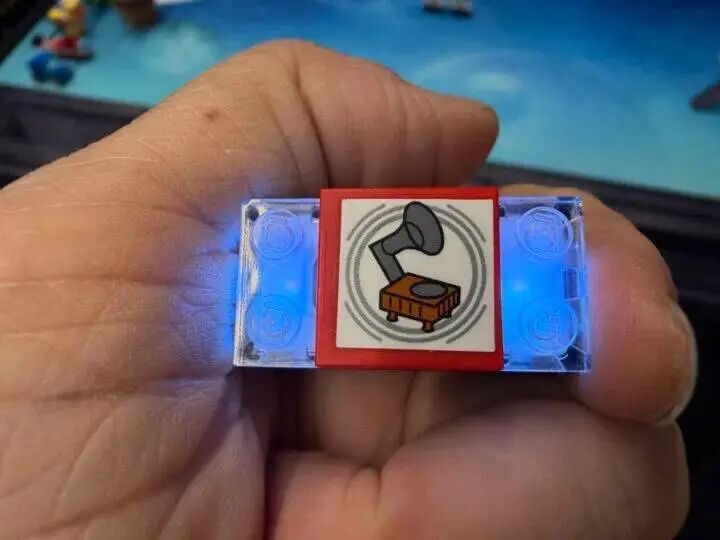
A Smart Tag in the shape of a "phonograph" installed on a Smart Brick. Image source: GadgetGuy
The Smart Minifigure also has such a tag inside, telling the Smart Brick its personality so that it can make corresponding sounds and interactions.

So, when we assemble a Smart Brick, an "airplane" Smart Tag, a Smart Minifigure with aviophobia, and ordinary Lego airplane bricks together, we can hear the sound of the airplane flying and the scream of the minifigure out of fear of flying, creating a very vivid experience.
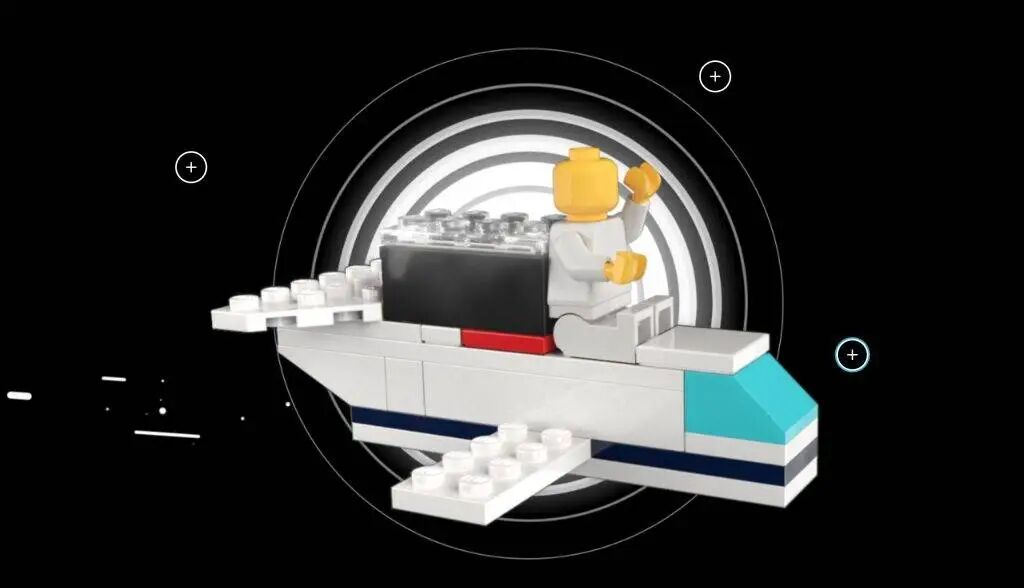
The combination of the three will produce a wonderful reaction
Making sounds is just the tip of the iceberg of the Smart Brick's capabilities. With the support of numerous sensors, the Smart Brick can sense movement, position, and distance, enabling the brick model to make different responses during the game.
For example, in a set of bricks of four ducklings and a mother duck, each one has a Smart Brick and a Smart Tag. The interaction is quite interesting: when the mother duck turns her back to the ducklings, the naughty ducklings will quack; if the mother duck turns to face the ducklings, they will stay quiet obediently - this shows the Smart Brick's ability to sense direction/position.
The Verge also experienced an interactive system composed of police car bricks, police minifigures, and robber minifigures on - site:
- If a robber approaches the police car, an alarm will sound; if it's a police officer, there will be a "beep" unlocking sound
- Putting a police officer in the back seat of the police car brick will make a snoring sound. At this time, putting a robber in the front seat will make the police officer shout and wake up
Editors from Gizmodo and Gadget Guy both experienced the upcoming "Star Wars" set at CES: when the big villain Darth Vader enters the spaceship, his famous entrance music will play, making him truly the "man with his own BGM."
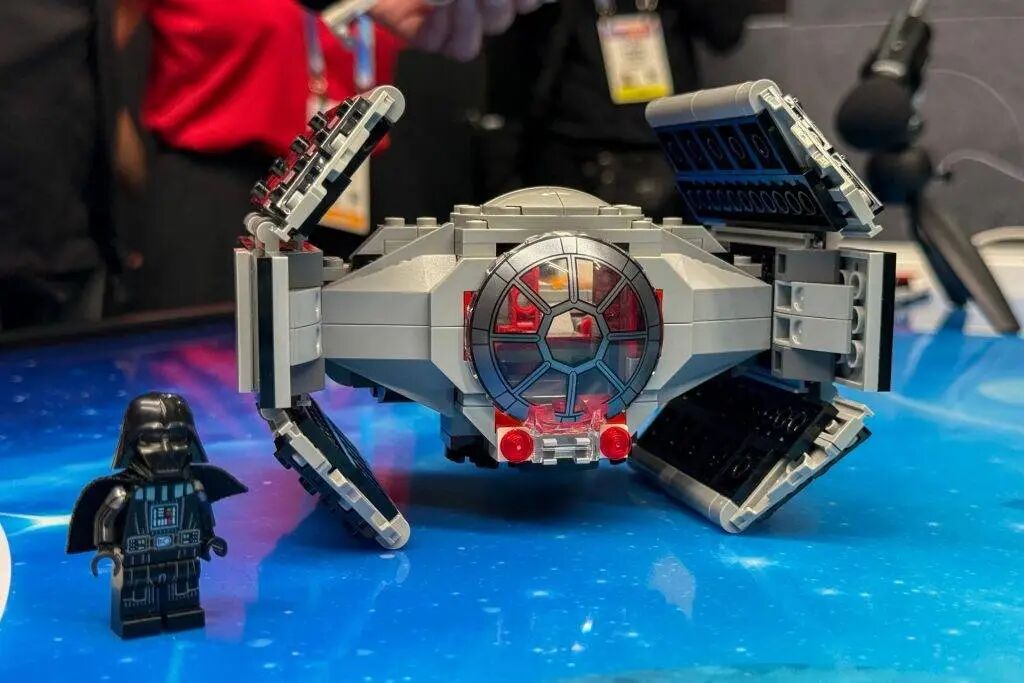
Image source: Gizmodo
When used in combination with different minifigures and fighter planes, the Smart Brick will make different sounds and movements. When holding an airplane and "flying" it, the audio of the Smart Brick will respond according to the speed and manner of movement, producing different sound effects. Pressing the button will also create a laser gun shooting effect, which makes the on - site onlookers exclaim "wow" continuously.
Picking up different minifigures and making them "duel" with lightsabers, the Smart Brick will also make a realistic lightsaber collision sound.

Image source: The Verge
Gadget Guy also tried "mix - and - match" and found that there are no boundaries to the gameplay, and the mix - and - match is full of fun. She put a spaceship tag on a Tyrannosaurus rex brick, and when it "hovered" in the air, it would make the roar of a spaceship - after all, there's no wrong way to build with Lego, and this really captures the essence.
Different tags and figurines will create wonderful chemical reactions. Therefore, the Smart Brick is a system full of possibilities, encouraging children to explore to their hearts' content.
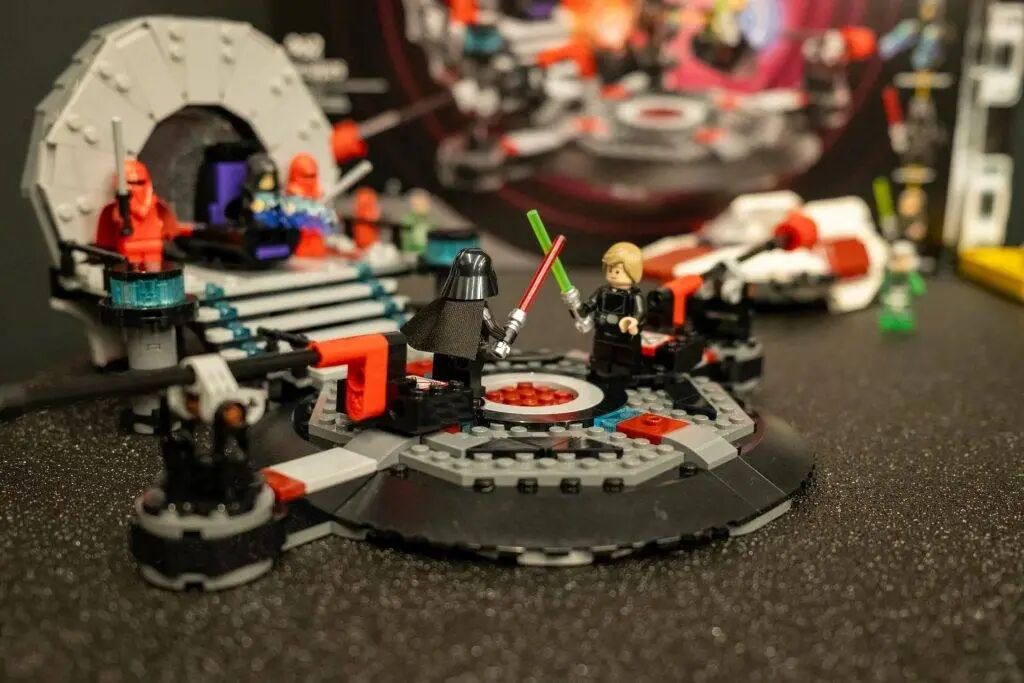
▲ Image source: Gizmodo
Julia Goldin, the product and market executive of Lego, also previewed more possibilities of "mix - and - match" in an interview with The Verge: Imagine what would happen if a Star Wars figurine met a Marvel figurine?
The clever part of the "Smart Play" solution is that the most core Smart Brick component is universal. Players who own Smart Bricks can start playing with their old bricks by pairing them with Smart Tags. In the future, they only need to buy new Smart Minifigures and tags, which relatively lowers the threshold.
As a toy for children, Lego also emphasized some sensitive issues about the Smart Bricks: for example, although it's called "smart," there's really no AI in it! Its working principle is pure sensor induction and reading the programs set on the NFC stickers.
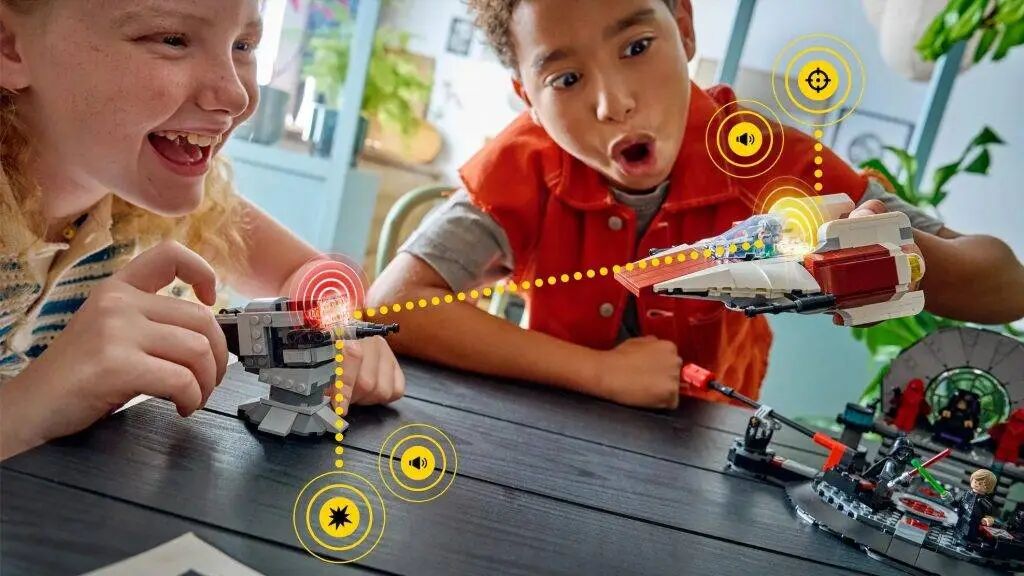
The upper limit of the Smart Brick's gameplay completely depends on Lego's imagination and creativity. This is also in line with Lego's underlying logic.
Currently, users can't reprogram the Smart Bricks and tags, which reduces the DIY playability to some extent - it's understandable for Lego to do so. After all, you don't want some inappropriate and violent programs to be written into the toys your children play with.
Lego has also confirmed that these bricks can be updated via Bluetooth, and the official will continuously optimize the experience and add new capabilities based on feedback.
In terms of privacy, the Smart Bricks don't have any cameras, so they're not compatible with some of Lego's previous smart toys that interacted through barcodes.
Regarding the microphone on the Smart Brick, Lego said it's only used as a sensor. For example, when placed on a birthday cake, you can blow on the brick to simulate the effect of "blowing out candles" and capture some sound inputs to respond to children's actions.
In terms of price, the Smart Bricks are sold bundled with traditional brick sets, and there's currently no option to buy them separately.
Take the "Star Wars" set as an example. It includes a Smart Brick, Smart Tags, a fighter plane made up of 473 bricks, and a Smart Minifigure of Darth Vader, priced at $70, which is about 500 RMB, slightly more expensive than traditional Lego bricks.
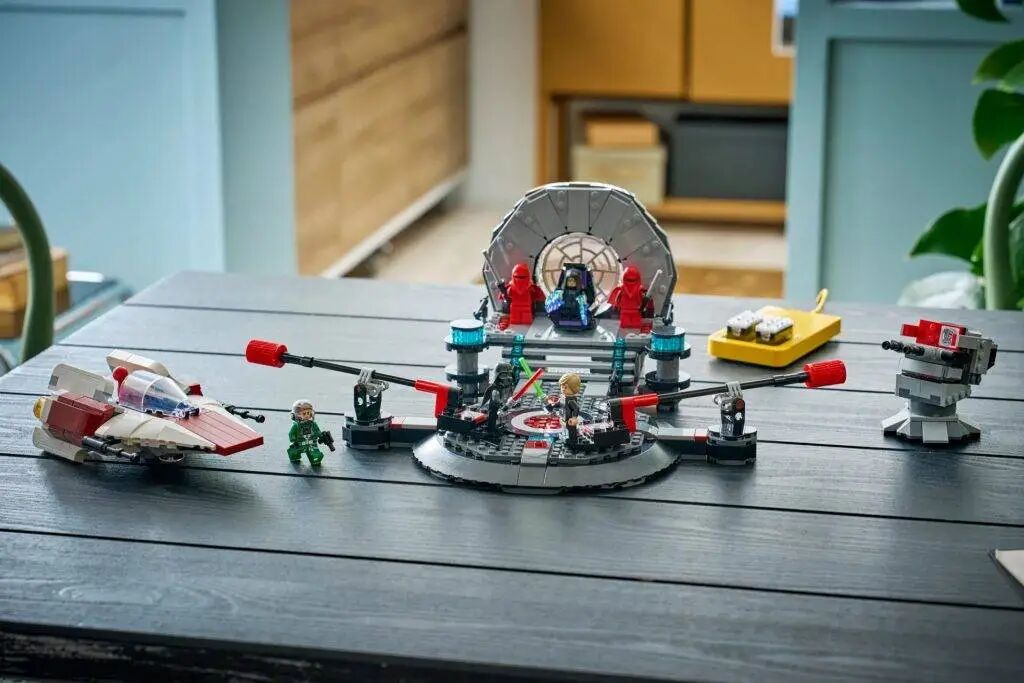
The top - end Star Wars set is priced at $160, about 1118 RMB
Is the Smart Brick Good or Bad?
Regarding the future development plan of the "Smart Bricks," Julia Goldin told The Verge that the company is quite looking forward to the potential of this new platform. It will continue to evolve in the future, and many plans have already been made.
Although the Smart Bricks shown at CES are mainly targeted at children, Goldin also hinted that the entire "Smart Play" project will also give "new meaning" to Lego's adult product line.
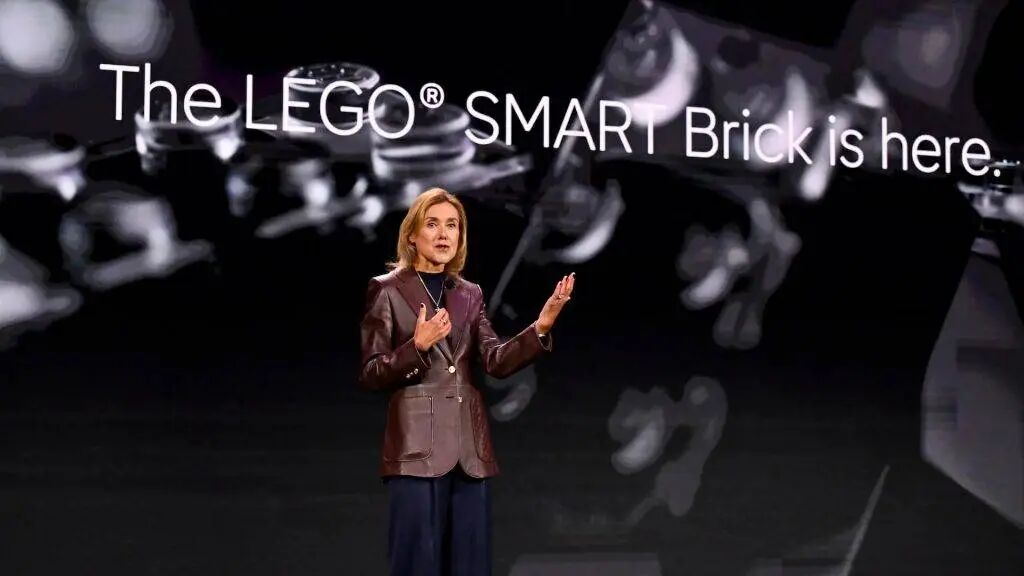
Julia Goldin. Image source: Inc. Magazine
For Lego, this is also a very promising platform, rather than an isolated toy series.
The Smart Bricks are like "game consoles" such as the PS5 and Switch, and the debut "Star Wars" series is the launch - title game. If it fails, Lego can quickly adapt by making updates and improvements and launching new - style bricks.
Lego has also tried to introduce digital technology to traditional brick products before. As early as six years ago, Lego collaborated with Nintendo to launch the "Mario Set." Players used Lego bricks to build their own levels, and the Mario figurine with built - in sensors could run through the physical levels, collect coins, and interact with enemies and props.
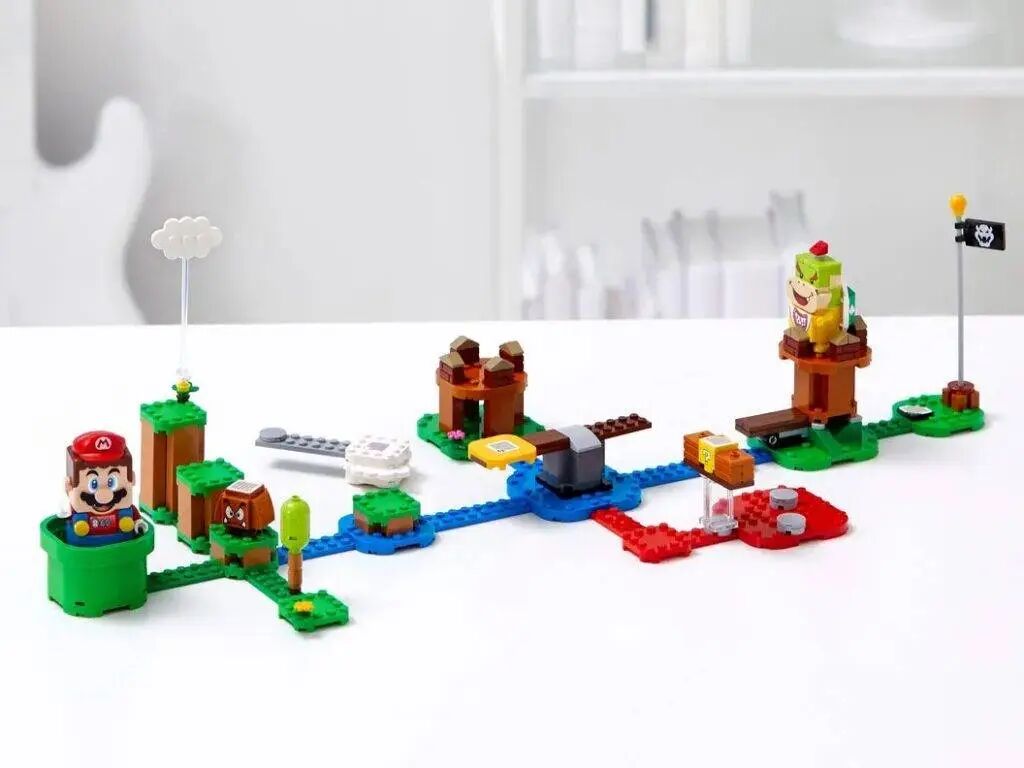
The Mario Set was more of a technological exploration of a co - branded product. The "Smart Bricks" are truly the most significant innovation in Lego's core product line in the past half - century.
