In 2026, Tesla's three aces to defend its position as the number one in energy storage
In the first month of 2026, a financial report presenting a stark contrast between “ice and fire” was laid in front of Elon Musk:
1. Troubled automotive business: In 2025, Tesla delivered 1.636 million vehicles, a year - on - year decrease of 8.6%. For the first time since 2018, it was surpassed by BYD, and the net profit also dropped by 12% year - on - year.
2. Soaring energy storage business: The annual installed capacity reached 46.7GWh, a significant year - on - year increase of 48.7%.

In the first three quarters of 2025, the cumulative revenue of the energy storage business was approximately $8.645 billion, with a stable gross profit margin of over 30%, significantly higher than the average level of 16% in the automotive business.
The proportion of energy storage revenue in total revenue increased to 12.0%, a 3 - percentage - point increase compared to the same period last year.
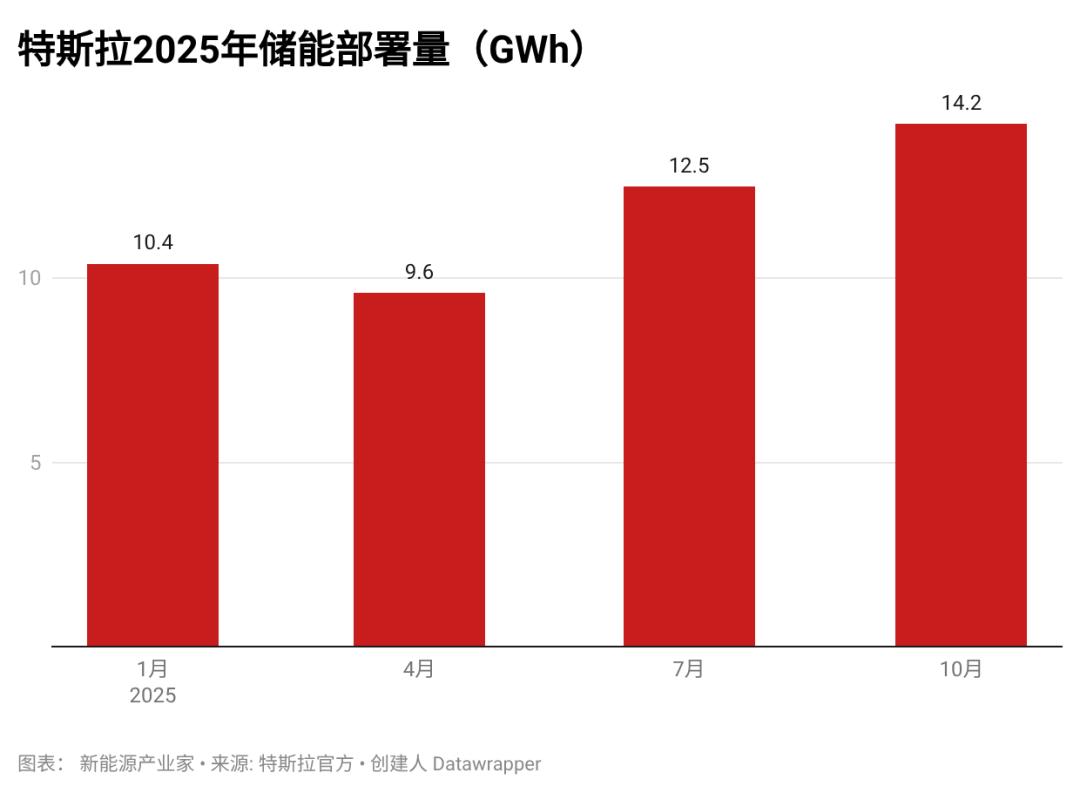
Tesla's energy storage deployment volume compiled based on official financial reports
Although Tesla still holds the top position in the entire energy storage market, there are still concerns in the market about whether Tesla can maintain its leading position. In the large - scale energy storage sector, Sungrow and BYD have overtaken Tesla in multiple rankings.
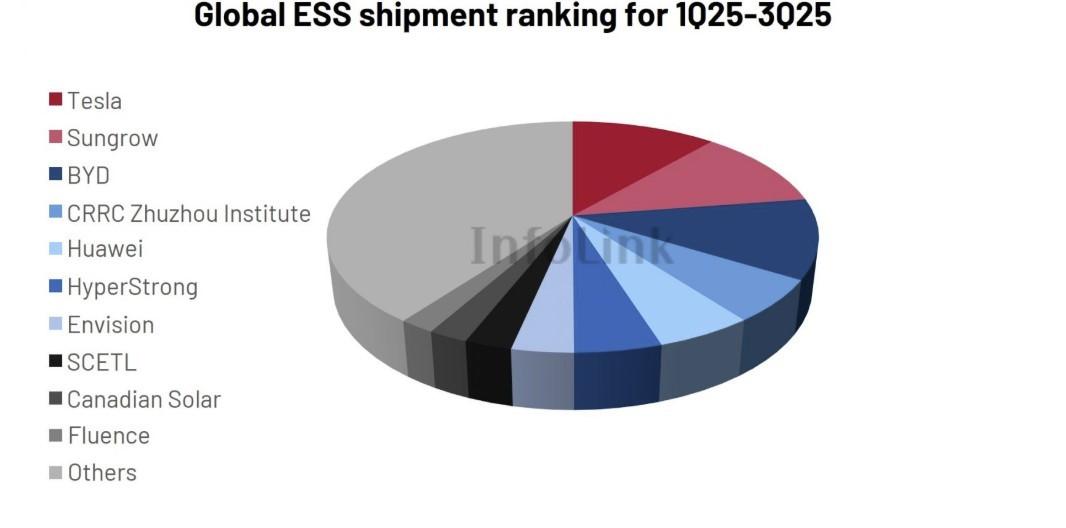
Infolink's global energy storage shipment ranking
Facing the fierce competition from rivals, Elon Musk played three cards to defend his position:
1. Personally involved in the AIDC energy storage business
2. Focus on penetrating emerging markets
3. Skilled supply chain management
Among them, the AIDC energy storage layout can be regarded as the “jokers” in this deck of cards. The core confidence of this trump card comes precisely from Tesla's unique gene of in - depth exploration in the AI field.
After all, no one understands the power demand of AI better than AI players.
01 AIDC's self - proof: The trump card from xAI to Google's supply chain
Tesla's own AI R & D has an urgent demand for energy storage. Although the cancelled Dojo supercomputer was never launched, the Cortex supercomputing cluster that replaced it has become an “internal testing ground” for energy storage technology.
The cluster is located in Texas. Initially, it was equipped with 50,000 NVIDIA H100 chips, which were later expanded to 100,000. It is specifically used for the neural network training of FSD and Optimus robots.

The Cortex cluster data center under construction
The instantaneous maximum power consumption of this computing cluster reaches 130 MW, and it is expected to increase to 500 MW in 2026. At that time, an additional 300MWh of energy storage support will be added, bringing the total energy storage scale to 500MWh.
Not only Tesla's own Cortex cluster, but xAI, a company under Elon Musk's control that focuses on AI, has also become an important scenario for the verification of Megapack technology.
Colossus, xAI's data center, is located in Memphis, Tennessee, at the junction of three states: Mississippi, Arkansas, and Tennessee.
The bridge connecting Arkansas and Tennessee is jokingly called the “Bridge of Freedom” — many speeders choose to cross this bridge along Highway 40 to avoid being chased by state troopers from another state.

The geographical location of Memphis
Elon Musk also took advantage of this loophole, but in the southern part of Mississippi.

The geographical location of xAI's data center
Colossus, which has 200,000 GPUs (initially 100,000), has extremely high power demand. The overall power demand during peak hours is approximately 250MW, equivalent to the power supply scale for nearly 250,000 households.
Therefore, in addition to the 150 MW of electricity specially allocated by the Tennessee Valley Authority (TVA), Elon Musk bypassed Memphis' restrictions on thermal power generation and bought an abandoned gas turbine power plant in neighboring Mississippi to provide over 400 MW of electricity for Colossus.
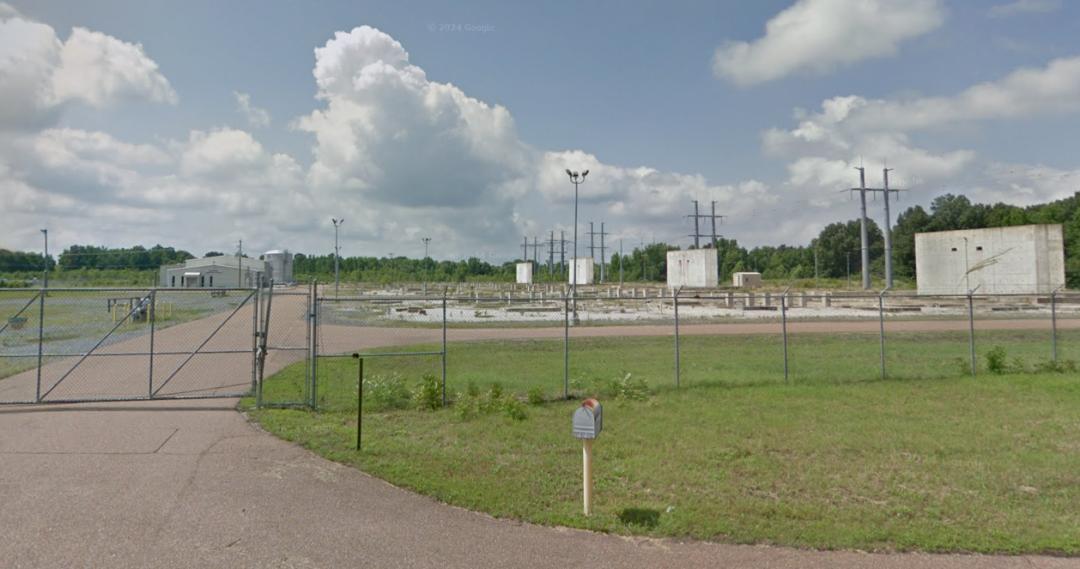
The abandoned power plant bought by Elon Musk. Source: Google Street View
Such a huge power demand naturally requires huge energy storage regulation. xAI has deployed approximately 156 Megapacks on - site in Memphis to provide backup power support for the first - stage Colossus, and has also delivered 168 Megapacks for Colossus 2 as energy storage devices for power backup and load regulation.
Calculated based on the typical capacity of approximately 3.9 MWh per Megapack, this means that the total deployed capacity of the two phases is close to the energy storage capacity of 1.2 GWh. This also makes Colossus the world's first gigawatt - hour - level data center, and Elon Musk also has the intention to expand it.

This positive cycle of “computing power demand - energy storage support - technology iteration” allows Tesla to have a deep understanding of the pain points and technical requirements of AIDC energy storage, accumulating valuable experience for serving external customers.
After Tesla thoroughly understood the technical core of AIDC energy storage through its self - use scenarios, better news came.
Three months after Elon Musk praised “Google's powerful computing power,” in December 2025, Google's parent company Alphabet acquired Intersect Power, a clean energy developer and Tesla's largest customer in the United States, for $4.75 billion.

In July 2024, Intersect Power signed a supply contract with Tesla for 15.3 GWh of Megapacks, which will last until 2030.
The acquisition will be completed in the first half of 2026. Currently, this acquisition has not changed the original supply contract, and there has been no large - scale personnel change. The CEO of Intersect Power has also publicly promised to stay in his position, and the company will continue to operate independently.
For Google, the training of large AI models has extremely high requirements for energy stability. Changing the energy storage supplier may lead to project delays. Tesla's background and experience in “energy storage + AI” make it a good supplier for Google. And Elon Musk is also willing to be this supplier.
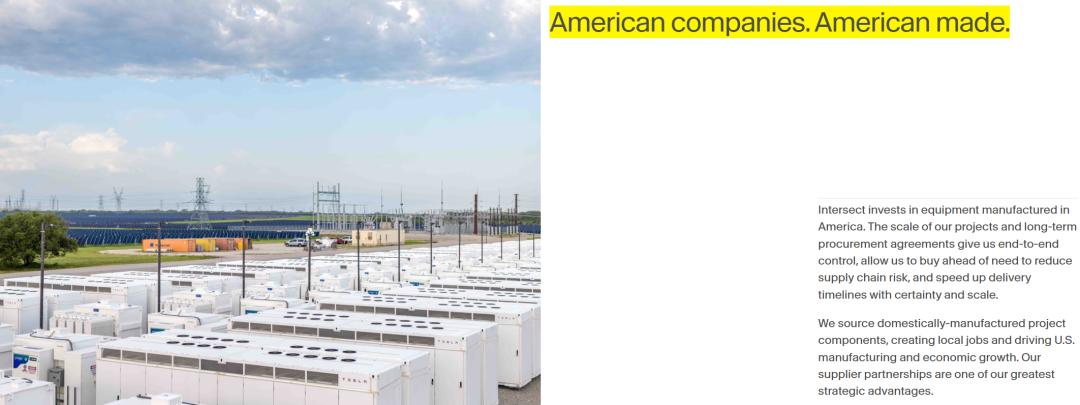
Currently, the 1GWh energy storage system of the Oberon project in California has been put into operation to provide energy security for Google's AI center. In addition, four large - scale projects (more than half of the contract volume) are expected to be put into production by the end of 2027.
As Sheldon, the CEO of Intersect Power, said, the development of artificial intelligence in the United States is stuck in the country's oldest industry - the power industry. The patchwork power grid in the United States was not built for the era of artificial intelligence.

A recent photo of Sheldon, the CEO of Intersect Power
According to Goldman Sachs' research and prediction, by the end of 2030, the power demand of global data centers may increase by 165%. Tesla, with years of experience in large - scale energy storage production and operation and AIDC construction experience, is precisely the “joker” for its strong energy storage business.
02 Advance into emerging markets: Successively won the “largest” projects in Australia and Japan
Australia is a core strategic market for Tesla's energy storage business and is also the main destination for the first batch of goods from the Shanghai Lingang factory.
In 2025, Tesla successfully won the largest - scale grid - level energy storage order in Australian history, the Western Downs Battery project in cooperation with French developer Neoen.
The first and second phases of this project have been connected to the grid for operation, with a total energy storage scale of approximately 540MW/1,080MWh. Approximately 305MW/1,220MWh will be added during the construction of the third phase. After completion, the total energy storage scale of the entire facility will reach approximately 845MW/2.3GWh.

In addition, the 200MW/400MWh project in cooperation with Origin Energy has been operating stably, meeting the daily electricity needs of 200,000 households in South Australia and helping customers reduce peak - shaving costs by 30%.
According to data from Clean Energy Australia, the large - scale energy storage connected to the grid in Australia in 2024 was only about 1.6 GWh. With this single project, Tesla exceeded last year's total installed capacity.
Relying on its technological advantages and the supply guarantee from the Lingang factory, Tesla had a 35% market share in the large - scale grid - level energy storage market in Australia in 2025, firmly ranking first in the industry.
As for Tesla's entry into the Japanese energy storage market, it has been a process of gradual development from small - scale pilot projects to large - scale engineering implementations.
As early as 2022, Tesla, together with local partners, launched Japan's earliest Megapack system in Chitose, Hokkaido, to participate in grid - related auxiliary services such as power unloading and demand - supply adjustment.
Subsequently, Tesla's energy storage systems were put into operation at power stations such as the Sendai Power Station in Miyagi Prefecture, with grid - side energy storage devices of approximately 10MW/43MWh, further verifying their reliability in Japan's high - standard grid environment.
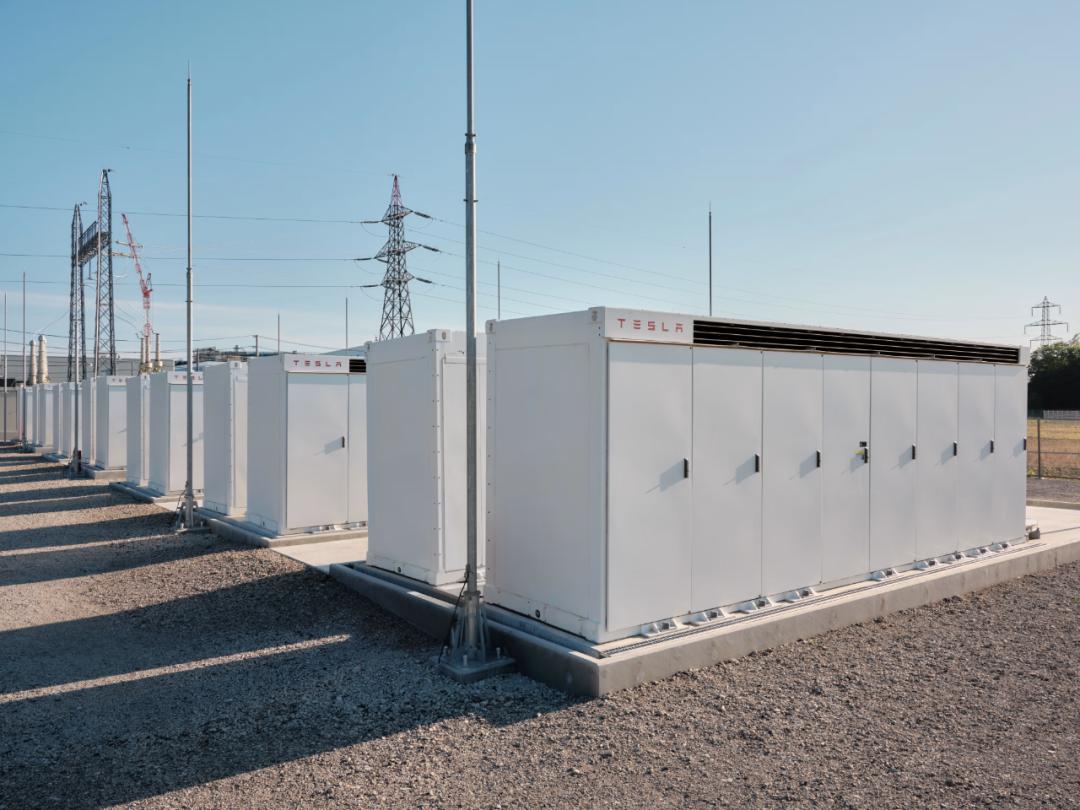
Tesla's Sendai energy storage project