He earned one billion US dollars without writing a single line of code for 30 days.
[New Intelligence Yuan Introduction] In six months, it achieved $1 billion in revenue. This is the miracle created by Claude Code. Just now, an engineer who revealed that he uses Claude Code to let AI write 100% of the code generously shared his configuration! Many industry leaders predict that the four - day workweek is really coming.
If there is an AI that can write 100% of your code, would you still work overtime all night?
Even more surprisingly, this tool is not a project initiated by a large company, nor is it developed through large - scale financing. Instead, it is a side project of an engineer.
In six months, starting as a personal project, it reached $1 billion in ARR (Annual Recurring Revenue), becoming an instant hit and a phenomenon - level tool in the programmer community.
You've probably already guessed it. It's Claude Code.
The father of Claude Code has admitted that in the past 30 days, 100% of his code was written by this AI!
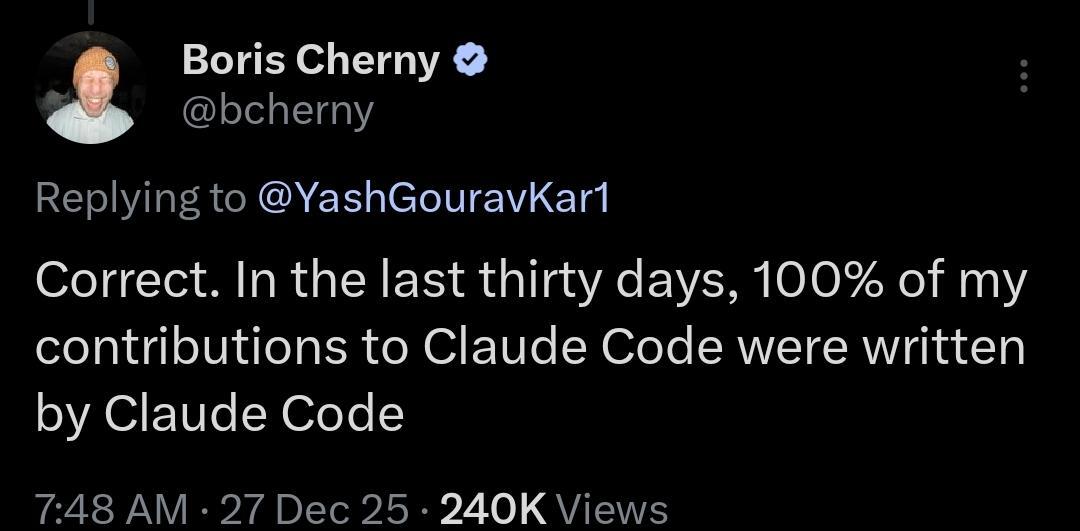
As the development leader of the Claude Code project, Boris Cherny is the soul of Claude Code technology. He was poached by Cursor developer Anysphere with a high salary and then quickly recruited back by Anthropic.

Half a year after launch, revenue exceeded $1 billion
In early December 2025, the AI programming community was in an uproar.
Anthropic announced that its AI coding tool, Claude Code, created nearly $1 billion in annualized revenue just six months after its launch. This is the most remarkable record in the history of AI programming tools, outperforming many large companies' half - year results!
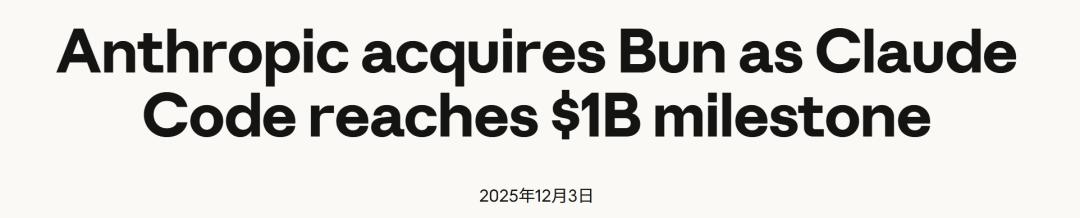
At the same time, it completed a stunning first strategic acquisition - acquiring the developer tool Bun. This means that AI coding tools have entered the era of mid - and back - end infrastructure, and the enterprise paid market has been opened!
The key secret behind Claude Code's amazing growth rate is that it is not just a simple "code completer" but an AI digital "coder colleague".
Ordinary AI tools can at most complete code snippets and explain bugs, but Claude Code aims to understand the entire project context, automatically design, generate, and test code, and deeply integrate with real - world workflows!
This means that whether it's writing functions, debugging, or packaging, the AI can complete these tasks automatically. It can be "summoned" with a single command in the terminal/IDE, and there's almost no need to write redundant code manually.
It can be said that it is already an AI engineer that can independently write projects with you.
This is why, just six months after its launch, Claude Code achieved nearly $1 billion in annualized revenue through enterprise paid subscriptions and the commercial API version.
This figure is higher than the annual revenue of many traditional software companies!
The father of Claude Code shares his experience in person
Since Boris Cherny, the father of Claude Code, admitted that 100% of his code was written by Claude Code, the AI community was shocked: How did he do it?
Just now, Boris generously shared his configuration!
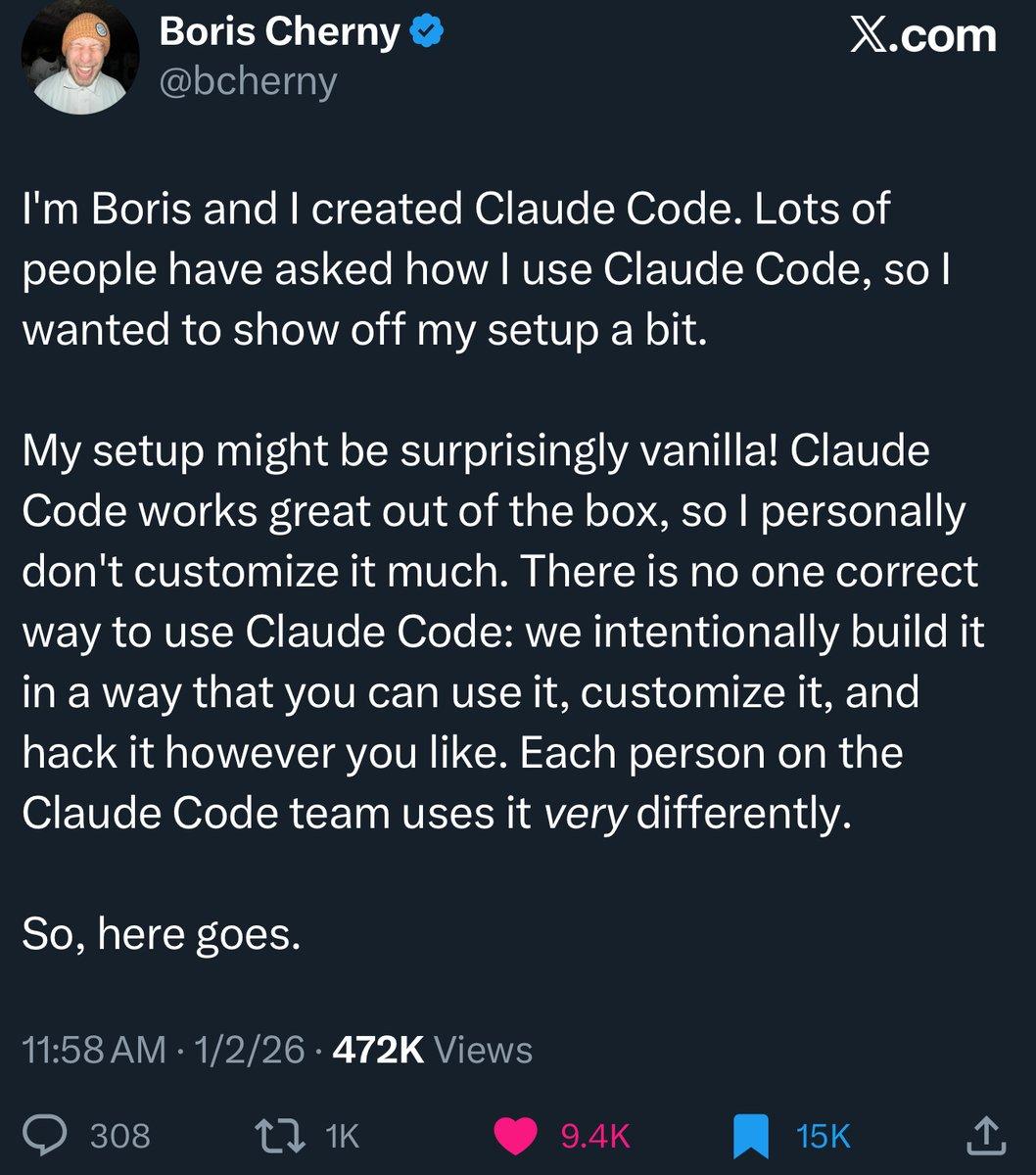
Surprisingly, this configuration is incredibly simple.
It can be said that Claude Code is ready to use out of the box and works well, so Boris Cherny rarely customizes its settings.
The specific steps are as follows.
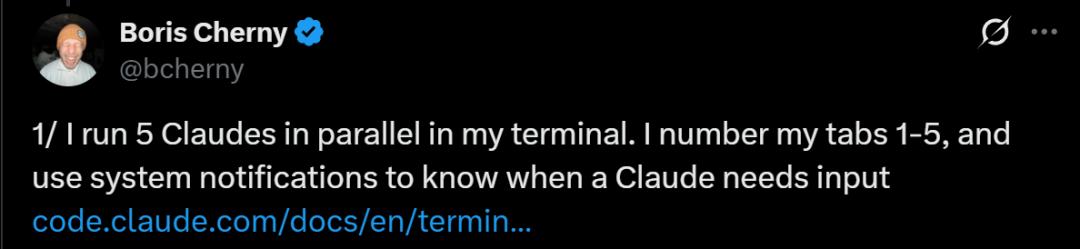
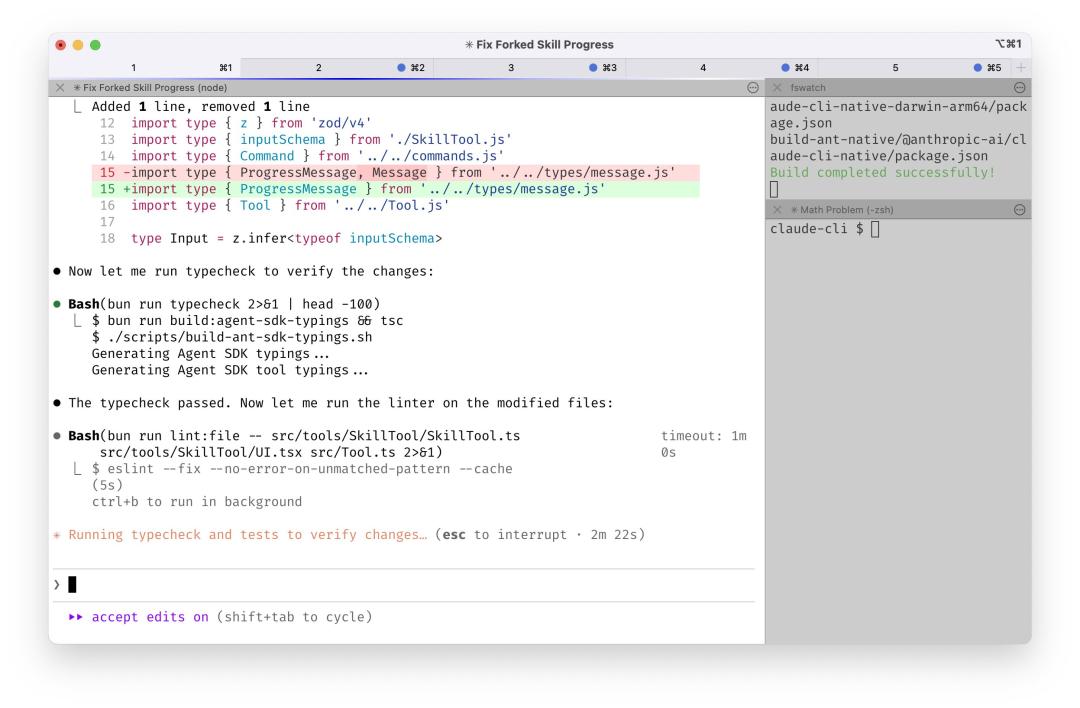
1. Run 5 instances of Claude in parallel in the terminal.
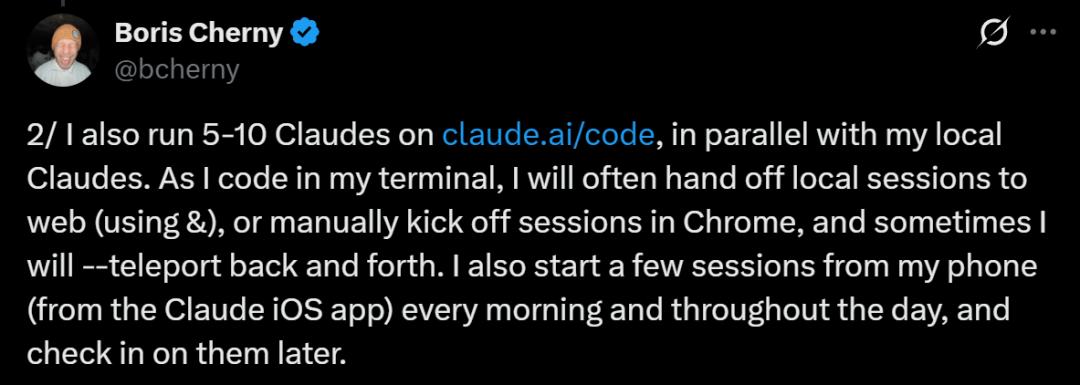
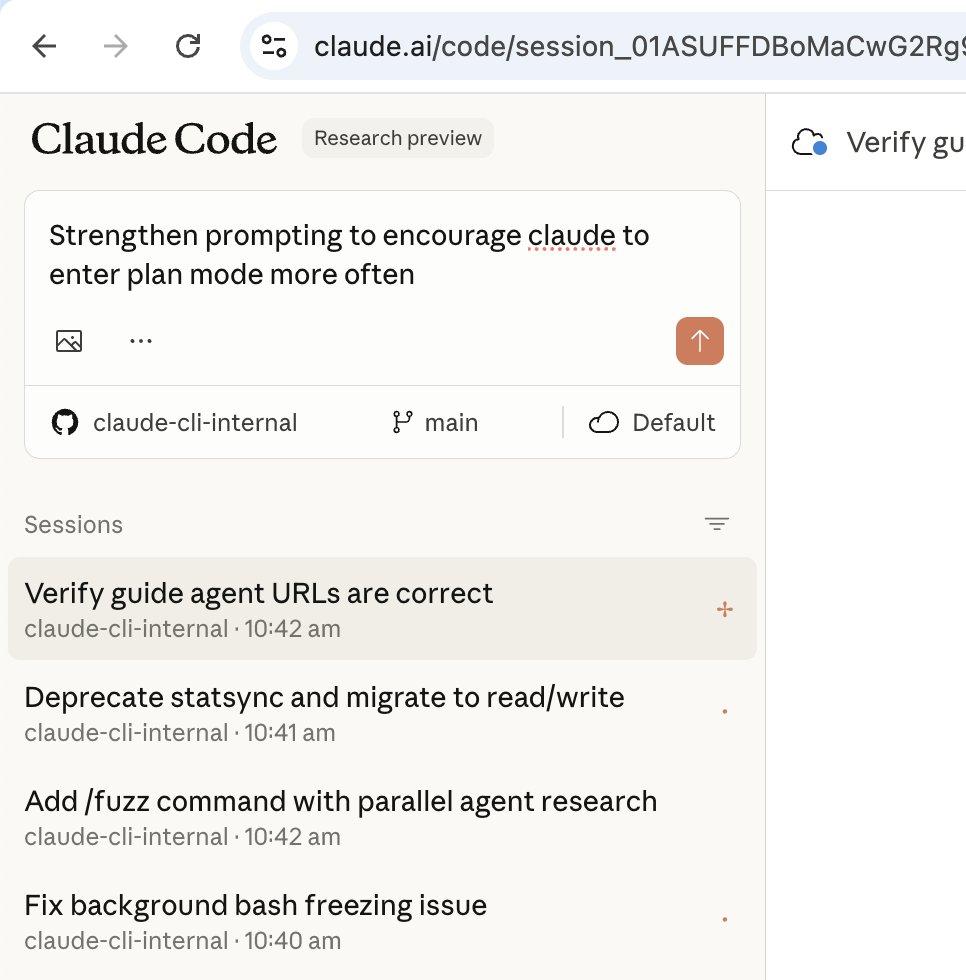
2. Also run 5 - 10 instances of Claude simultaneously on Claude.ai/code.
When coding in the terminal, he often transfers local sessions to the network or manually starts sessions in Chrome and sometimes transfers them back and forth.
Every morning and throughout the day, he starts several sessions from his phone (via the Claude iOS app) and then checks them.
Then, he uses Claude Opus 4.5 for thinking. It can be said that this is the best programming model he's ever used. Although it's larger and slower than Sonnet, it requires less guidance and is better in tool usage, so it's almost always the fastest among small models.
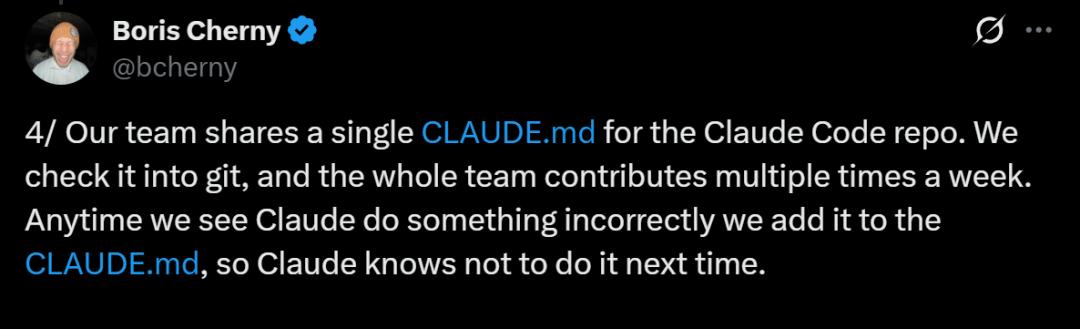
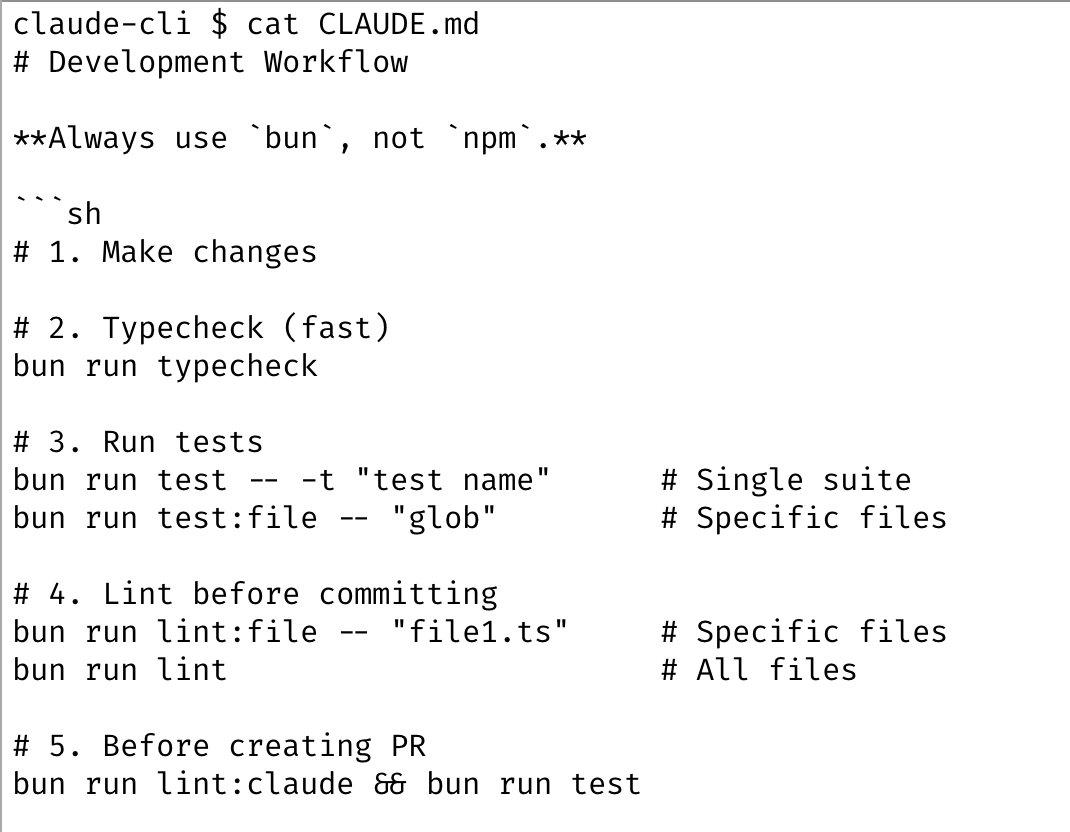
Boris's team shares a CLAUDE.md file for the Claude Code repository. They commit it to git, and the whole team contributes multiple times a week.
Every time they see Claude make a mistake, they add it to CLAUDE.md so that Claude knows not to do it again next time.
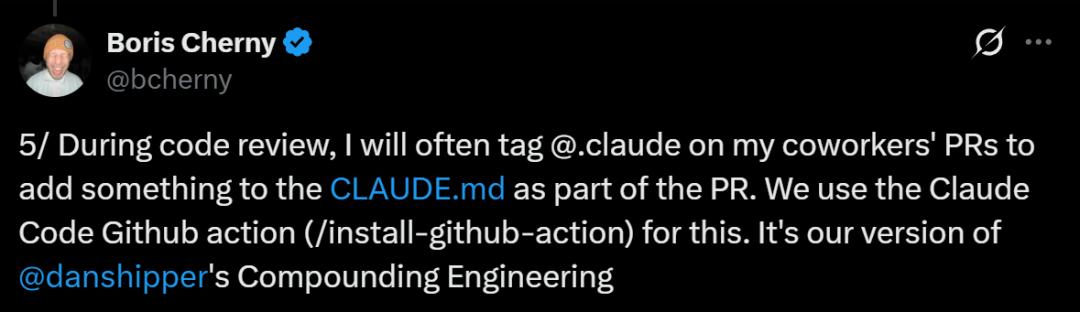
During code reviews, he often marks @.claude on his colleagues' PRs to add certain content to CLAUDE.md as part of the PR. They use the Claude Code Github action (/install - github - action) to achieve this.

Most sessions start in Plan mode. If the goal is to write a Pull Request, he uses Plan mode and communicates with Claude back and forth until he's satisfied.
Then, he switches to the automatic acceptance editing mode, and Claude usually completes the task in one go.
A good plan is really important.


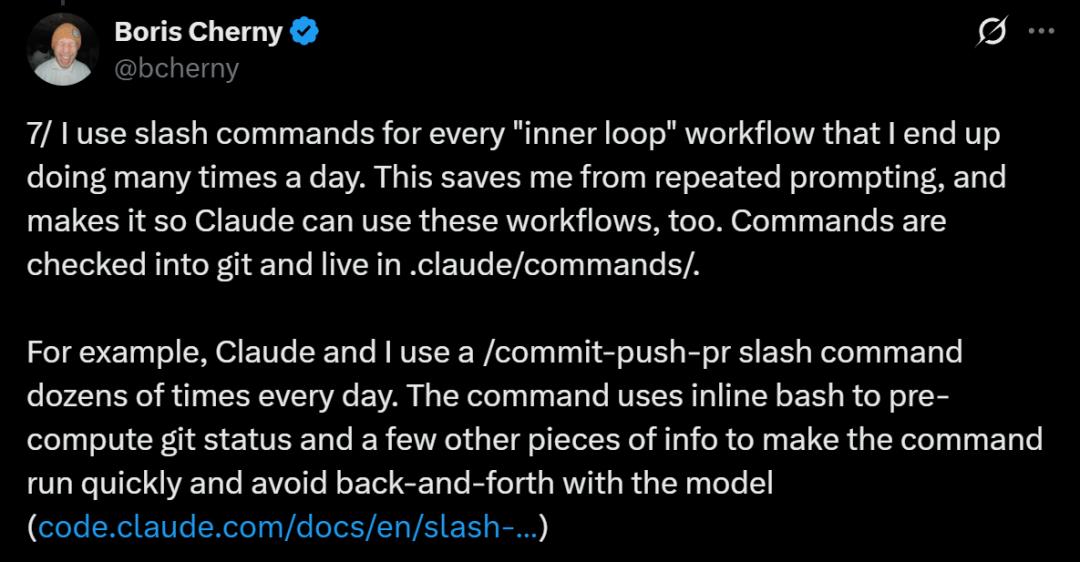
Boris said that he uses slash commands for the "inner - loop" workflows that he executes multiple times a day. This way, he doesn't have to repeat writing prompts, and Claude can also directly use these workflows.
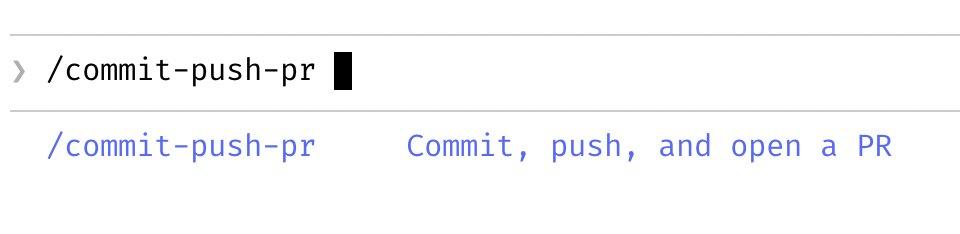
For example, both Claude and he use the /commit - push - pr slash command dozens of times a day.
This command embeds a bash script directly, pre - calculating the git status and some other information. This makes the command execute faster and avoids back - and - forth confirmation and communication with the model.
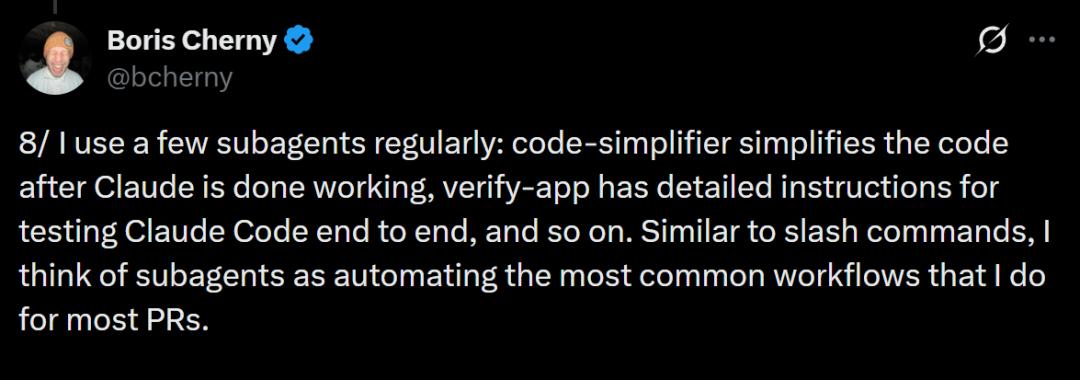
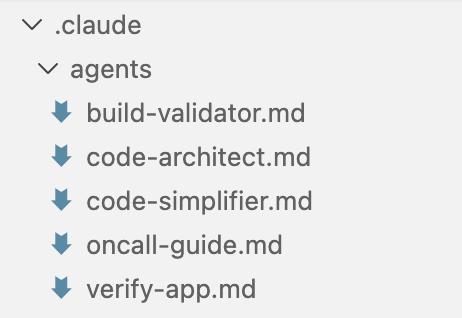
Boris often uses several sub - agents.
For example, code - simplifier is responsible for simplifying the code after Claude finishes writing it; verify - app has a very detailed set of instructions for end - to - end testing of Claude Code, etc.
Similar to slash commands, Boris views sub - agents as automated encapsulations of the most common workflows in most PRs and assigns repetitive and fixed processes to them.
His team often uses the PostToolUse hook to format the code generated by Claude.
Claude usually generates well - formatted code from the start, and this hook is mainly responsible for the last 10% of the details to avoid errors due to formatting issues in CI.