Sued by Cook for leaking secrets, he simply "gave up": All details of the foldable iPhone are exposed, and the price may exceed 14,000 yuan.
In Apple's world, leaks have always been a "cardinal sin."
If we were to list the people who give Apple's public relations and legal departments the most headaches, there would surely be three names on that list:
- One is Bloomberg journalist Mark Gurman, who has been consistently leaking Apple's roadmaps in advance.
- Another is analyst Ming-Chi Kuo, who is known for his supply-chain research and whose "leaks are more accurate than official announcements."
- And topping the list, the one Apple has truly "gone all out" to sue, is YouTuber Jon Prosser.
In July this year, Apple officially sued Jon Prosser for leaking information about iOS 26 and the brand - new Liquid Glass design language. It was thought that this would make this veteran leaker lie low for a while, but unexpectedly, on Christmas Eve, he just "threw caution to the wind" and released a complete 3D rendering video claiming to be of the foldable iPhone.
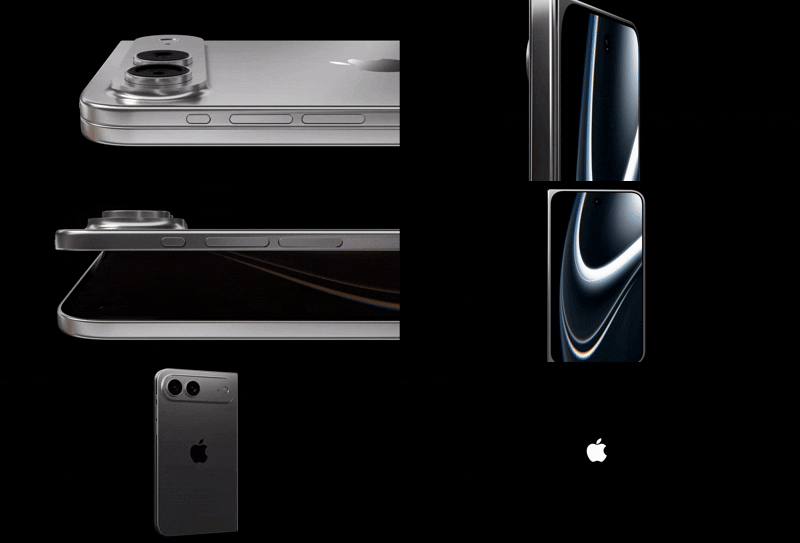
According to the normal schedule, this product was originally supposed to make its official debut in the fall of 2026.
It is said that there will only be three new iPhones next year
In the leak video, the first piece of information Jon Prosser revealed at the beginning was shocking enough:
"Next year, Apple will only release three new iPhones: the iPhone 18 Pro, the iPhone 18 Pro Max, and the brand - new iPhone Fold (the foldable iPhone) - this could very well be your next phone."
Yes, there will be no standard version, no Plus, and no Air. The foldable iPhone will become the only truly "new category" and directly occupy the position of the "highest - end model of the year." Behind this, it is actually highly related to Apple's product performance in the past two years.
- The iPhone mini has proven to be unpopular.
- The iPhone Plus has long been at the bottom of the sales list.
- The latest iPhone Air, despite its amazing craftsmanship, has been reported to have dismal sales, and there may not even be a next - generation model.
In this context, Apple has clearly realized that "minor upgrades" can no longer stimulate the desire to change phones, and it must make a real leap in form. This also means that the pricing and positioning of the iPhone Fold will be much higher than any previous iPhone.
Has Apple "solved" the biggest pain point of foldable screens?
According to Jon Prosser, Apple internally tested two folding forms for the foldable screen: one was a vertical folding design similar to the Galaxy Z Flip, and the other was a horizontal folding design similar to the Z Fold. In the end, Apple chose the latter, with only one reason: they believe they have "accomplished the impossible" - making the crease in the middle of the foldable screen disappear.
Considering that many Apple fans may not pay much attention to phones from other brands, Jon Prosser first gave a brief introduction to the current situation:
The biggest enemy of foldable screens has never been thickness, weight, or price, but the crease. No matter how cool the manufacturers' promotions are, as long as it is a foldable OLED screen, you can definitely see and feel the crease in the middle from multiple angles. This is not a design flaw but an inevitable result of the repeated bending of the OLED screen.
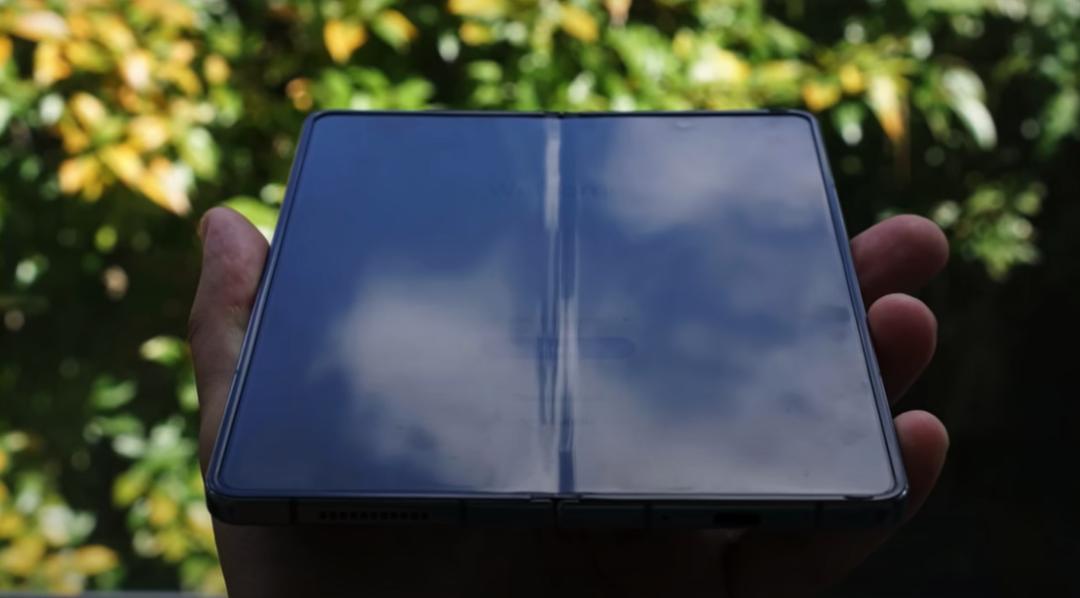
Regarding this pain point, Jon Prosser said that Apple's "black - tech" solution is to add a metal pressure - distributing plate under the screen to disperse the folding pressure, and then use liquid metal materials in the hinge to improve the structural strength and durability. In fact, several supply - chain sources have previously mentioned that Apple's investment in foldable structure testing is much higher than that of any Android manufacturer.
Therefore, even though Jon Prosser thinks that "a foldable screen is a bit unnecessary," he also admits that if the crease can really "disappear," this will be Apple's biggest trump card in entering the foldable - screen market.
What exactly does the foldable iPhone look like? Its size and structure have all been exposed
According to Jon Prosser, the form of the iPhone Fold is roughly as follows:

That is to say, when you fully unfold it, the thickness of this phone is only 4.5 millimeters - this is a rather extreme thickness.
You know, the "thinnest iPhone to date," the iPhone Air, has a thickness of 5.6mm, which is so thin that it's "almost just a USB - C port." If Jon Prosser's statement is true, the single - side thickness of the unfolded iPhone Fold is more than 1 millimeter thinner than that of the iPhone Air, almost reaching the engineering limit.
However, regarding the idea of "putting an iPad - level large screen in a phone," Jon Prosser "poured cold water" on it, saying, "Whether you want such a large screen is your choice. Anyway, I don't need it."
With a starting price of $2000, will the foldable iPhone "repeat past mistakes"?
In addition to the changes in the screen, in terms of the camera, Jon Prosser said that the iPhone Fold will be equipped with a four - camera system: 1 on the outer screen, 2 on the rear, and 1 on the inner screen. In addition, Face ID will be completely removed and replaced by Touch ID integrated into the power button, and the power button will return to the top of the phone body.
The logic behind this is not complicated: in the foldable - screen form, the structural complexity and cost of Face ID will increase exponentially, and its reliability is also difficult to guarantee. The Touch ID on the power - button solution has already been proven to be mature on the iPad Air/mini.
In terms of network connectivity, the iPhone Fold will be equipped with Apple's second - generation self - developed modem, the C2, which supports full - band cellular networks. The most interesting part is the battery life: thanks to the slimming of the display driver chip, Apple can fit a higher - density battery in the freed - up space. Coupled with the improved energy efficiency of the C2 modem, the battery life of the iPhone Fold will be improved.
Jon Prosser even half - jokingly said, "This phone might even last for more than two hours when it gets hot." Although it's just a joke, it at least shows that Apple is making battery life one of the key selling points of the iPhone Fold.
"In terms of color, the iPhone Fold will initially only be available in black and white, and the price will be very, very expensive," he leaked. The price of the iPhone Fold is likely to be between $2000 and $2500 (equivalent to about 14,000 - 17,500 yuan).
If the starting price of the foldable iPhone really exceeds $2000, then the question is: Are consumers really willing to pay so much more for a "foldable" phone? Undoubtedly, Apple has its own popularity, but the market performance of the iPhone mini, iPhone Plus, and iPhone Air also shows that not all "cooler forms" will be well - received by users.
From the almost unanimous comments of netizens after Jon Prosser's leak, it can be seen that most people don't seem to be very optimistic about the iPhone Fold:
- "I don't want an iPhone with a bigger screen (I have an iPad, which is enough for me). I want a more compact model. It would be better to make the existing iPhone size foldable."
- "I have a phone, an iPad, and a desktop computer, and they all have their own uses. I can't think of any scenario where I would want to use a foldable phone. It just seems like a gimmick, not something users really need."
- "To be honest, the iPhone is no longer what it used to be. Since the iPhone 7, it's basically the same thing with a different package. There's no longer any sense of novelty."
So, are you looking forward to the foldable iPhone, and can you accept its price?
Reference link:
https://gizmodo.com/leaker-who-apple-is-suing-says-screw-it-heres-the-foldable-iphone-early-2000703449#comments
This article is from the WeChat official account "CSDN," and is published by 36Kr with authorization.