DeepSeek went viral overnight, Labubu triggered a global buying spree, and there was an "epic" food delivery war... A comprehensive review of the top ten business events in China in 2025.
Looking back at 2025, it is destined to be a "Year of Reshaping" written into the business annals.
The first thunderclap at the beginning of the year did not come from a grand strategic release. Instead, DeepSeek shattered the profit - making myth of Silicon Valley with its ultimate "cost paradigm". It not only triggered a global re - evaluation of the value of AI assets but also made tech giants like Alibaba and ByteDance shift from mere "showcasing skills" to close - combat competition in C - end applications and hardware implementation.
AI is no longer an unattainable concept. It has become a variable that truly penetrates the business fabric through price wars and breakthroughs in computing power.
While technology was advancing at a breakneck pace, the capital market also underwent a thrilling stress test. Facing the darkest moment triggered by the external tariff storm, the "national team" resolutely entered the market in the form of a stabilization fund. It not only stabilized the bottom line of the market but also paved the way for the explosion of hard - core technology.
From the collective sprint of the "Four Little Dragons" of domestic GPUs towards IPOs, to the official launch of L3 - level autonomous driving with licenses, and then to the hard - core breakthroughs in nuclear fusion and reusable rockets, the focus of Chinese business is accelerating the shift from model innovation to underlying technology and high - end manufacturing.
In the more consumer - and service - oriented fields closer to daily life, the battle is equally fierce and full of tension. JD.com aggressively entered the food delivery market, breaking the old duopoly and triggering a new round of competition in efficiency and subsidies. Meanwhile, Pop Mart proved the global penetration power of Chinese IPs to the world with the phenomenal popularity of Labubu overseas.
In 2025, Chinese business witnessed both hard - core breakthroughs reaching for the stars and intense competition in the existing market. In this year full of uncertainties, resilience and breakthrough became the most real footnotes.
Here are the top ten representative Chinese business events of 2025, as compiled by Wall Street News:
From NVIDIA's "Darkest Moment" to the "Re - evaluation of Chinese AI Assets", DeepSeek Triggered a "Cost Paradigm Shock"
Looking back at late January 2025, the global tech community experienced an unprecedented upheaval, all starting with the startup DeepSeek.
On January 20th, DeepSeek quietly released the R1 inference model, which didn't initially cause a big stir. However, as the news spread, by the weekend of January 24th, its performance comparable to OpenAI's o1 on various lists shocked Silicon Valley.
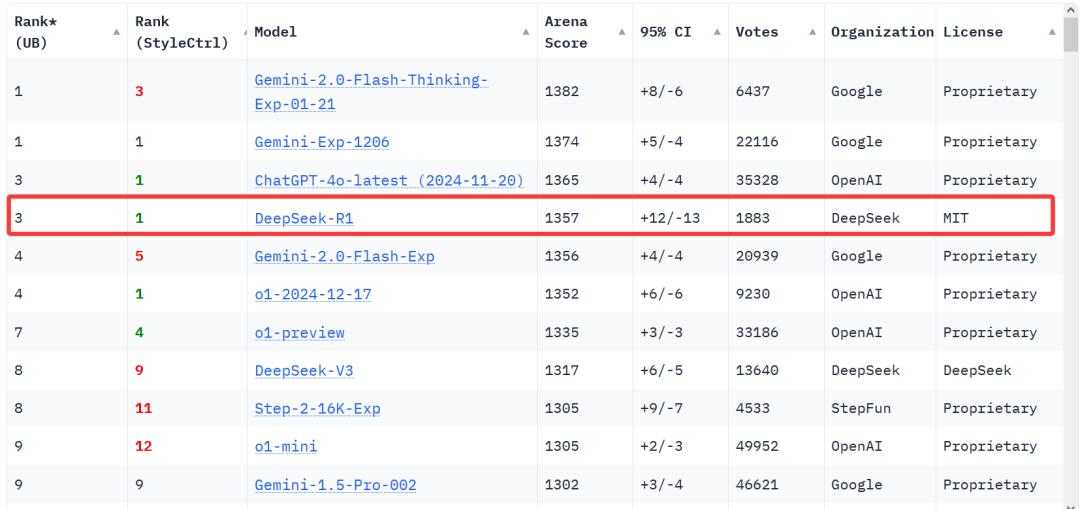
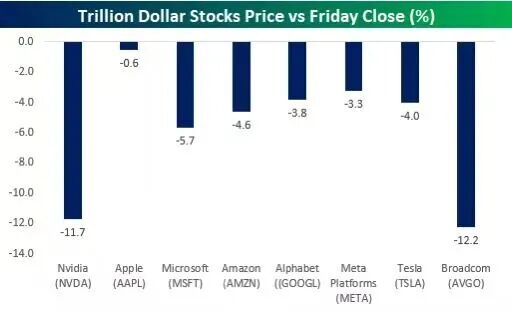
The real climax occurred on the "DeepSeek Night" of January 27th. Due to the market panic caused by its sudden popularity, the US stock chip sector was severely hit. NVIDIA's stock price plummeted due to "short - selling" - like doubts, and its market value evaporated by nearly $600 billion overnight, setting a record in the history of the US stock market.
The core of this upheaval lies in the "cost paradigm shock" brought by DeepSeek. The market originally believed in the idea of "success through massive investment", thinking that top - notch AI models must rely on hundreds of billions of dollars in capital expenditure and a mountain of top - grade chips.
However, DeepSeek R1 revealed a chilling new reality: with only 2,000 graphics cards and a training cost of about $6 million, less than one - tenth of the cost of OpenAI's o1, it can achieve the same level of inference ability.
This ultimate "cost - performance ratio" directly shattered Wall Street's tolerance for the bottomless capital expenditure of tech giants, forcing investors to re - evaluate the actual effectiveness of hundreds of billions of dollars in investment.
The butterfly effect of DeepSeek quickly spread to the capital market, triggering a global "re - evaluation of Chinese AI assets". Just a few days after NVIDIA's plunge, the market began to shift its focus to Chinese assets.
By January 31st, the Nasdaq Golden Dragon China Index soared by more than 4%. Chinese tech giants represented by Alibaba and Baidu followed the upward trend, and the capital inflow into Internet ETFs reached a four - month high.
Investors realized that Chinese tech companies are opening up a path of innovation different from Silicon Valley's "money - burning model" with their extremely low inference costs and efficient open - source ecosystem.

This one - week period became a watershed in the history of AI development. From the amazing debut of DeepSeek R1, to the collapse of NVIDIA's market value, and then to the counter - trend rise of Chinese assets, the market logic has been completely rewritten.
Facing the Global Tariff Storm, the National Team Resolutely Deployed the "Stabilization Fund"
On April 7th, affected by a new round of US tariff policies, the global financial market instantly plunged into its darkest moment. The stock markets in Japan and South Korea tumbled at the opening, and the A - share market suffered an extremely rare "Black Monday". The ChiNext Index plummeted by more than 9% in a single day.
Facing the severe upheaval caused by external geopolitical games, market panic spread rapidly, and the resilience of the Chinese capital market was severely tested.
Just when market confidence was on the verge of collapse, the "national team" stepped forward resolutely in this critical moment. On the afternoon of April 7th, Central Huijin Investment Co., Ltd. broke the silence first, announcing its firm confidence in the future of the Chinese capital market and stating that it had bought exchange - traded funds (ETFs).
Following closely, central state - owned enterprises under the supervision of the State - owned Assets Supervision and Administration Commission of the State Council, such as China Chengtong Holdings Group and China National New Energy Investment Group, also announced share - increasing plans. These timely "real - money" investments, like a stabilizing anchor, demonstrated the official's firm determination to maintain market stability.
Before the morning session on April 8th, a more powerful "combination punch" landed, pushing the market - protecting action to a climax. Central Huijin solemnly declared its strategic position as a "stabilizer" and a quasi - "stabilization fund" in the capital market, promising to increase its shareholding evenly and with greater intensity, and emphasizing that it would "act resolutely when necessary".
More importantly, the People's Bank of China immediately voiced its support, promising to provide sufficient re - loans to Huijin when necessary. Thus, the Chinese - style stabilization fund model of "Huijin is responsible for investment, and the central bank promises to provide funds" officially emerged, providing a solid liquidity backstop for the market.
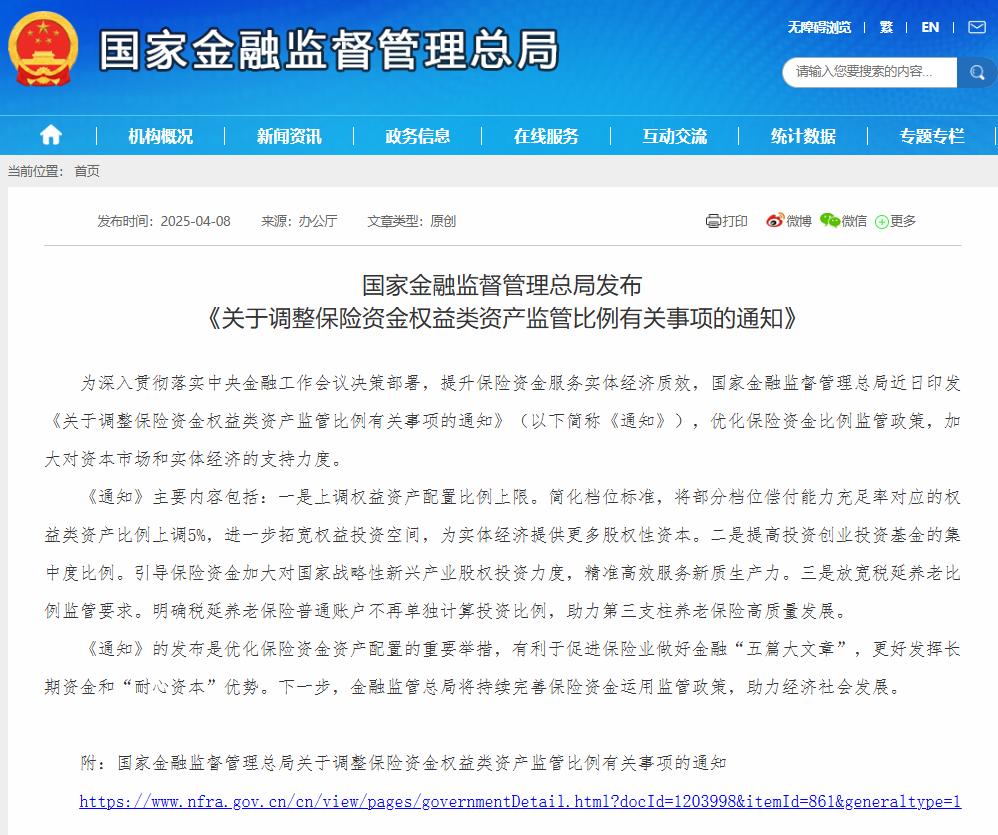
Meanwhile, the policy side also coordinated its efforts intensively. The National Financial Regulatory Administration issued a notice to optimize the supervision policy of insurance funds and raise the upper limit of the equity asset allocation ratio. This measure further broadened the space for long - term funds to enter the market, aiming to inject continuous "fresh water" into the real economy and the capital market and improve the long - term mechanism for maintaining market stability at the institutional level.
In the stormy waves caused by the global tariff war, the official's action was particularly timely and heroic. From Huijin's vanguard role to the central bank's guarantee, a complete and efficient crisis - response mechanism quickly came into operation.
This not only effectively curbed the irrational fluctuations in the market but also sent a strong signal to the world that China is determined to safeguard financial security and ensure the stable operation of the capital market, greatly boosting investors' confidence.
Labubu Triggered a Global Buying Craze, and Pop Mart's Stock Price Reached a Record High
In the first half of the year, Pop Mart, a leading Chinese trendy toy company, set off a global buying craze with its star IP, LABUBU. This "naughty" character with extremely long ears and a smile showing nine teeth quickly evolved from a niche toy to a phenomenon - level cultural symbol.
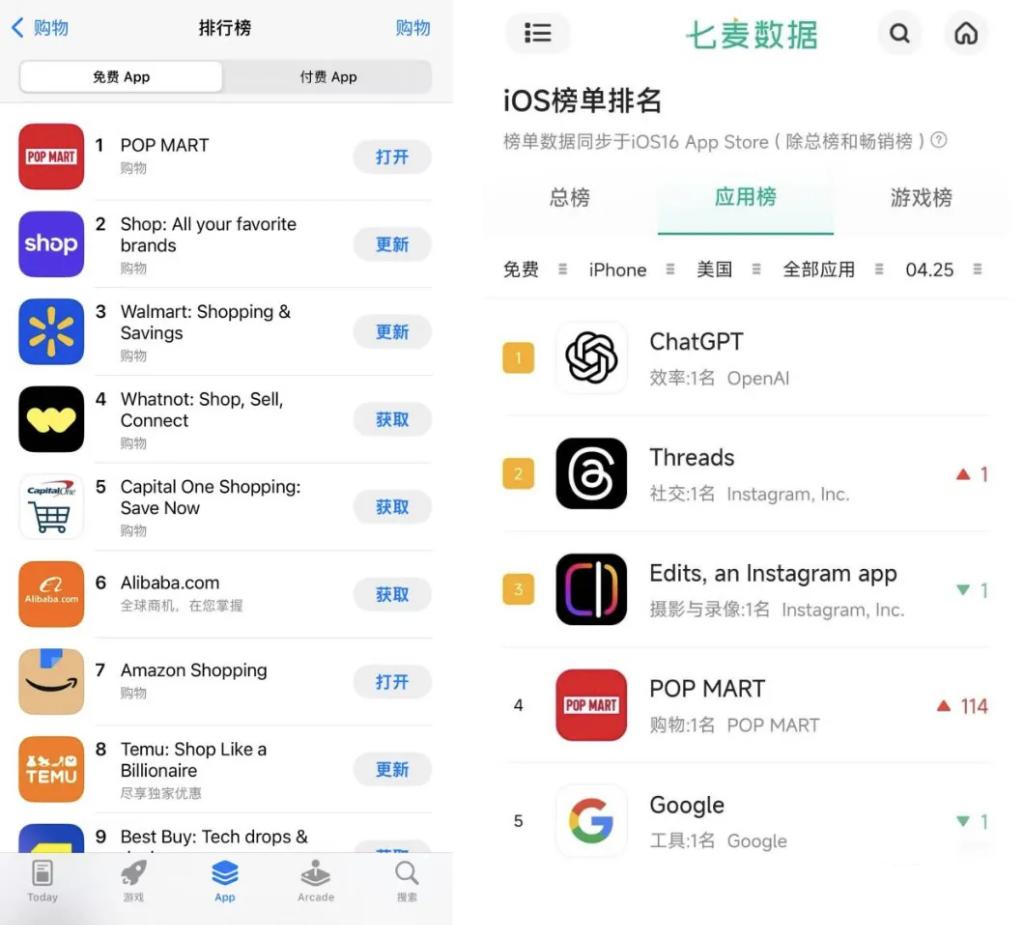
On April 24th, the third - generation "High - Energy Ahead" series of LABUBU was globally launched. That night, the topic of "grabbing Labubu" topped the Weibo hot - search list. Pop Mart's APP topped the shopping list on the US App Store for the first time, and long queues formed outside its global stores in cities like Los Angeles, London, and Milan.
Celebrities such as the Princess of Thailand and David Beckham showed off their LABUBU toys. The number of TikTok followers soared by 68%, and it became the champion of retail sales in April.
This craze was directly reflected in the financial reports: In the first quarter of 2025, the company's overall revenue soared by 170% - 175% year - on - year. The revenue in the American market increased nearly nine - fold, and that in Europe increased six - fold. The revenue of THE MONSTERS series reached 3.04 billion yuan in 2024, soaring by 726.6% year - on - year, making it the company's top - selling IP.
The capital market was equally enthusiastic. Pop Mart's stock price soared by more than 200% in the first half of the year, and on April 28th, it rose by more than 10% in a single day, reaching a record high. In June, at least five investment banks, including Citigroup, Deutsche Bank, and Morgan Stanley, collectively raised their target prices. Citigroup was the most aggressive, raising the target price to HK$308, an increase of 90%.
In the second half of the year, the market fever became more rational, and the stock price corrected by nearly 30%. However, institutions still thought highly of its long - term value: After the correction, Citigroup reaffirmed its "buy" rating, indicating an upside potential of 91.8%, citing the confirmation that LABUBU 4.0 will be launched in 2026 and that Sony Pictures has obtained the movie adaptation rights, suggesting that the IP value has not been fully realized.
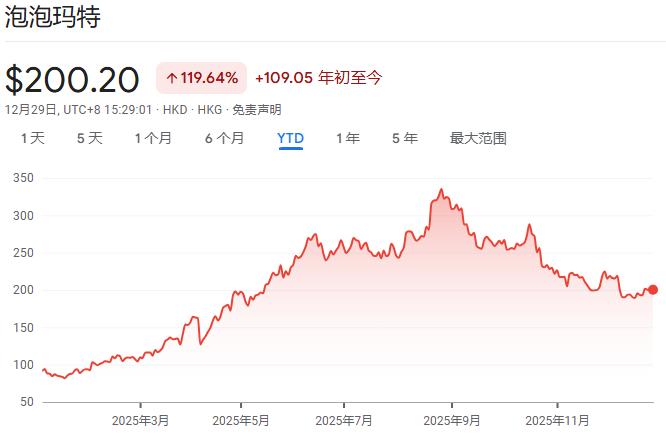
From Southeast Asia to Europe and the United States, from online to offline, Pop Mart proved the global penetration power of Chinese IPs with a single monster doll. This market journey from frenzy to rationality is a microcosm of the realization of globalization ambitions.
JD.com's Aggressive Entry Ignited the Food Delivery War in July
The food delivery market in 2025 was also in turmoil. With JD.com's high - profile entry and the fierce competition between Alibaba and Meituan, a "three - way battle" pattern covering the entire industry was taking shape and officially erupted in July.
As a new disruptor, JD.com showed a strong offensive. In mid - April, JD.com announced that its daily food delivery orders exceeded 5 million. It not only achieved a five - fold increase from one million to five million in three weeks but also emphasized that its GMV scale surpassed that of the "ghost food delivery" with a scale of over ten million.
To support business expansion, JD.com plans to recruit 50,000 full - time riders and pay the full amount of the five social insurances and one housing fund. Relying on more than 100,000 offline stores, it has fully rolled out the "self - operated instant delivery" service, focusing on high - quality products and 30 - minute express delivery.
Just as JD.com was making steady progress, the established giants in the food delivery industry fought a head - on battle on the evening of July 5th. The trigger was Taobao Flash's previously announced 50 - billion - yuan subsidy plan, aiming to impact Meituan's market share with large - value red envelopes.

Meituan quickly counterattacked, and both sides offered huge coupons such as "21 - yuan discount for every 25 - yuan purchase", "16 - yuan discount for every 16 - yuan purchase", and even "free purchase". The crazy subsidies attracted a large number of users to grab orders. A cup of Luckin coffee cost as low as 2.2 yuan, and hamburgers were almost free. The huge traffic impact caused Meituan's server to crash temporarily, and the number of Meituan's instant retail orders finally exceeded 120 million on that day, setting a new record.
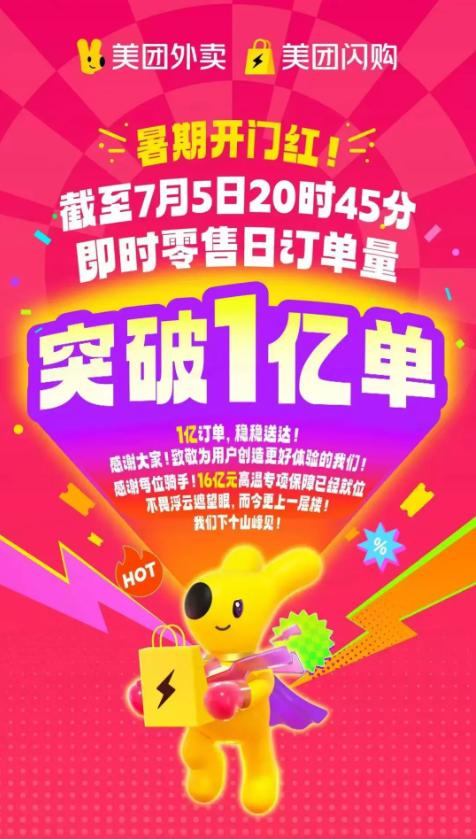
Goldman Sachs analysis pointed out that the essence of this battle is not simply to compete for food delivery profits. Instead, the giants are using the high - frequency food delivery business to acquire traffic and then support their high - profit e - commerce and other businesses. The future market may present a new tripartite situation of Meituan, Alibaba, and JD.com.
Although high - value subsidies will cause short - term profit pain, this intense price war marks that the Chinese instant retail market has entered a new stage of competing for existing customers and efficiency.
Targeting ChatGPT! Alibaba's "Tongyi Qianwen" Enters the C - end Market
Facing the fierce competition in the global AI wave, tech giant Alibaba planned a major transformation.
In November, Alibaba comprehensively revamped its flagship AI application, "Tongyi", and officially renamed it "