What do businesses really need in the next phase of cross-border payments? | A conversation with WU Yujun, founder of Qbit
A significant change is taking place in the cross - border payment industry.
Companies going global are becoming more diverse:
The market is more fragmented, operations are more localized, and organizational structures are flatter. Meanwhile, more and more companies are relocating their cost centers to Hong Kong, Singapore, or even setting them up near the business sites.
This has made an issue increasingly prominent - companies no longer only care about how to "receive" money, but also about whether this money can be used in a long - term, compliant, efficient, and large - scale manner.
In an exchange on cross - border payment and global corporate treasury management, Wu Yujun, the founder of Qbit, a representative Neobank company, made a very clear judgment:
As companies become more globalized, competition in cross - border payment is becoming more multi - dimensional: In addition to payment channel capabilities, how funds are used, managed, and supported on a large scale is becoming an increasingly important part.
This judgment does not come from conceptual deductions but from the long - term practice of Qbit, a global team that has been operating at high speed in real - world business.
When "virtual cards" are no longer just a payment tool
In many people's perception, "virtual card companies" are essentially just tool providers:
They provide companies with a card to pay for overseas platforms, subscribe to services, and pay for advertising.
However, in real corporate operations, the problems are far more complex.
As the customer base expands and the market becomes more widespread, companies often face more fundamental and systematic problems:
- With multiple projects and teams running in parallel, it is difficult to split and control budgets.
- When advertising, service subscriptions, and travel expenses occur simultaneously, it is difficult to reconcile accounts.
- Once the business scale grows, the costs of risk control and compliance increase sharply.
- For companies with a customer base, how to quickly acquire card - issuing and treasury management capabilities without increasing the financial compliance burden.
"If we only provide a card, none of these problems can be solved," Wu Yujun said bluntly during the exchange.
Based on this judgment, Qbit positioned itself from the start as a Fintech Infrastructure company that "empowers corporate treasury management by providing underlying financial infrastructure capabilities."
Phase 1: Solving the problem of "whether the card can be used overseas"
In the first phase, the goal was very clear: to solve a very practical problem - enabling companies to use cards overseas.
In the early days, many cross - border sellers, advertising agencies, and global internet teams faced similar dilemmas:
They had money in their overseas accounts but could not use it in a compliant and stable manner for high - frequency expenditure scenarios.
During this phase, the team invested a lot of effort in building some inconspicuous but extremely crucial basic capabilities:
- Companies can issue cards in a compliant manner.
- The cards are truly usable and stable in the long run.
- They cover high - frequency scenarios such as advertising, service subscriptions, and platform deductions.
These capabilities form the prerequisite for all subsequent expansions.
To date, this phase has been fully completed and has achieved long - term and large - scale operations in multiple markets.
Phase 2: Moving from a payment tool to treasury management capabilities
Once the issue of "whether it can be used" is resolved, new challenges emerge:
How should the money be split, controlled, and managed in real - time?
This need first emerged prominently among advertising agencies and companies with multi - project operations.
In the current global business environment, such companies often operate multiple markets, serve multiple customers, and run multiple advertising campaigns simultaneously:
The advertising rhythms vary in different countries, the budget cycles of different customers are different, and even the funding needs of the same customer at different stages are completely different.
If they still use traditional accounts or single - card models, structural problems will soon surface:
- The funds of multiple customers are mixed together, making it difficult to isolate them.
- Activity budgets rely on manual allocation, which is inefficient and error - prone.
- There is a lack of real - time visibility during the advertising process, and risks are often discovered after the fact.
During this phase, Qbit began to deeply integrate card - issuing capabilities with treasury management:
- Split funds by "customer" or "project".
- Allocate independent budgets and usage rules for each project.
- Track the expenditure of different customers and markets in real - time.
The card is no longer just a payment outlet but has become a carrier for budget execution and fund control.
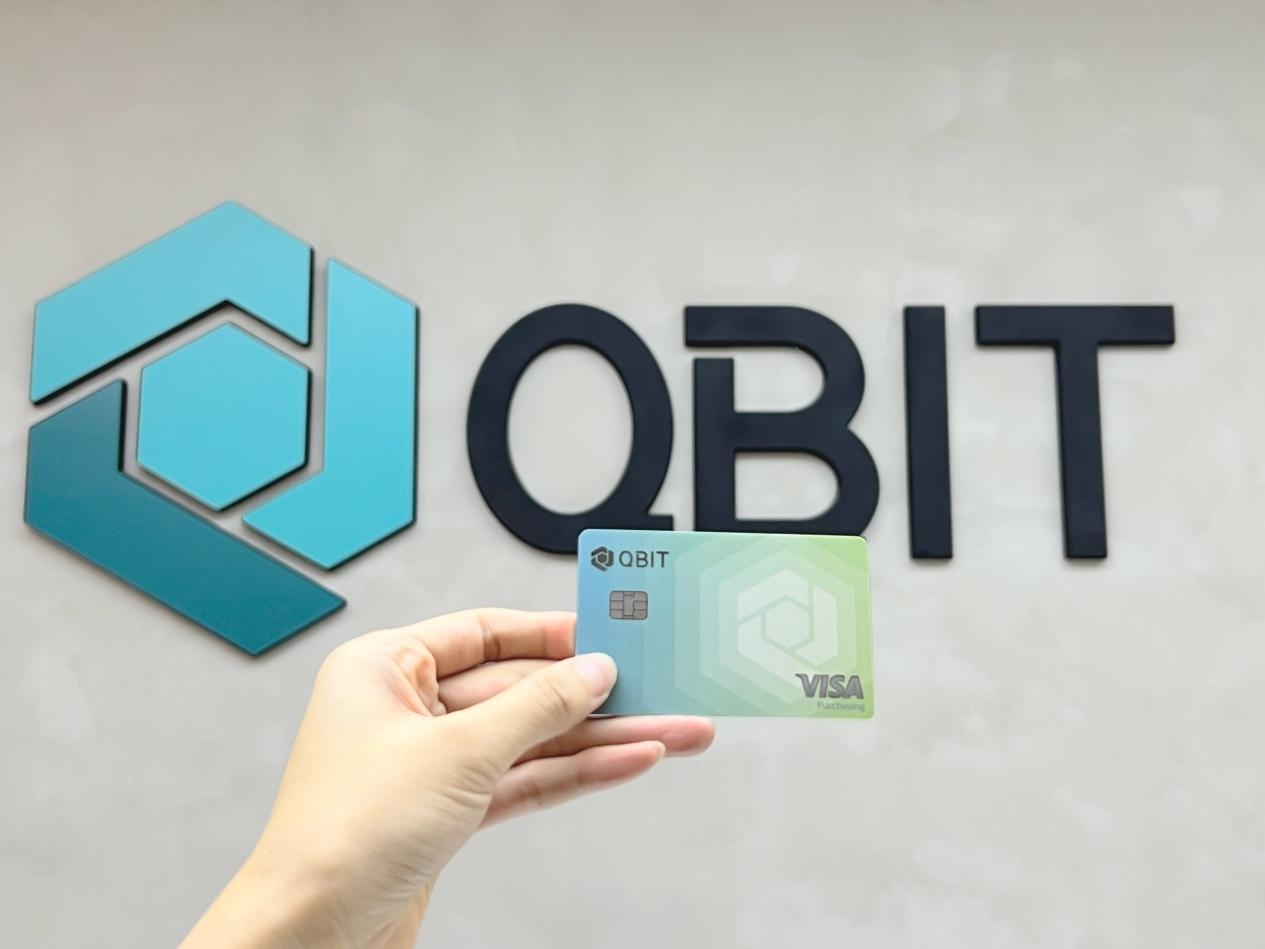
To meet these expense management needs, Qbit's core product, Quantum Card, with its flexible payment and control capabilities, helps companies reduce the complexity of financial management during business expansion and achieve flexibility, security, and efficiency in fund control.
For employees, Quantum Card focuses more on high - frequency and scattered expenditure scenarios. In high - frequency business scenarios such as business travel, Quantum Card is widely applicable and supports mainstream payment tools such as Apple Pay and Google Pay. It covers various expenses related to overseas business travel, including airline tickets, hotel stays, taxi rides, dining, conferences, and office supplies. Employees can choose the payment method according to the scenario without having to pay out - of - pocket, significantly simplifying the reimbursement process.
For companies, Quantum Card plays a more "operational" payment role. Corporate cards can be used in core expenditure scenarios such as advertising, cloud service subscriptions, software purchases, and overseas supplier settlements. Companies can allocate budgets and manage permissions by project, department, or purpose, and set up fund usage rules in the payment process to achieve more precise expense control.
Beyond card - issuing, the account system is becoming a key component
As companies continue to grow, the team gradually realized that simply solving the problem of "how to pay" is not enough. They also need to solve - where to keep the money, how to manage it, and whether it can be systematically utilized.
Therefore, in addition to the card - issuing system, Qbit has also gradually built a comprehensive global account and treasury management system.
Companies can not only open and manage overseas accounts through the platform for fund collection, splitting, scheduling, and monitoring but also "export" these account capabilities to their downstream customers or partners.
In the banking system, such capabilities are usually referred to as BaaS (Banking as a Service):
That is, the platform packages its established bank partnerships, account systems, compliance frameworks, and technological capabilities, allowing companies to directly provide account - opening and account services to their customers or downstream enterprises at the front - end.
For companies, this means:
- They don't need to connect with banks on their own.
- They don't need to rebuild complex compliance and risk - control systems.
- They can provide their customers with a complete set of capabilities including "accounts + treasury management + payment".
In essence, it is the modularization and spill - over of financial capabilities.
Phase 3: Transforming card - issuing and account capabilities into callable financial infrastructure
As business and expenditure scenarios continue to expand, many companies, especially large enterprises, are putting forward new requirements - they not only want to issue cards and make payments but also hope that these capabilities can be directly integrated into their business systems or financial processes.
In an interview, Wu Yujun mentioned that after business expansion, some customers have significantly higher requirements for card - issuing efficiency and management flexibility. For example, they need to support batch card - issuing or quickly configure corresponding cards for different businesses and teams. If these requirements rely entirely on manual operations, it will be difficult to keep up with the business pace.
Based on such requirements, Qbit has opened some of its operational capabilities originally concentrated in the management background to customers through APIs, enabling companies to issue cards and open accounts in their own systems.
To meet these practical usage needs, Qbit has opened its card - related capabilities to customers through the CaaS (Card - as - a - Service) API. Through API integration, companies can issue cards with one click, issue cards in batches, and adjust credit limits in their own systems. Customers can also customize card designs according to their needs to distinguish different business or team usage scenarios.
Meanwhile, in terms of funds, Qbit also provides companies with account and treasury management - related capabilities through the BaaS (Banking - as - a - Service) API. Companies can integrate functions such as account management, fund collection and payment, foreign exchange, and settlement into their existing business systems or financial processes, reducing the operational costs caused by switching between multiple platforms.
Wu Yujun said that for the complex and diverse business needs of API customers, Qbit also provides exclusive compliance training and technical guidance to help companies balance efficiency and compliance in independent operations, enabling these capabilities to be integrated into companies' business and financial processes at a lower cost and in a more stable manner.
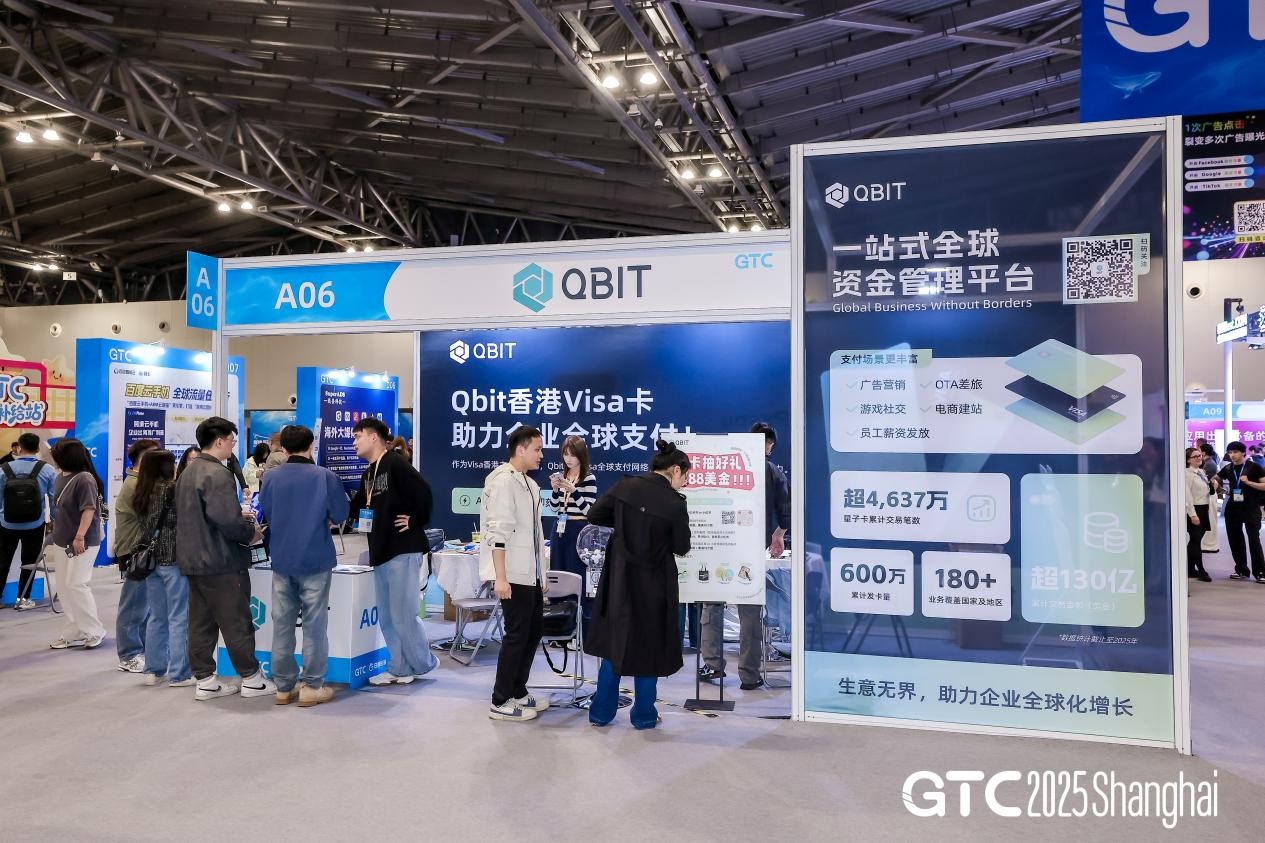
In actual use, the API is not only a tool to improve operational efficiency, and its smooth operation also highly depends on the stability of the underlying fund links and compliance systems. Relying on a service network covering more than 180 countries and 40 currencies, Qbit can support multi - region and multi - currency account and fund transfers within the same system, providing a unified entry point for companies' expenditure and treasury management in different markets.
In terms of compliance, Qbit has obtained relevant financial licenses in multiple countries and regions, including the Hong Kong MSO, TCSP, and the US MSB, and has established a KYC/KYB customer verification and anti - money laundering (AML) mechanism during business operations. Through continuous monitoring of transaction behavior, it ensures the stable operation of services within the compliance framework.
"Doing Fintech is about building trust, and compliance and risk control are our core moat," Wu Yujun told 36Kr. Qbit's compliance team will pre - assess the regulatory policies of different countries and start applying for licenses and building risk - control systems 1 - 3 years before entering a new market to ensure the compliance and security of full - link services globally and escort companies going global.
The core of this phase is no longer to teach companies how to use financial products but to package the following accumulated over the years:
- Bank partnerships
- Financial license coverage
- Risk - control and anti - money - laundering experience
- Clearing, settlement, and account management capabilities
Into underlying financial capabilities that companies can directly call.
Companies stand at the front - end:
- Focus on customers
- Focus on business
- Focus on growth
The platform stands at the back - end:
- Provide card - issuing capabilities
- Provide account and treasury management capabilities
- Undertake compliance, risk control, clearing, and settlement
For companies, this is no longer a complex financial system but a plug - and - play financial infrastructure.
From "technology can solve everything" to truly understanding the moat of finance
On this path, the team's own perception has also been constantly changing.
As a science and engineering graduate from Stanford, Wu Yujun also believed in the early days that "technology can solve all problems." However, in the financial industry, what really determines how far a company can go is often not technology itself but:
- Risk - control capabilities
- Compliance systems
- Deep understanding of laws and regulations
- Long - term and stable partnerships with banks
- Sustainability of licenses and payment channels
The reason why many companies that started at the same time eventually failed was not that their products were inferior but these seemingly inconspicuous yet extremely crucial underlying capabilities.
Currently, Qbit has an international team of over a hundred people, with members located in multiple core financial and technology hubs. Its service network covers more than 180 countries and regions around the world. From cross - border sellers and advertising agencies to global SaaS and platform - based companies, Qbit is meeting more and more complex and multi - level fund usage needs.
In terms of business, Qbit's overseas business has maintained a growth rate of 5 - 6 times per year in the past few years. As the structure of corporate customers becomes more complex, this growth does not come from the expansion of a single market or scenario but from the continuous accumulation of multi - regional, multi - project, and multi - level fund usage needs.
This is also confirmed by the data disclosed by Qbit. As of December 2025, Qbit has issued more than 7 million cards in total, and the total number of transactions has exceeded 53 million. These transactions mainly occurred in daily business expenditure scenarios such as corporate advertising, service subscriptions, cloud resource purchases, and employee business travel.
Conclusion
If we summarize what Qbit is currently doing in one sentence:
Through a set of underlying capabilities such as card - issuing, account, and treasury management, Qbit "empowers" companies to easily become a card - issuing platform or even a "bank - like institution" that can open accounts for customers.
Companies no longer need to become banks themselves but can provide financial capabilities like banks.
This is exactly what companies really need as cross - border payment moves into the next stage.