After using the Xiaomi 17 Pro Max intensively for 80 days, I can no longer do without its rear display.
From Gimmick to Practicality
There are some things that you only truly appreciate after you've lost them.
I'm not talking about love here. I'm referring to my real daily companion, the Xiaomi 17 Pro Max.
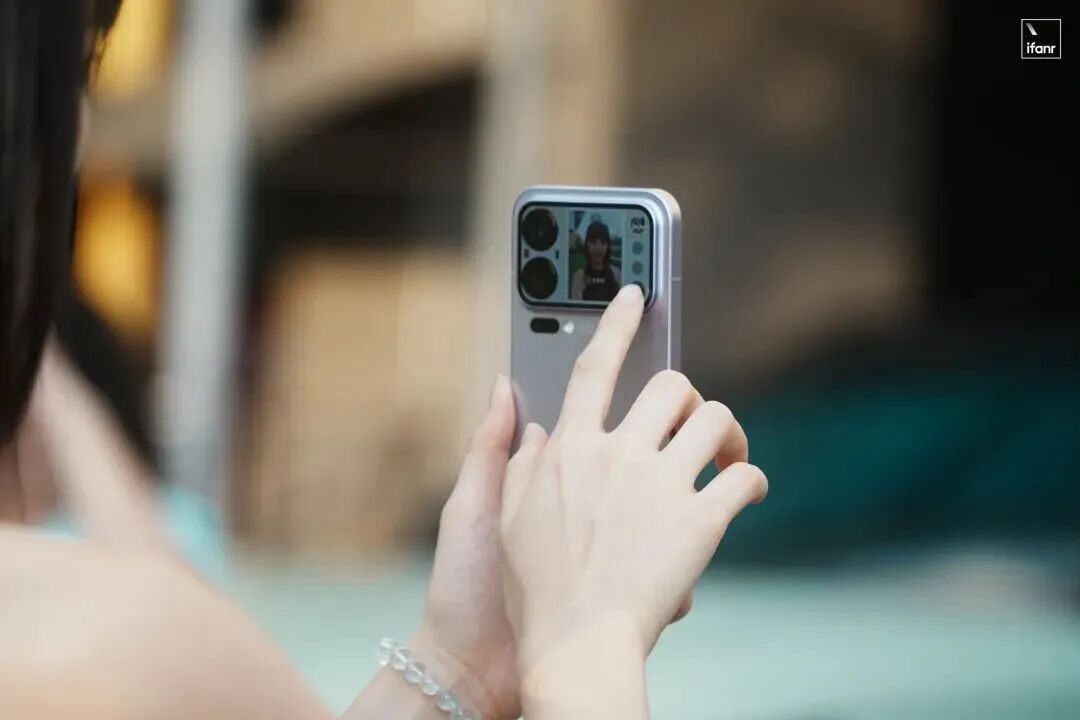
If you had asked me what I thought of the rear screen of the Xiaomi 17 Pro Max two months ago, I would have unhesitatingly described it as an "electronic appendix." At that time, I believed it was just a feature forced by Xiaomi to create differentiation.
However, after using it intensively for 80 days, when my colleague took the phone for testing and I switched to the OPPO Find X9 Standard Edition, a sense of discomfort came over me, making me realize that I seemed to have grown quite attached to it.
From Three Steps to One Step
This gap in the user experience is hidden in many insignificant details of daily life.
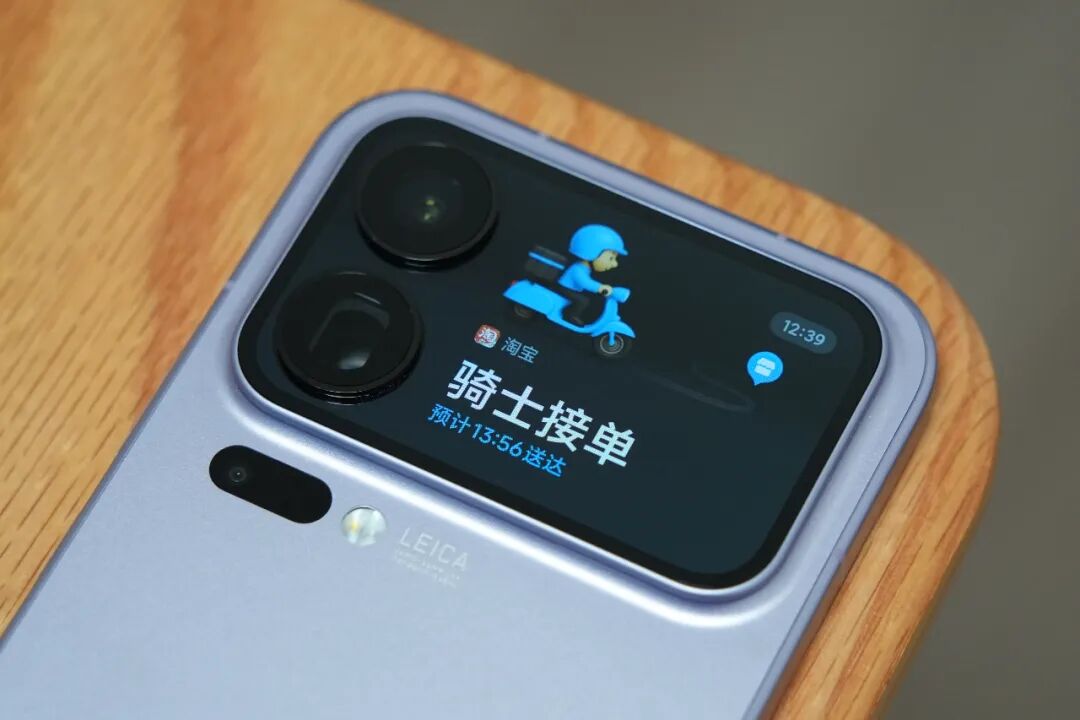
During the more than two months I've had the Xiaomi 17 Pro Max, my morning routine has been almost the same: After exiting the subway station, I use my left hand to open the coffee shop door, while my right hand takes out the phone from my pocket. Then, I naturally turn my wrist, and the pick-up code permanently displayed on the rear screen is already pointed at the scanner. With a "beep," I pick up my coffee and leave.
The whole process doesn't require me to light up the main screen or even confirm the content on the screen because the pick-up code was set when I placed the order, and the position of the rear screen has become a conditioned reflex of my body.
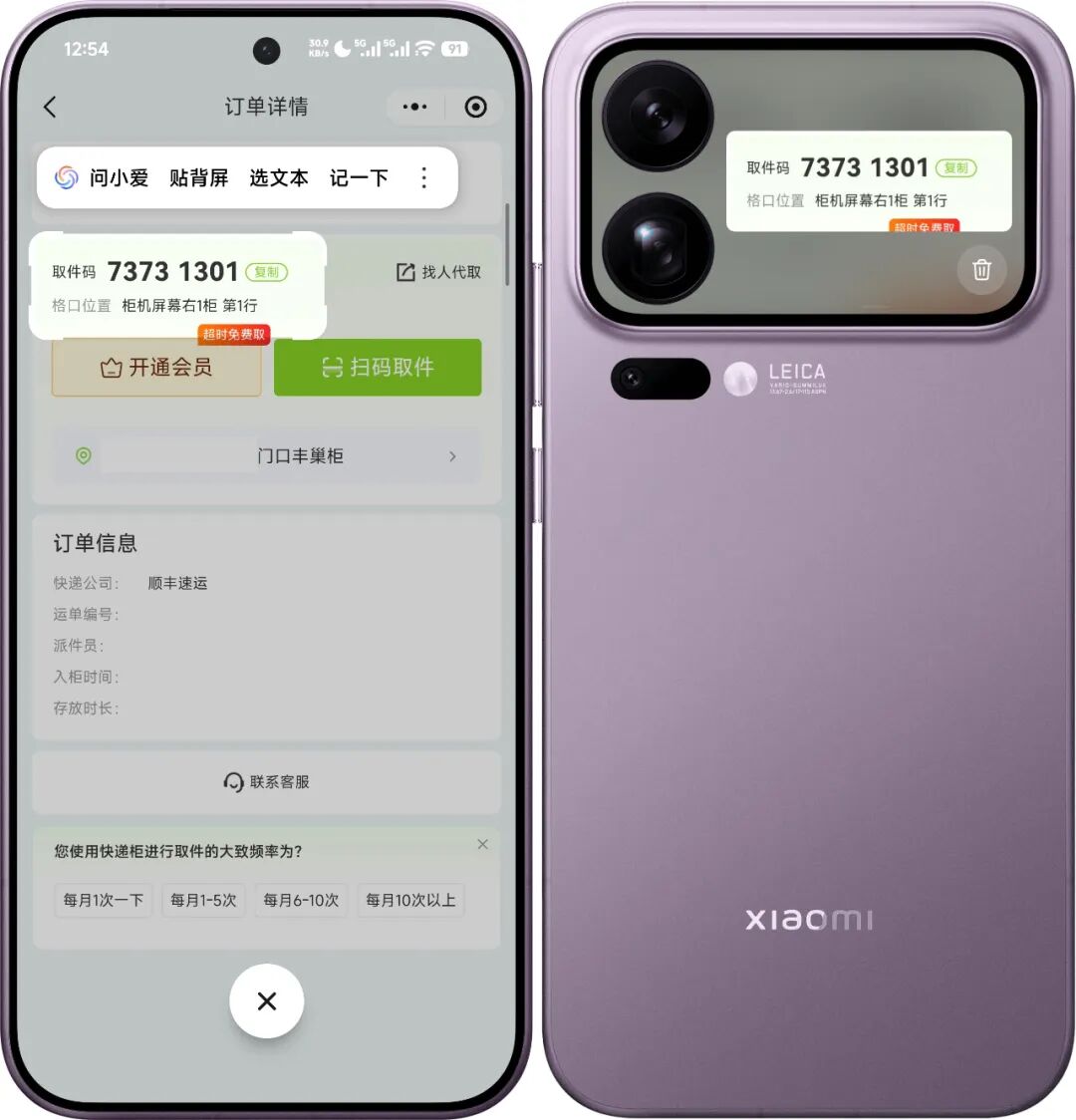
It's not just the pick-up code. You can put anything you want on the rear screen.
This sense of fluency came to an abrupt end on the first day I switched back to a regular flagship phone.
Out of habit, I handed the back of the phone to the scanner, only to be met with silence from the scanner and a confused look from the clerk. I had to take the phone back, double-tap to wake it up, swipe up to unlock, open the Dynamic Island or the desktop widget, wait for the app to load, and finally pull up the QR code.
In terms of physical time, it only takes about 3 to 4 seconds more. But in terms of the interactive experience, it's a regression from "one-step access" to "three-step navigation."
In the high-pressure and fast-paced scenario of the morning rush hour, the sense of blockage caused by these two additional steps is infinitely magnified. It forces me to shift my attention from "getting my coffee" to "operating the phone."
A New Solution
In the new energy vehicle industry, the competitiveness of a new car is often evaluated according to the following weightings:
Price competitiveness > Intelligence level > High-frequency core functions > Design aesthetics (emotional value) > Low-frequency special functions.
If we apply this logic to the current smartphone market, we'll find that it generally holds true.
By 2025, the price systems of flagship phones from various brands have become transparent and fixed. After Xiaomi upgraded to the Pengpai OS3 and the user experiences of different systems have become similar, the decisive factor in the competition has naturally shifted to the third level - the convenience of high-frequency functions.
In the past five years, phone manufacturers' understanding of "high-frequency" has mostly focused on the imaging field. They've invested huge amounts of money in an "arms race," with higher pixel counts, larger sensors, and external lenses... Imaging flagships have emerged one after another.
However, the law of diminishing marginal returns is starting to show. Users can barely perceive the improvement in image quality from 98 points to 99 points. For most ordinary people, it's not worth making the phone as thick and heavy as a brick for an imaging system that's not used very often.
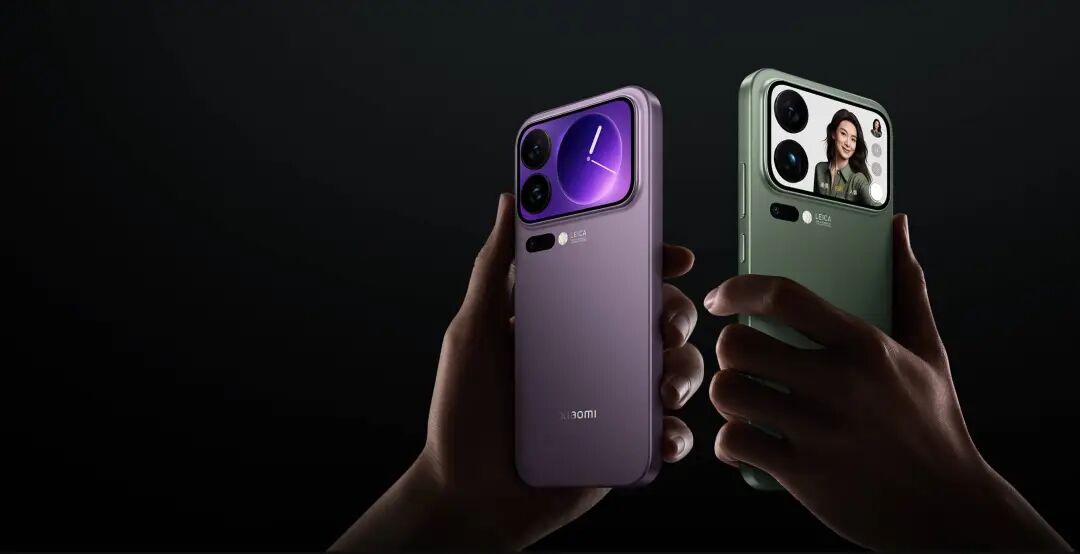
Without the huge imaging module, the grip feels much better.
The rear screen of the Xiaomi 17 series offers a completely different approach.
The rear screen isn't an original idea of Xiaomi. Starting from the "Smart Window" of the Meizu 7 Pro, to the Xiaomi 11 Ultra, and then to various "small foldable" and "wide foldable" phones in recent years, manufacturers have made many attempts.
But why is it that only the rear screen of the Xiaomi 17 series has received wide acclaim and successfully boosted sales?
Looking back at previous rear screen products, we can easily find a common interaction trap: Most of them offer users "two paths."
The rear screen is often designed as a "watered-down" or "mirrored" version of the main screen. It can either only show the time and weather, or it's almost the same as the main screen. You can use it for selfies, browsing Weibo, and replying to WeChat messages.
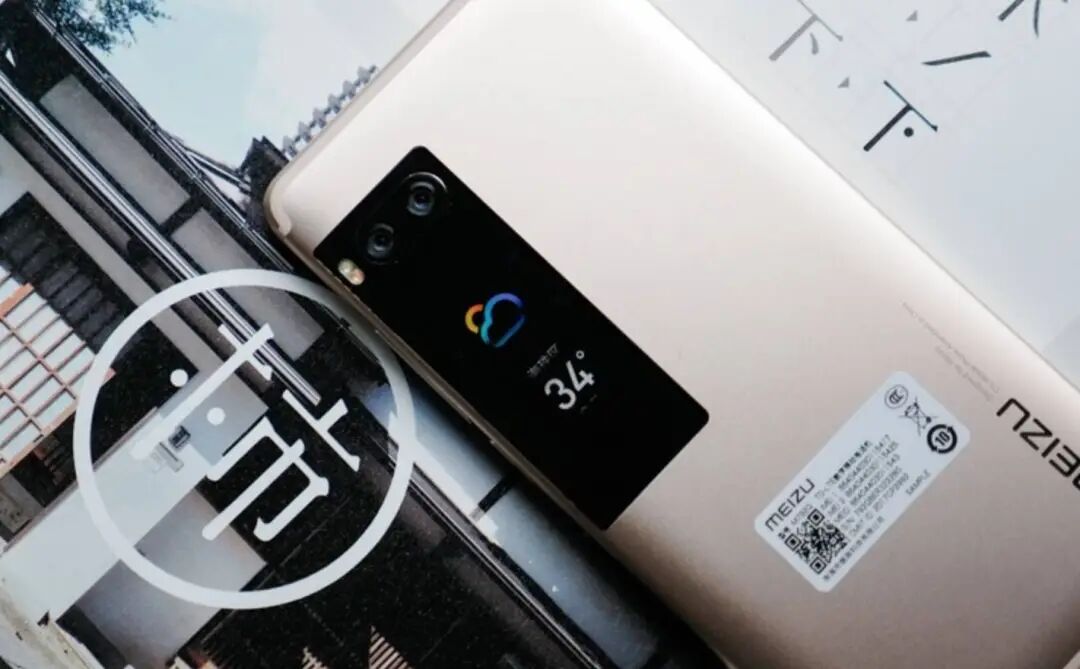
The "Smart Window" of the Meizu 7 Pro can only show the time and weather.
But then we're faced with a choice. Our brains need half a second to think about "should I do this on the front or the back?" Once there's a choice, there'll be hesitation. Once hesitation sets in, the experience will plummet.
This slight sense of hesitation will accumulate infinitely during high-frequency use and eventually turn into an inexplicable sense of burden. Instead of feeling free at the crossroads, we feel confused.
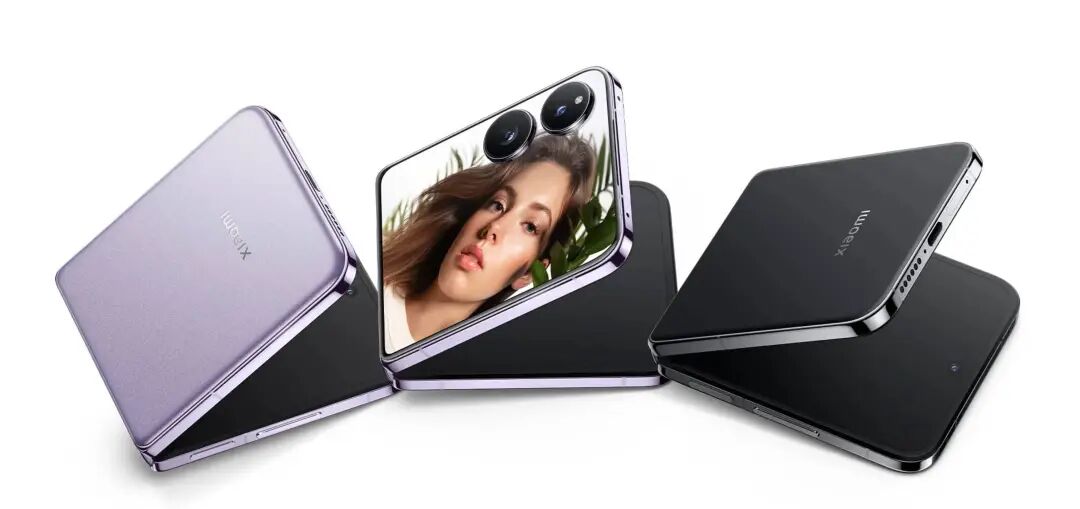
The Xiaomi Mix Flip 2 has almost the same functions on the rear screen as on the main screen.
But the Xiaomi 17 series eliminates this kind of choice.
Xiaomi's product managers have very restrictedly defined the boundaries of the two screens. You can't watch short videos or reply to WeChat messages on the rear screen. The two screens have their own functions and don't interfere with each other.
I tried to display WeChat notifications on the rear screen according to a solution shared by a Github expert. But later I realized why Xiaomi doesn't offer this feature. It's really just a redundant step.
This design makes the state of hesitation disappear completely.
When I want to consume in-depth content, I'll naturally light up the front screen. When I need to complete lighter confirmation and interaction (such as picking up food, checking my seat, or controlling my car) without interrupting my current physical activities (such as walking, talking, or queuing), my wrist will instinctively turn to the back.
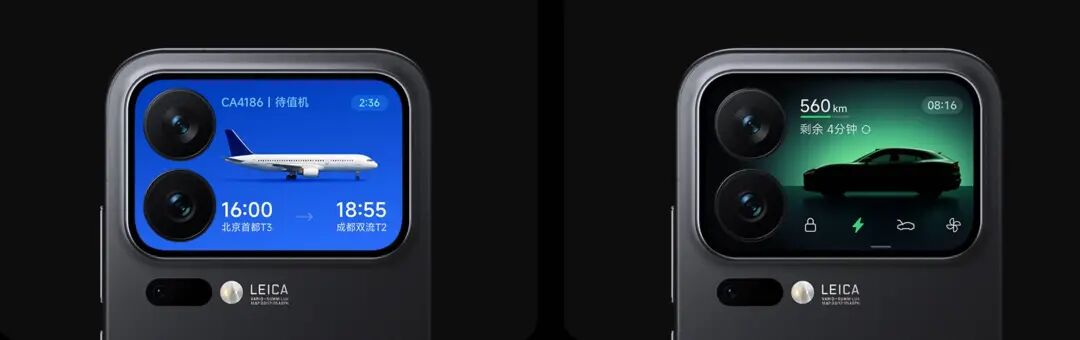
This kind of "zero-thinking" interaction division is the key watershed for the dual-screen design to evolve from a "gimmick" to something "useful." It doesn't increase the user's decision-making cost. Instead, it makes the operation more intuitive through physical form diversion.
The "Third Space"
Furthermore, this rear screen not only solves the efficiency problem but also unexpectedly fills the value of "aesthetics."
On a regular phone, the back of the phone is almost a dead wasteland except for the brand logo and the increasingly exaggerated camera module. Users' self-expression often has to rely on phone cases.
The appearance of this rear screen gives the phone the ability to be "customized."
It can be a barometer of your mood, an electronic photo frame for your pet, or a retro clock. This sense of aesthetic pleasure, just like the ambient lighting in a car interior, is an important part of the product's texture.
As the usage frequency of the rear screen increases due to various functions, the chances of visual contact with it increase exponentially. This high-frequency visual contact multiplies the aesthetic and emotional value carried by the rear screen.

Various "Anime Phone" solutions.
In this regard, Xiaomi is actually creating a "third space" for smartphones.
The first space is the lock screen and wallpaper, which are used to block the world and please yourself. The second space is the main screen, which is used for immersive content consumption and production. The rear screen is neither as closed as the lock screen nor as cumbersome as the main screen. It has become a "light interaction space" between the two.
In this space, we have more initiative. Besides convenient functions, selfies, simulation games, and self-expression have also become quite common uses.
It even made me regain a sense of "participation" similar to the time when I was looking for various ROM packages to flash my Redmi 2A. In the community, people rarely put aside their arguments and start sharing all kinds of "meme pictures" and combinations.
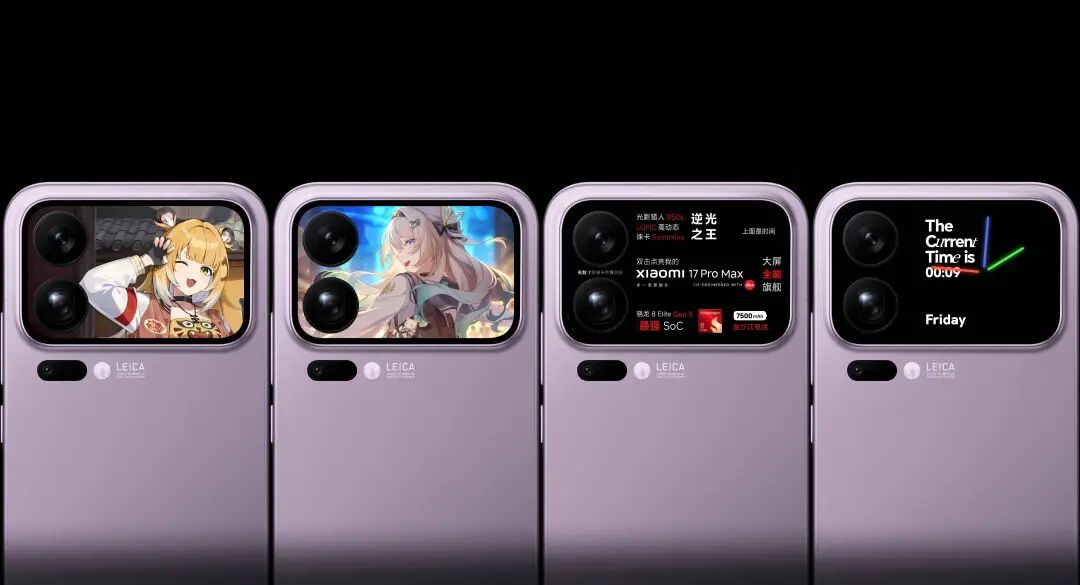
Some rear screen wallpapers I often use.
Humbly Serving People
In 2025, when we evaluate whether a technology is a "good civilization," the standard is no longer how sci-fi or cool it is. Instead, we consider whether it can serve people humbly.
Once upon a time, we thought that the increase in phone functions would inevitably lead to an increase in operation complexity. But with the improvement of chip performance and the development of AI technology, the phone operating system finally has the ability to "perceive" and "make decisions" in a real sense.
The system has evolved from a passive "executor" waiting for instructions to an active "manager" distributing tasks. This progress has continuously moved the location of information display and interaction forward - from the depths of apps, to the notification bar, then to the lock screen, and finally to an interaction surface like the rear screen with "zero levels."
From Apple's Dynamic Island to OPPO's Fluid Cloud and even the Glyph 2.0 of the Nothing Phone (3), the entire industry is rushing in this direction.
The essential logic behind these designs is the same: Earlier information display, smarter interaction, and more imperceptible perception. They're all trying to break the isolation of apps and let high-value information flow out like water.
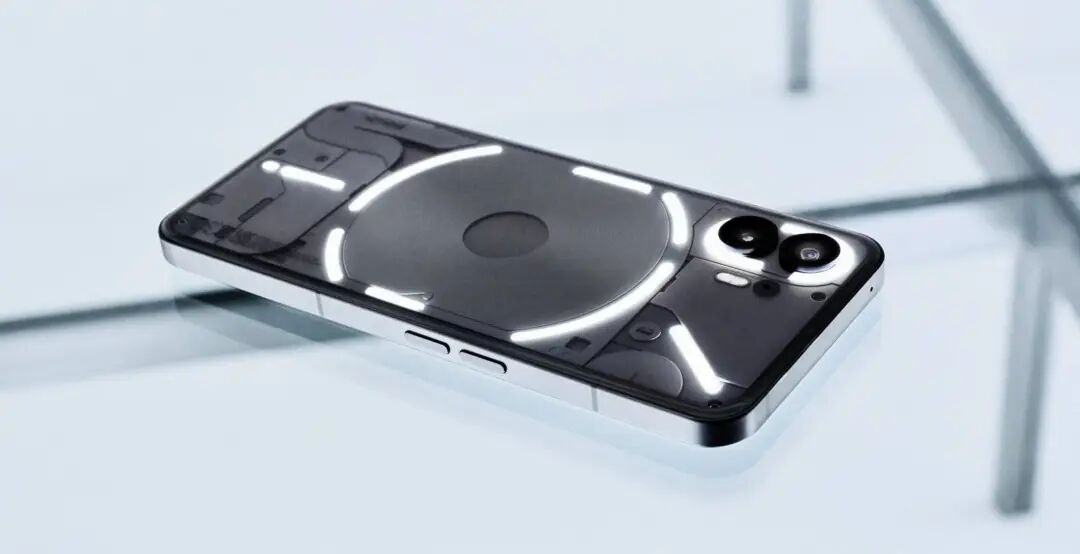
The lights on the back of the Nothing Phone (3) will light up when there's a notification.
Xiaomi's rear screen is just the most intuitive physical form that carries the most information based on this concept. It's not just a screen but also an "information outlet" after the system makes active decisions.
It acknowledges the fact that in many cases, users don't want to "play" with their phones. They just want to complete tasks quickly and then put the phone back in their pockets.
From this perspective, the design philosophy of the rear screen is similar to the revival of physical buttons in cars. In an era when touchscreen displays dominate car infotainment systems, physical buttons that can be operated blindly have proven to be a safer and more efficient design.
In a sense, Xiaomi's rear screen is the "super physical button" in the smartphone era. It simulates the intuitiveness of physical buttons with a screen while retaining the flexibility of digital content.
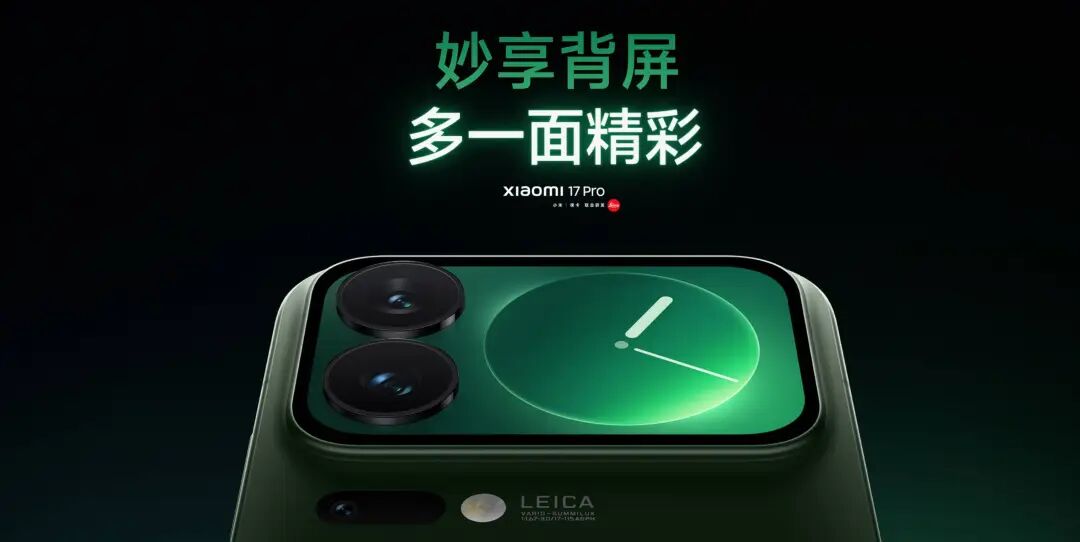
As the marginal benefits brought by imaging become increasingly thin and the homogeneous competition of systems reaches a stalemate, Xiaomi has planted a flag on the two new frontiers of "convenience in high-frequency scenarios" and "emotional value" with a rear screen.
Once you've experienced this new-era experience, you'll never go back.
This article is from the WeChat official account "if