The Year of Unitree and Similar Companies: Showcasing Fiercely in Public and Seeking Capital through IPOs
At the end of the year, robot companies are gearing up for next year's performance stage. Some time ago, the news that Unitree Technology and Zhipu Robotics spent tens of millions to compete for the naming rights of the Spring Festival Gala once hit the hot search.
Although Zhipu quickly denied this rumor, and Unitree also said "no comment". But since Unitree robots stepped onto the Spring Festival Gala stage this year, robots have set off a national boom in a way that the public can directly perceive.
Behind the stage, more than one million robot companies are also waging a war without gunpowder. As of early December, more than 30 robot companies have submitted listing applications to the Hong Kong Stock Exchange.
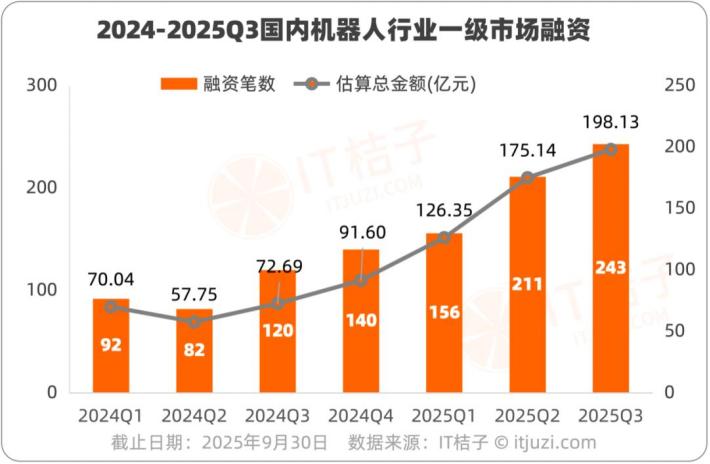
The primary market is also booming. In the first three quarters of 2025, the total financing of domestic robot startups reached about 50 billion yuan. Star unicorns such as Galaxy Universal and Tashizhihang have also refreshed the financing records of the robot industry one after another.
However, while the robot army is collectively striving for IPOs, the criticism of "unclear commercialization path of embodied intelligence" by Zhu Xiaohu, the managing partner of GSR Ventures, still rings in our ears. After the excitement, robots still have to find someone to pay for them first.
New and old players flock to the stock market
At the beginning of this year, Zhu Xiaohu, the managing partner of GSR Ventures, put forward a series of views such as "unclear commercialization path of embodied intelligence" and "exiting some embodied intelligence projects recently", which sparked heated discussions in the industry.
In a recent public interview, Zhu Xiaohu was asked again how he viewed "exiting humanoid robot companies". He said "it's meaningless to talk about it again, it's already very expensive now", and mentioned that he had also invested in some robots in differentiated scenarios in the past year, such as massage robots that can do work.
It can be seen that the robot market is really hot. Rather than saying that Zhu Xiaohu exited because he was pessimistic about the robot track, it's better to say that he is looking for a more cost - effective robot track for investment.
In the primary market, there are also many investors like Zhu Xiaohu who are accelerating their bets on the robot track.
According to IT Juzi statistics, in the first three quarters of 2025, the number of financing events in the domestic robot industry reached 610, doubling compared with the same period last year. Since the second half of the year, the number of financing events has shown an accelerating growth trend, with 243 in the third quarter alone.
A number of robot companies have reached the final stage of IPO. As of December, more than 30 companies in the robot industry chain have queued up to submit listing applications this year, covering core links such as core components, complete machine manufacturing, and system integration.
Among them, the star company Unitree Technology has officially announced that it will submit its listing application in the fourth quarter of this year. Zhipu Robotics has become the invisible "first robot stock" by acquiring Shangwei New Materials through a shortcut; Leju Intelligence is expected to complete the guidance from March to June next year.
Robot companies in the secondary market are also extremely popular. The stock price of Shangwei New Materials, a high - performance resin material company acquired by Zhipu, has increased by 13 times in just one month; the stock prices of some leading robot concept stocks have increased by double - digit to triple - digit rates this year.
The capital market's enthusiasm for robots continues to heat up, attracting more robot companies to enter the market. According to Qichacha data, as of September this year, the number of newly registered robot - related companies this year has exceeded 140,000, exceeding the total number of last year.
At present, the players in this listing boom can be roughly divided into three categories: First, companies in the industry chain focusing on core robot components and supporting facilities. They have generally been established for more than ten years.
Among them, there are companies with stable profits and mature technologies, such as Sanxie Electromechanical and Sikan Technology; and companies that have not yet made profits but have leading technological advantages, such as Yunji Technology. They have all successfully landed on the capital market this year.
Second, old players who have been deeply involved in industrial scenarios for many years. They have generally been established for 5 - 10 years and have basically completed the commercialization cycle.
For example, Youai Zhihé, known as the "first stock of mobile operating robots", has been deployed on a large scale in the two scenarios of industrial logistics and inspection and maintenance; Ruiwei Technology, which focuses on security service robots, has formed stable orders and achieved profits in fields such as public security and transportation.
Third, the "new forces" that emerged in the past two years, mainly general robot companies with humanoid forms, such as Unitree Technology and Zhipu Robotics.
Although these companies have only been established for 3 - 5 years, they have become the "favorites" of capital. Galaxy Universal has just received more than $300 million in financing, refreshing the record of single - round financing for domestic embodied intelligence; Tashizhihang has refreshed the record of angel - round financing for the embodied intelligence industry.
However, although the starting points and paths of the three types of players are different, at present, their goals are the same. In the robot track where technology is iterating rapidly, they want to take advantage of this robot boom to get the entry ticket to the capital market as soon as possible.
Show on the front - stage, replenish blood backstage
Since this year, robots have frequently appeared in various scenarios of people's daily lives, moving from laboratories to the streets and alleys.
In March this year, Unitree robots brought goods live in the "Jiaoge Pengyou" live - streaming room, setting a record of sales exceeding 1 million yuan in one minute; in April, 21 robots participated in the world's first "human - robot co - running" marathon; recently, Zhao Tongyang, the CEO of Zhongqing Robotics, fought with his own robot...
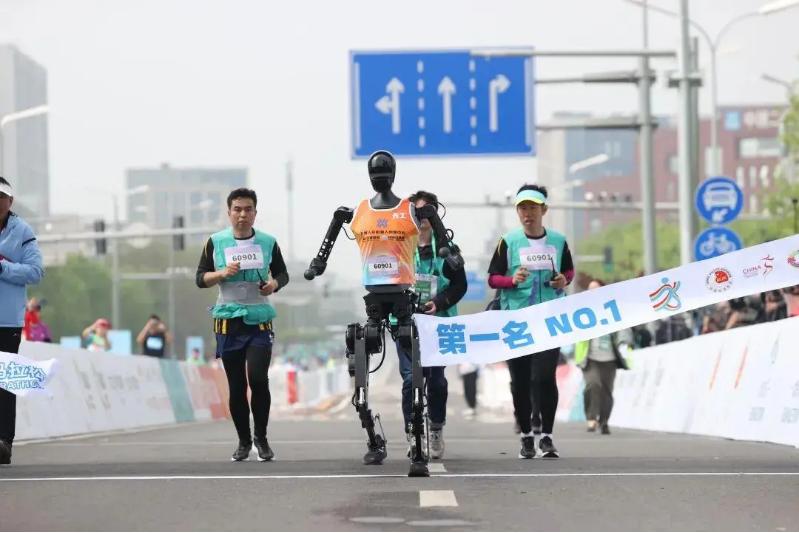
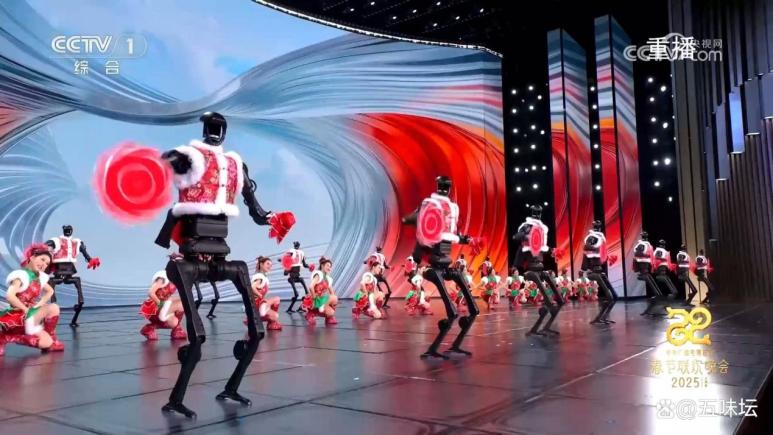
In addition, there are robots dancing yangge hard in performance activities, backup dancer robots dancing hard on the concert stage, and robot dogs handing scissors to the host in ribbon - cutting ceremonies...
Robots are working so hard to step onto various stages, sending a signal to the public: they are no longer a distant fantasy of the future, but "daily tools" that can be integrated into life.
The reason why they strive to prove their value is that the current capital market is more eager to see what robots can actually do, which has become the key for investment institutions to decide whether to place bets.
Behind the crazy IPOs, most robot companies are still in the red. According to incomplete statistics, among the robot industry chain companies that submitted listing applications in the first three quarters of this year, 18 companies are still in a loss - making state, accounting for more than half.
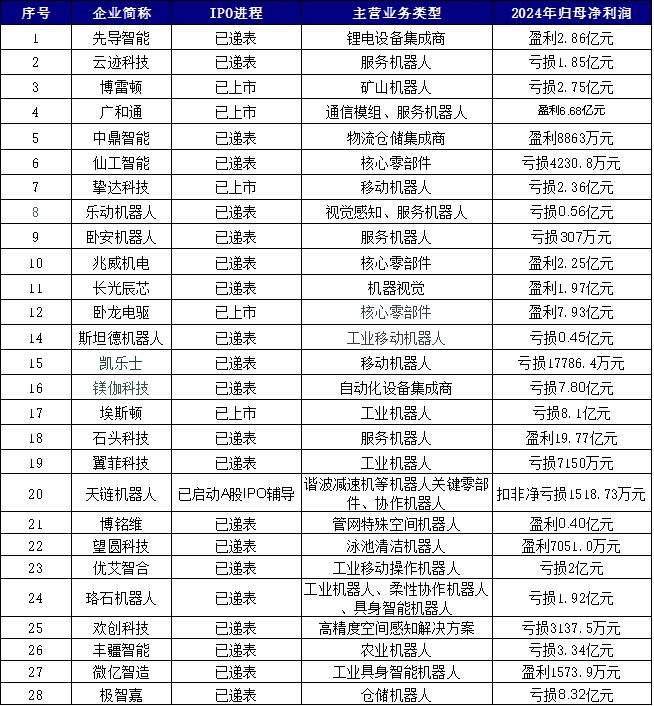
(Data source: public data, GGII)
Among them, even UBTECH, the "first robot stock", which has completed the commercialization cycle in the industrial scenario and achieved orders of more than 800 million yuan last year, still suffered a loss of 1.16 billion yuan in 2024.
It has never been an easy thing for robot companies to turn a profit.
On the one hand, although a company's revenue remains stable or increases, it may not come from high - margin businesses. At present, the robot industry chain is becoming increasingly mature, and the simple sale of hardware has become a red - ocean competition. In contrast, industry solution businesses with algorithm and technology advantages are high - margin businesses.
On the other hand, although some companies are selling more robots, their investments are also increasing, with R & D and marketing being the major expenditures.
An investor in the robot industry said that currently, there is an overlap in the business layouts of many robot companies. When the technological routes have not fully converged, companies must continuously invest in R & D to maintain their technological leadership, otherwise they will face the risk of being eliminated.
At the same time, improving brand awareness through marketing is also a key strategy for robot companies to gain a foothold in the market and make themselves more visible to the capital market.
According to public materials, most robot companies mentioned in their prospectuses that they will use the raised funds for "technological R & D" and "replenishing working capital". Among them, many companies mentioned that due to market expansion, expenditures such as employee salaries and after - sales services have increased significantly.
Driven by financial pressure, robot companies are seizing this round of opportunities and accelerating their sprint to the capital market. Going public can not only bring in funds but also serve as a springboard for companies, helping them seize market attention and obtain more high - quality resources.
In the current robot industry, startups are eager for an opportunity, and investors want to seize an advantage. Whether it is investment or being invested, the window for both parties to "fall in love at first sight" is fleeting, so naturally everyone should seize the opportunity.
The robot business "needs more time"
IDC predicts that by 2029, the global robot market scale will exceed $400 billion, and China will account for nearly half of the share. For this vision, robot companies and the capital market are both making all - out efforts.
However, even if robot companies can board the "ship" of the capital market, they may not be the final winners. Wang Xingxing, the founder of Unitree Technology, mentioned that when a humanoid robot can help carry water and clean up the site just by a single command, that will be the "ChatGPT moment" for robots. But in his opinion, this may take 2 - 3 years, and at the latest, no more than 35 years to achieve.
Therefore, even though companies such as Unitree, Zhipu, and Galaxy Universal have become "star companies", they still need to work hard to find sustainable and profitable business scenarios. More importantly, for startups, they still need to take a gamble.
Will the final form of embodied intelligence be humanoid robots?
Currently, the industry generally believes that humanoid robots will be the future of embodied intelligence. He Xiaopeng and Sam Altman have both mentioned similar views. Because humanoid robots are more "human - like", they can bring a natural sense of intimacy and can also better perform tasks required by humans.
However, in fact, there are still many challenges in the implementation of humanoid robots, such as insufficient flexibility of the body, difficulty in precisely controlling the limbs with algorithms, and the lack of understanding of the real world by large models.
Wang Xingxing, the founder of Unitree Technology, admitted that the consumer's demand for robots to do housework is still unlikely to be realized at present. Actions such as opening doors and mopping the floor are very complex for humanoid robots, and the industry still needs continuous breakthroughs.

If robots still can't help humans with work, where will the next booming commercialization scenario be?
Currently, all the sub - tracks in industrial scenarios, such as assembly lines in automobile manufacturing and handling and sorting in warehousing and logistics, are already crowded with competitors; although the consumer - grade market has great potential, it is still questioned for being "toy - like" and having "false demands".
In contrast, some semi - structured or high - value non - standard scenarios, such as home services and medical care, may have a higher penetration rate in the future. An investor focusing on the field of embodied intelligence suggests that companies can first lock in a scenario and then develop corresponding products.
Unitree became a partner of the AI training laboratories of technology giants such as NVIDIA and Google early on, and can obtain a large amount of real - world data at a low cost; Zhipu has formed a self - circulating closed - loop from data to model through the full - link layout of software and hardware integration.
In the future, robot players who hold high - value scenario entrances and can enable large models to continuously learn and evolve in the real world may have a greater leading advantage.
When a company locks in a scenario and the form of a robot, whether it can achieve success is the biggest gamble.
Among them, cost will become the key factor restricting the large - scale production of robots. Currently, the lowest - priced consumer - grade humanoid robots on the market cost about 10,000 yuan, which is still not "affordable" for most ordinary consumers.
With the continuous advancement of the localization of the robot industry chain, the cost of humanoid robot complete machines may continue to decrease in the future. But if robot companies want to have a more prominent cost advantage, they need to deeply integrate technological R & D and production manufacturing, optimize manufacturability and material costs from the source, so that their delivery capabilities will not be limited to the laboratory.
The robot industry still needs to go through the test of time to reach the "singularity" of commercialization.
Currently, robot companies are competing to enter the IPO market, which is essentially to buy more time for the companies. Whether it is to tell new stories through technological innovation or to seize scenario entrances through mass production first, everyone is waiting for that critical point to arrive.
The real turning point may not lie in a single company going public or a single product becoming extremely popular, but in the moment when robots are first regarded as a "taken - for - granted existence" by ordinary people.
Before that, anyone could be the "next ChatGPT", but they could also be the "next bubble".
This article is from the WeChat public account "Bohu Finance". Author: Kaikai. Republished by 36Kr with permission.