End-of-year special report in 2025: One year of rapid development of embodied intelligence: Robots still can't do work, but it doesn't stop robot companies from going public.
Editor's Note: With perseverance, we reach far - reaching goals; through reconstruction, we forge new paths. Elephant News and Elephant Wealth, in collaboration with Tencent News and Tencent Technology, present the year - end special project in 2025, "Perseverance and Reconstruction". Looking back on 2025 and looking forward to 2026, let insights illuminate the essence and seek certainty in change.
In 2025, the embodied intelligence industry experienced a year full of twists and opportunities.
Amidst the capital frenzy and industrial exploration, embodied intelligence passed through its crucial first year of mass production.
At the beginning of the year, Unitree Robotics' robots performing the yangge dance on the Spring Festival Gala foreshadowed the subsequent robot and robot - dog performances seen in offline shopping malls, parks and other places.
Besides the eye - catching robot performances, another notable phenomenon was the intense financing enthusiasm in the industry.

Data from IT Juzi shows that in the first three quarters of 2025, there were 610 new primary - market financing events in the domestic robotics industry, more than doubling the 294 events in the same period last year.
In terms of estimated amounts, in the first three quarters of 2025, domestic robotics startups received a total financing of about 50 billion yuan, 2.5 times that of the same period last year.
Contrary to the high - profile financing, there were doubts about the large valuation bubble in the industry. The technology curve was still in the climbing stage from usability to reliability, and engineering, cost control, and supply - chain stability were still in the deep - water zone.
These harsh realities were far more difficult to overcome than the beautiful commercialization stories.
Behind this mad dash was the misalignment between technological ideals and capital realities, and it was also the inevitable pain for the industry to evolve from concept to maturity.
01 Entering Factories and Going Public: A Year with an Accelerated Pace
In 2025, the biggest change in the industry was the pace. From laboratory R & D to scenario implementation and then to capital realization, all links had their acceleration buttons pressed.
This year, financing in the field of embodied intelligence was unprecedentedly hot. It became normal for 9 companies to complete 13 financings exceeding 100 million US dollars. In China, Tashizhihang, founded only a few months ago, received two consecutive angel financings exceeding 120 million US dollars. Leju Robotics obtained a 1.5 - billion - yuan Pre - IPO financing, and Galaxy Universal secured a single - round financing of 300 million US dollars, setting a new industry record.
The US market was even crazier. Figure AI's Series C financing skyrocketed its valuation from 2.6 billion US dollars to 39 billion US dollars. Physical Intelligence, focusing on robot brains, saw its valuation jump from 2.4 billion US dollars to 5.6 billion US dollars. Skild AI was also in talks with SoftBank and NVIDIA for a financing exceeding 1 billion US dollars, with an expected valuation of 14 billion US dollars.
Coincidentally, the financing wave almost coincided with the IPO rush.
More than a dozen enterprises flocked to submit IPO applications. Geek+ and Yunji Technology have successfully listed on the Hong Kong Stock Exchange. Unitree Technology is expected to become the "first stock of humanoid robots" on the A - share market. ZHIYUAN ROBOTICS acquired Shangwei New Materials to obtain a listing platform and completed management changes. Leading players such as Leju Robotics, Galaxy Universal, and DeepRobotics are also accelerating their listing processes.
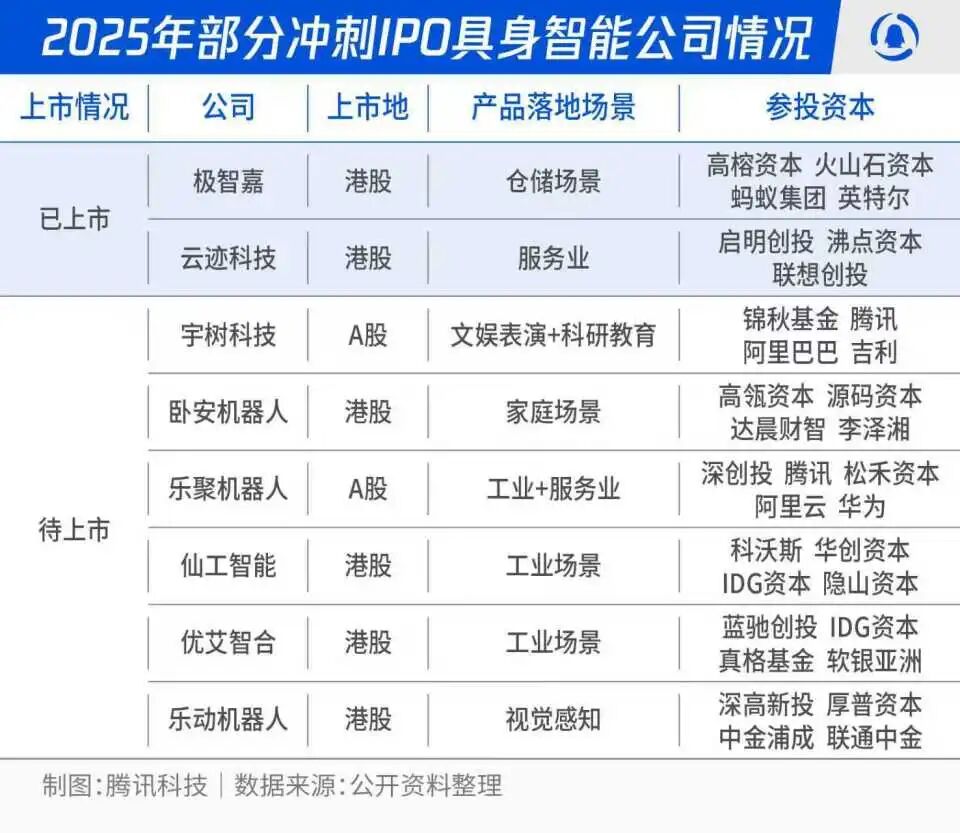
Currently, the industry's IPOs are characterized by three major features: the differentiation of capital camps, the stratification of listing paces, and significant differences in commercialization maturity. The composition of investors and the choice of listing paths behind them can better reflect the industry's development stage.
From the perspective of investors, there are obvious differences in the capital backgrounds of listed and to - be - listed enterprises.
Geek+ and Yunji Technology, which have successfully listed, are backed by comprehensive leading VC/PE firms such as Sequoia Capital China, Hillhouse Capital, and Tencent Investment. These types of capital value enterprises' commercialization capabilities and stable revenues more.
For ZHIYUAN, Unitree, Leju and other enterprises in the to - be - listed or preparatory stage, their capital composition is more inclined to "industrial capital + state - owned capital + special funds". ZHIYUAN is backed by Huawei - affiliated capital. Unitree has received support from Matrix Partners China and CICC Capital. Leju has introduced local industrial funds. These types of capital are more tolerant of early - stage losses and focus on technological breakthroughs and large - scale potential.
The core difference between listed and unlisted enterprises lies in commercialization maturity and product form.
Geek+ and Yunji Technology, which are already listed, mainly focus on non - humanoid robots, targeting standardized scenarios such as logistics and hotels. They have formed stable revenues and cash flows, and the funds raised through listing are mainly used for capacity expansion and global layout.
Most of the to - be - listed or preparatory enterprises take humanoid robots as their core products. They are currently in the pilot - verification and small - batch delivery stage, with limited revenue scales and dependence on orders. The core appeal for listing is to promote technological iteration and large - scale mass production through capital injection. There is a development gap of about 2 - 3 years between the two.
The fundamental driving force behind all this is that the industry has passed the Demo verification period and entered a more practical implementation verification period.
The signing of multiple orders for thousands of units and the entry of mass - produced robots into factories to create value have preliminarily verified the industrial logic of embodied intelligence.
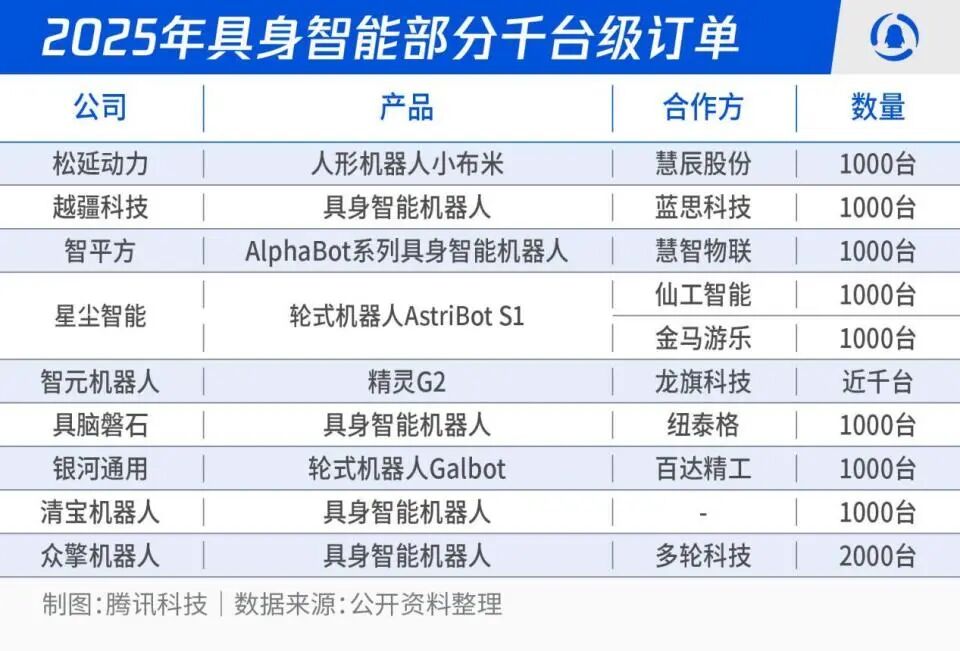
UBTECH has gone the farthest in the field of robots entering factories. The total annual order value of its Walker series of humanoid robots exceeded 1.3 billion yuan, with a single - order maximum of 264 million yuan.
In terms of delivery, it has delivered more than 200 industrial robots, and is expected to deliver more than 500 for the whole year. These robots have been undergoing practical training in the factories of enterprises such as Geely, BYD, Foxconn, and SF Express.
ZHIYUAN ROBOTICS follows closely. Through in - depth cooperation with customers such as Longcheer and Joyson Electronics, it has obtained natural implementation scenarios and supply - chain guarantees.
Its 5000th general - purpose embodied robot has rolled off the production line, and 1412 industrial robots of the Sprite series have started commercial delivery.
Among overseas players, Agility Robotics' Digit robots deployed in the factory of logistics giant GXO have delivered more than 300,000 items. Figure AI's F.02 robots have served in the BMW fleet for more than 1250 hours and participated in the production of more than 30,000 vehicles.
Currently, the implementation of robots shows distinct characteristics of scenario stratification, enterprise stratification, and form stratification. Players at different levels focus on different tracks, forming a differentiated competition pattern.
From the perspective of implementation scenarios, a clear hierarchical layout has been formed.
The first - tier includes the automotive manufacturing and consumer electronics scenarios. Representative enterprises include UBTECH, ZHIYUAN, and Figure AI. Their tasks involve assembly, handling, and quality inspection, which require high precision and stability but offer the highest - value orders.
The second - tier is the logistics and warehousing scenario. Representative enterprises are Agility Robotics and Geek+. The core tasks are sorting and delivery. The scenario standardization level is medium, and it relies on large - scale production to reduce costs.
The third - tier is the special inspection scenario. Representative enterprises are DeepRobotics and Unitree. Non - humanoid robots are used to replace human labor in high - risk environments. The customization level is high, and the profit margin is large.
The fourth - tier includes consumer - level scenarios such as entertainment and education. Representative enterprises are Unitree and Songyan Power. The demand is scattered, and these scenarios mainly serve for brand and technology display.
Correspondingly, the implementing enterprises also show stratification. Leading enterprises, with their comprehensive advantages, have won orders for thousands of units in core scenarios such as the automotive industry and have entered the small - batch delivery stage.
Mid - tier enterprises focus on niche markets and obtain pilot opportunities through strategic cooperation with large customers. Overseas leading enterprises rely on their technological first - mover advantages to cooperate with global giants such as BMW and GXO to verify technologies and seize high - end markets.
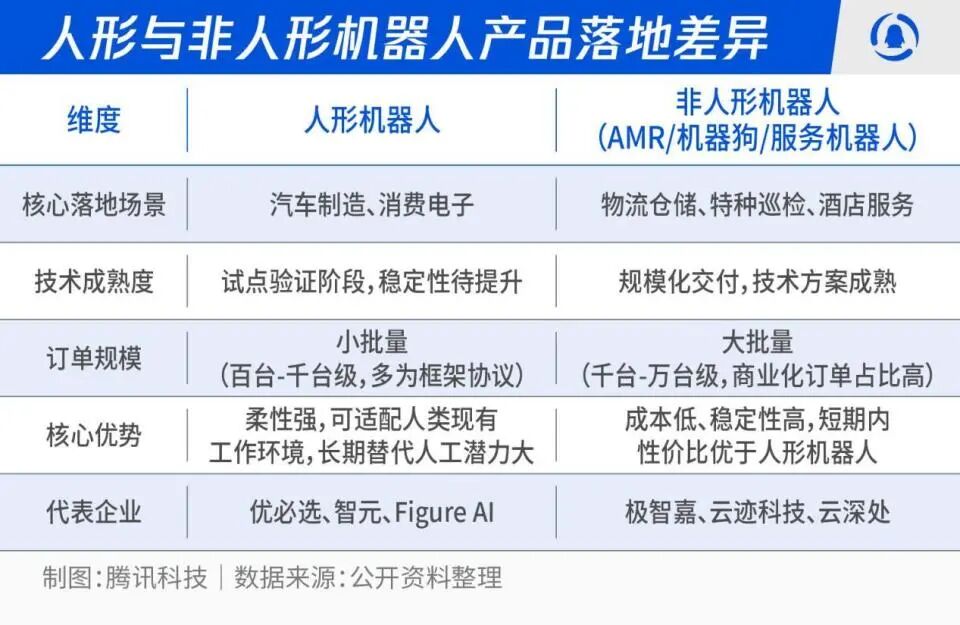
These real - life cases together outline a clear industrialization path: start from industries with high standardization such as the automotive and electronics industries, use repetitive tasks in a single scenario as a breakthrough point, and gradually extend from single - point pilots to production - line collaboration.
02 How Far Is the Robot from "Being Capable of Working"?
Although the impetus from capital and the market cannot be ignored, the difficulty of technological implementation still determines whether embodied intelligence can be widely implemented.
The capital frenzy and the growth of orders cannot completely cover up the deep - seated technological challenges. From the maturity of algorithms, engineering challenges, to the establishment of reliability and safety standards, embodied intelligence still faces many technological obstacles before it can truly work.
In addition, the imbalance between cost and efficiency, as well as the differences in implementation technical difficulties between humanoid and non - humanoid robots, further prolong the realization cycle of "being capable of working".
Over the past year, the progress in hardware capabilities has been obvious. Whether it is Unitree Robotics' robots performing boxing for entertainment or DeepRobotics' robot dogs conducting inspections in practical applications, they are all supported by hardware performance.
An obvious trend is that while the parameters are rising, price cuts have been the main theme throughout the year.
Songyan Power launched Bumi at a price of only 9,998 yuan. The upgraded Booster K1 and Unitree's R1 are both priced at 29,900 yuan, and Unitree's G1 has a price as low as 85,000 yuan.
Chinese manufacturers have demonstrated strong engineering capabilities in cost control.
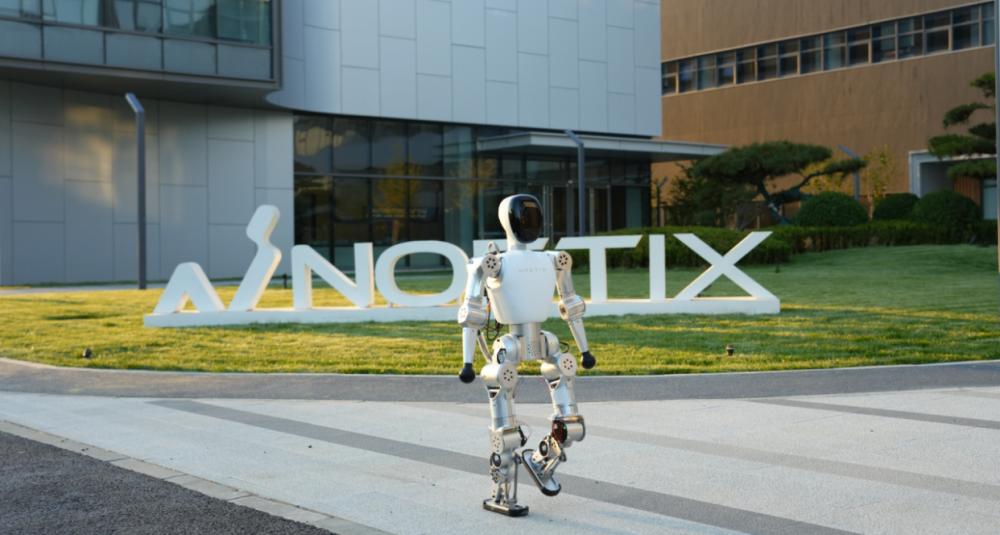
However, upon closer inspection of these products, it is not difficult to find that most of them are small - and medium - sized, and their application scenarios are more inclined to entertainment performances. They are difficult to undertake heavy physical labor or delicate industrial operations.
A key limiting factor behind this is that the industry still lacks a pair of dexterous hands that are good enough and balance cost and performance.
Dexterous hands, as the last - mile link for humanoid robots to interact with the physical world, directly determine the upper limit of a robot's working ability. Currently, the product technology routes in the market are diverse, with prices ranging from a few thousand yuan to 200,000 yuan, and no single product has absolute dominance.
Currently, most small - and medium - sized robots in the industry are equipped with "fake hands". Although the proportion of full - sized robots equipped with dexterous hands has increased, few are actually put into operation. Most wheeled robots, which are more commonly used in factories, still adopt the gripper solution.
The core problem is that the practicality of dexterous hands has not fully surpassed that of grippers.
Due to the premature price war in the market, the product quality is uneven, which makes it difficult for robot body manufacturers to make choices.
More importantly, the actual service life of dexterous hands is still a big question mark. The advertised service life is mostly the result of no - load tests, which is far from the actual load conditions. Many dexterous hands only last 1 - 3 months in real - world use, and the shortest may malfunction within a week.
In addition, the weight of most dexterous hands in the market ranges from 370 to 1200 grams, generally heavier than the 400 - gram human hand. This will lead to increased energy consumption, slower movements of the robot, and may even cause unstable vibrations or gait imbalances, seriously affecting work efficiency.
The engineering problems on the hardware side restrict the robot's executive ability, while the algorithm bottleneck on the software side makes it difficult for the robot to truly become intelligent.
At the beginning of the year, the US company Figure AI ended its cooperation with OpenAI and released its self - developed end - to - end VLA (Vision - Language - Action) model Helix, which brought the VLA model architecture with the "fast - slow brain" system as the core into the spotlight.
Among Chinese companies, Xingdong Jiyuan's end - to - end VLA model ERA - 42 and Xingchen Intelligence's VLA model DuoCore also adopt this approach.
Companies like Physical Intelligence and Zibianliang Robotics, which have more prominent model capabilities, adhere to the end - to - end unified VLA architecture.
In particular, the π series of models launched by Physical Intelligence have always been at the forefront of the industry in terms of performance. The open - sourced π0 and π0.5 are both regarded as some of the strongest open - source VLA models and have become the technical reference benchmarks for many robot enterprises.
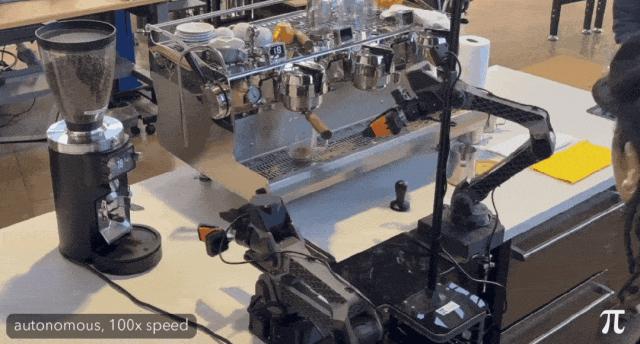
Although embodied intelligence has made obvious progress in the model aspect in the past two years, the industry has not witnessed a Scaling Law like that of large - language models, and it is difficult to achieve the "ChatGPT moment" of embodied intelligence in the short term.
The bottlenecks in this dilemma are concentrated in three aspects: data, models, and system engineering.
In terms of data, high - quality multimodal data is extremely scarce. Currently, the industry generally uses a combination of "sim