Top 10 Events in China's Technology Industry in 2025
In 2025, China's technology industry forged ahead amidst challenges, using independent innovation as its anchor to achieve breakthroughs in multiple key areas such as AI, semiconductors, new energy, and the Internet ecosystem. From tackling fundamental technologies to implementing end - user scenarios, and from the leadership of individual enterprises to the rise of industrial clusters, a series of landmark events not only reshaped the domestic industrial landscape but also significantly enhanced China's influence in the global technology arena.
In this year, "self - control" was no longer just a slogan but was translated into tangible technological achievements and industrial advantages. "Ecological synergy" became a consensus, promoting the in - depth integration of technology and the real economy.
Below is Zhang Dongwei's in - depth review of the top ten key events in China's technology industry in 2025.
1. Breakthrough in AI Open - Source: DeepSeek Large Model Triggers Global Industrial Reshuffle
On January 20, 2025, DeepSeek released the open - source inference large model DeepSeek - R1, which shocked the global AI industry with its "low - cost, high - efficiency" features.
This model, trained with only 512 NVIDIA H800 GPUs at a cost of approximately 2.08 million yuan, boasted performance comparable to international top - level standards, completely breaking the Western technological barriers in the high - end large - model field. In less than 20 days after its launch, its daily active users globally exceeded 30 million, topping the app markets in more than 140 countries and becoming the fastest - growing generative AI application of the year.

The core value of this event lies in guiding China's AI industry from the frenzied competition of the "hundred - model battle" to the reshuffle stage of "rational in - depth development". Capital began to re - evaluate the core value of China's technology assets, leading to a significant rise in the Sci - tech Innovation 50 Index.
More importantly, DeepSeek's breakthrough accelerated the industry's entry into the "Agent (Intelligent Agent) Era". AI applications transformed from interactive tools that "can chat" to task executors that "can do things", laying a technological foundation for AI empowerment in various industries.
According to a joint report by the Massachusetts Institute of Technology and Hugging Face, in 2025, the global download volume of open - source AI models developed in China accounted for 17.1%, surpassing the United States for the first time and ranking first globally. Leading models such as DeepSeek were the core drivers of this trend.
2. Leadership in New Energy: BYD Tops Global Pure - Electric Vehicle Sales
From April to May 2025, BYD, with a global market share of 15.7% - 17%, surpassed Tesla for the first time to become the global champion in pure - electric vehicle sales. This milestone marked a crucial leap for Chinese auto brands in the new - energy field from "following" to "leading".
Data showed that in the first 11 months of 2025, the retail market share of Chinese self - owned brands reached 65%, a 5 - percentage - point increase from the previous year, becoming the absolute main engine of the auto market growth.
BYD's success was not accidental but a concentrated manifestation of the systematic advantages of China's auto industry. From the full - industrial - chain self - control of batteries, motors, and electronic controls to the global production capacity layout, the regular operation of BYD's "Changsha" ro - ro ship to Europe, and the annual sales of brands like SAIC MG exceeding 300,000 units in Europe, all together outlined the accelerating globalization curve of Chinese automakers.
BYD's breakthrough not only rewrote the global auto industry's competitive landscape but also proved the correctness of China's technological path in the new - energy transportation field, providing a "Chinese solution" for the global auto industry's transformation to electrification.
3. Breakthrough in Semiconductors: Return of Kirin Chips and the Listing Wave of Domestic AI Chips
On September 4, 2025, Huawei launched the triple - foldable screen mobile phone Mate XTs Master Edition equipped with the Kirin 9020 chip at a new product launch event, bringing its self - developed Kirin chips back into the public view after a four - year hiatus.
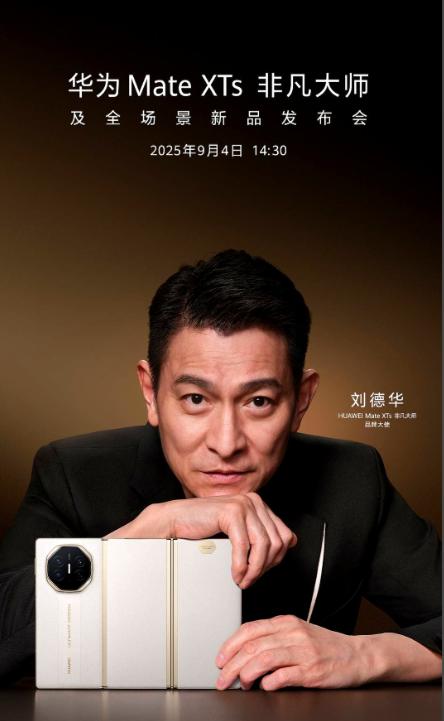
On September 18, Huawei added another highlight at its Connect event by releasing the Ascend 950/960/970 series of AI chips and a three - year roadmap, marking a new stage of "full - stack self - development" for domestic AI chips.
Beyond individual breakthroughs, the cluster effect of the domestic semiconductor industry fully emerged in 2025.
Companies such as Cambricon, Moore Threads, and Muxi Semiconductor rose simultaneously. Cambricon's stock price once exceeded 1,595.88 yuan per share, surpassing Kweichow Moutai and becoming the focus of the market. At the capital level, December 2025 witnessed a listing boom of domestic AI chip companies: Moore Threads and Muxi Semiconductor successively listed on the Science and Technology Innovation Board, with their stock prices rising by 468.8% and 692.95% respectively on the first day of listing, and their total market values both exceeding 300 billion yuan; Biren Technology passed the Hong Kong Stock Exchange's hearing and was sprinting for the "first GPU stock in the Hong Kong stock market" with 1.241 billion yuan in orders.
Among them, the new - generation GPU architecture "Huagang" released by Moore Threads increased the computing power density by 50% and the energy efficiency by 10 times, perfectly supporting the full - function GPU computing ecosystem and demonstrating the leap of domestic chips from "substitutable and usable" to "self - developed and excellent".
Supported by the 344 - billion - yuan Third Phase of the National Integrated Circuit Industry Investment Fund, domestic GPUs can now support the training of models with hundreds of billions of parameters, with a linear acceleration ratio of over 95%, completely changing the pattern of overseas chip monopoly.
4. Explosion of C - end AI: Alibaba Tongyi Qianwen App Ushered in the Era of Mass Intelligence
In mid - November 2025, Alibaba's "Tongyi Qianwen" App became a key node in detonating the C - end AI market. Its download volume exceeded 10 million during the public beta in one week, and the monthly active users reached 30 million within 23 days, topping the global AI application growth list and marking China's official entry into the C - end AI era.
The success of the Tongyi Qianwen App lies in breaking through the "laboratory nature" of large models and becoming the "first user entrance in the AI era". It deeply integrates Alibaba's e - commerce, AutoNavi Maps, Alipay, and other ecological services, realizing practical functions such as intelligent price comparison and travel planning, allowing ordinary users to truly feel the value of AI.
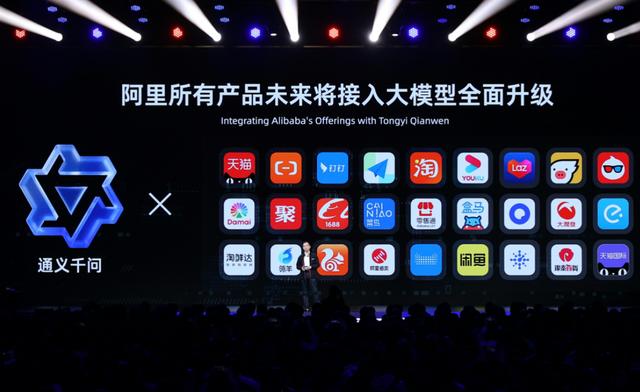
Commercially, on December 9, Alibaba established the Tongyi Qianwen C - end Business Group, helmed by Wu Jia, a vice - president of the group, demonstrating its full - scale bet on the AI - to - C track.
This event triggered a chain reaction. Internet giants such as ByteDance and Tencent followed up to layout C - end AI applications. The core of industry competition shifted from "model parameter comparison" to "scenario implementation ability and user experience competition", promoting AI technology to truly integrate into the daily lives of hundreds of millions of users.
5. Mass Production of Intelligent Driving: L3 - Level Autonomous Driving Officially Approved for Implementation
On December 15, 2025, the Ministry of Industry and Information Technology officially announced the first batch of L3 - level autonomous driving vehicle access permits. Relevant models of Changan Shenlan and BAIC ARCFOX were successfully selected and carried out pilot projects in designated areas of Beijing and Chongqing respectively.
This policy breakthrough marked that China's intelligent driving officially entered the "commercial application" stage from the "testing and verification" stage, ushering in the era of mass production.
According to the pilot standards, L3 - level vehicles can achieve "legal hands - off driving" on designated roads, with a maximum speed of 80 km/h in the Beijing pilot and 50 km/h in congested scenarios in Chongqing. Drivers only need to stay alert and respond to takeover requests in a timely manner.
This breakthrough drove the explosion of the entire industrial chain: the demand for core components such as lidars and high - computing - power chips soared. Autonomous driving companies such as Pony.ai and WeRide successively listed on the Hong Kong stock market and were pursued by capital.
More importantly, it accelerated the transformation of intelligent connected vehicles from a "marketing selling point" to a "core competitiveness", promoting the industry competition to shift from a "price war" to a "technology war" and accumulating valuable commercial operation experience for the implementation of higher - level autonomous driving in the future.
6. Changes in E - commerce: Douyin E - commerce's GMV Exceeds 4.3 Trillion, Reshaping the Landscape
In December 2025, Douyin E - commerce announced that its annual GMV reached 4.3 trillion yuan, with a year - on - year growth rate of over 30%. It achieved a scale breakthrough in just 5 years that traditional e - commerce took more than a decade to achieve, completely rewriting the competitive landscape of the Chinese e - commerce market.
Previously, the traditional e - commerce landscape dominated by Alibaba, Pinduoduo, and JD.com had lasted for many years, while Douyin emerged as a dark horse with its dual - engine driving model of "interest e - commerce + shelf e - commerce".
Data showed that in contrast to traditional e - commerce, it took Alibaba 19 years, JD.com 20 years, and Pinduoduo 8 years to exceed 4 trillion yuan in GMV, while Douyin only took 5 years, setting the fastest growth record in the industry.
By the end of 2025, Douyin E - commerce's market share rose to 24%, forming a situation of "Taobao & Tmall, Pinduoduo, Douyin, and JD.com" standing side by side.
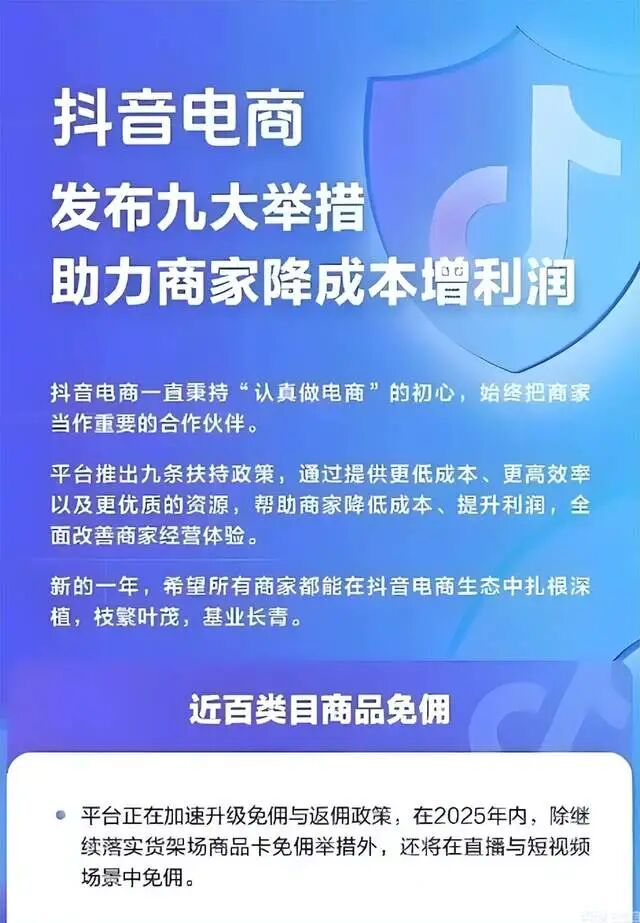
Notably, Douyin had become an important platform for international brands to launch new products. Giants such as Apple had launched their new products on the Douyin platform. The GMV share of the shelf scenario exceeded 40%, proving that its ecosystem had shifted from "traffic dividends" to "sustainable business value".
7. Fierce Competition in Local Life: The "Three - Kingdoms Battle" Pattern in the Food Delivery Market Takes Shape
In 2025, China's food delivery market bid farewell to the "two - horse race" that had lasted for many years and officially entered a new competition stage of "three - kingdoms battle" among Meituan, Alibaba (Taobao Flash Shopping/Ele.me), and JD.com. The core of industry competition shifted from a simple price war to a "battle for the instant - retail ecosystem".
In terms of the pattern evolution, Meituan still led with a 50% market share; Alibaba promoted Ele.me to fully integrate into the Taobao Flash Shopping system, achieving the dual - engine driving of "e - commerce + instant retail", and its market share rose to 42%; JD.com's food delivery service emerged as a dark horse and stabilized with an 8% share.
The fierce competition forced the industry to upgrade. While the three major platforms invested more than 100 billion yuan in subsidies in total, they also accelerated the standardization of rider rights and interests protection: JD.com achieved 100% coverage of the five social insurances and one housing fund for full - time riders, and Meituan invested 2.3 billion yuan in subsidizing riders' endowment insurance. At the regulatory level, the "Basic Requirements for the Service Management of Food Delivery Platforms" was issued to set the bottom line for competition and promote the industry's transformation from wild growth to high - quality development.
8. Communication Innovation: Commercial Use of eSIM Ushered in the "Card - Free Era"
In October 2025, the Ministry of Industry and Information Technology approved the three major operators to conduct commercial trials of eSIM mobile phone operation services. The implementation of this policy marked that China's communication industry officially entered the "card - free" era, laying a foundation for the innovative integration of communication technology and terminal devices.
The commercial use of eSIM brought a comprehensive experience upgrade: users could activate numbers without inserting physical SIM cards, use multiple devices collaboratively, and switch operators conveniently, completely getting rid of the troubles of SIM card loss and damage.
At the industrial level, the card - free design simplified the internal structure of terminal devices, reduced manufacturing costs, injected new impetus into the development of the Internet of Things and wearable devices, and forced operators to transform from "traffic sales" to "service upgrading".
In terms of technological synergy, eSIM was deeply integrated with cutting - edge technologies such as 5G - A and satellite communication, laying a foundation for the realization of the "Internet of Everything" in the 6G era and supporting the implementation of emerging application scenarios such as the metaverse and industrial Internet.
9. Cluster of Hard - Tech Companies: The Rise of the "Six Little Dragons in Hangzhou" Detonated the AI + Ecosystem
In 2025, the "Six Little Dragons in Hangzhou", consisting of Unitree Robotics, DeepSeek, Game Science, Qunhe Technology, BrainCo, and CloudMinds Robotics, collectively emerged as a "phenomenal force" in China's AI + hard - tech field, driving Hangzhou to form a complete science and technology innovation ecosystem from technology R & D, scenario implementation to capital support.
The six companies covered cutting - edge fields such as humanoid robots, large models, brain - computer interfaces, 3A games, and spatial intelligence, and each had core breakthroughs:
Game Science's "Black Myth: Wukong" won the global Game of the Year award, with sales exceeding 22.1 million copies; DeepSeek's open - source large model had performance comparable to international top - level standards; Unitree Robotics' humanoid robots appeared on the Spring Festival Gala, and CloudMinds Robotics' quadruped robots were used for power grid inspections in Singapore, with sales in the US market increasing by more than 10 times, becoming the fastest - growing overseas region; BrainCo's brain - computer interface bionic devices achieved mass production of millions of units.
At the capital level, Qunhe Technology submitted an IPO application to the Hong Kong Stock Exchange and was expected to become the "world's first stock in spatial intelligence"; Unitree Robotics and CloudMinds Robotics successively launched listing counseling. CloudMinds Robotics completed two rounds of financing exceeding 500 million yuan in a single year, and strategic capitals such as China Telecom and China Unicom deeply participated.
At the policy and ecosystem level, Hangzhou allocated 15.72% of its industrial policy funds to support hard - tech. More than 400,000 college students under 35 years old were introduced throughout the year. The six companies