KeKr | Dyson's Path to Success Amid the Fierce Competition in the Cleaning Appliance Market
In 1901, the first electric vacuum cleaner was introduced, rewriting the history of household cleaning for humanity. Today, the Chinese cleaning appliance market is in the midst of a fierce battle, and 2025 can be seen as a year of "reshuffle". The continuous improvement of Chinese households' cleaning concepts, the rapid advancement of intelligent technologies, and policy incentives from the government have jointly contributed to the expansion of the Chinese cleaning appliance market. Domestic brands have risen rapidly, introducing new products one after another. Chinese consumers' requirements for cleaning robots have long gone beyond just "cleaning thoroughly". Functions such as obstacle avoidance, self - cleaning ability, battery life, and even the presence of noise have all become variables that can influence consumers' purchasing decisions. Amid the rapid product iteration and transformation in the market, there is a brand that doesn't seem to follow the trend of piling up parameters and features. Instead, it adheres to innovation based on its own R & D rhythm and market insights.

Official image
Recently, we conducted an exclusive interview with Jake Dyson, the chief engineer of Dyson. Facing the rise of Chinese cleaning appliance brands and the rapid iteration of new products, Jake Dyson shared Dyson's core concept: "Long - termism is deeply ingrained in our DNA. We are committed to researching and developing core technologies that can shape the future. Being both a family - owned business and a commercial entity gives us the ability to withstand risks and invest in cutting - edge technologies, which allows us to maintain an advantage in continuously improving our products. This is the core of what makes us Dyson and enables us to continuously enhance people's quality of life."

Jake Dyson
Recently, Dyson launched a new product - the Dyson True AI Cleaning Robot. As the brand's first cleaning robot capable of both dry and wet cleaning, it truly embodies the long - termism mentioned by Jake Dyson. In fact, Dyson has a 20 - year technological accumulation in robot R & D. From the first vacuuming robot DC06 in the 1990s, to the 360 Eye equipped with visual navigation technology, and then to the 360 Vis Nav that entered the Chinese market last year, every step demonstrates Dyson's unremitting efforts in innovation and its commitment to solving practical problems with technology.
Actually, cleaning is far more complicated than it seems. Whether a cleaning robot can move freely among complex furniture, whether it can handle stubborn stains like soy sauce in Chinese kitchens, whether it is smart enough to avoid scattered wires, socks and other debris or even pet excrement on the floor, and whether it can recognize the difference between carpets and wooden floors - such details are all questions that Dyson actively considers during the R & D process, which means Dyson's cleaning robots must be "fastidious".
Wet - mopping function to meet the needs of the Chinese market
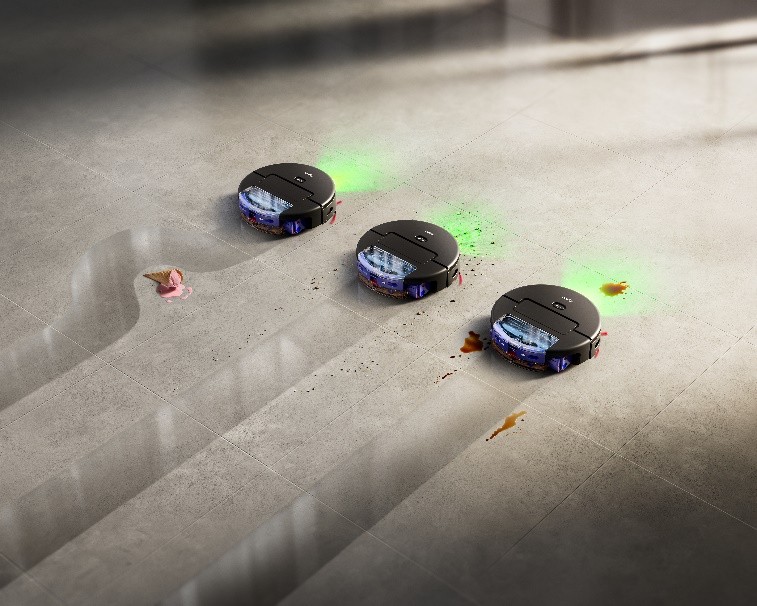
Adhering to creativity is not just empty talk, especially when you are facing demanding Chinese consumers. Jake Dyson understands this well. Last year, he personally visited Chinese households and noticed a detail: Chinese consumers have a very prominent demand for the wet - mopping function. The floor materials in Chinese households are mainly hard floors, and people's cleaning habit is to first clean the floor with water and then dry it to avoid water stains. The Dyson team found that water stains are likely to leave marks on various floor materials after drying. Therefore, Dyson integrated the wet - mopping system of the previously launched WashG1 floor cleaner into this robot. Through precise water volume control, the robot can continuously moisten the roller during the cleaning process and scrape off the sewage continuously, ensuring that there is no standing water left on the floor surface, so users no longer need to mop the floor manually. This technology is currently applied to all Dyson floor cleaners and is continuously being upgraded and optimized. "Our goal is to make the floor look as clean as new after being cleaned by the robot, completely freeing people from this household chore and allowing them to have more time to enjoy life," Jake Dyson said in an interview.
Official image
Accurate discrimination and repeated cleaning
When intelligence has become a sweeping wave in the industry, the Chinese market is undoubtedly at the forefront. How to judge whether a cleaning robot is "smart" enough? Chinese consumers have their own criteria, and they are more worried about the situation of "mopping dirty with dirty". The core advantage of the Dyson True AI Cleaning Robot precisely addresses the pain points of current consumers. Jake Dyson introduced its core advantage in detail: The Dyson True AI Cleaning Robot can process environmental information in the home in real - time through the coordinated work of multiple intelligent software and hardware. It can intelligently identify more than 200 types of objects in the home. At the same time, with the help of the visual detection system, the robot can accurately identify the location of stains, perform targeted cleaning through reciprocating scrubbing, and continue the whole - house cleaning after confirming that the stains have been removed, just like humans use their eyes to confirm whether the stains are removed.
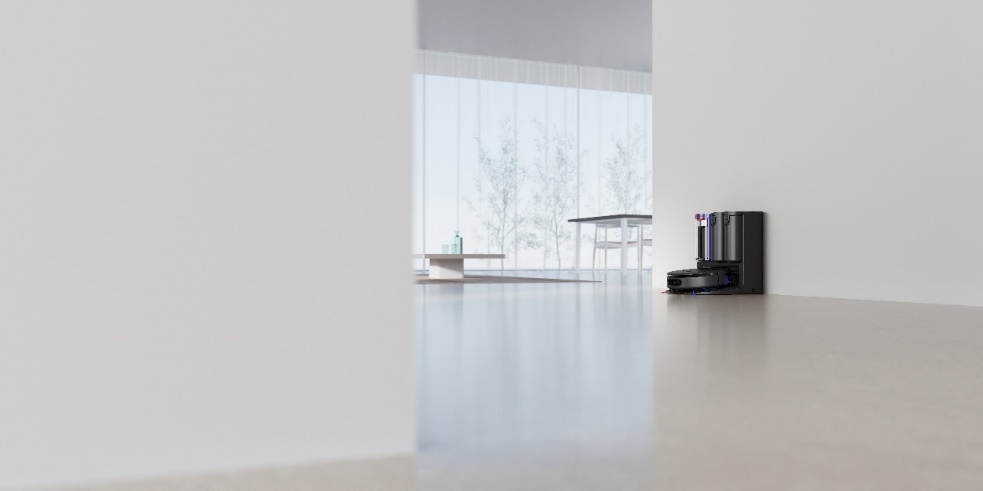
For Dyson, the charging station is not only a storage space for the robot but also reflects Dyson's pursuit of engineering. The multi - duct cyclone separation system equipped with this product can automatically empty the dustbin and support the precise dispensing of cleaning fluid. In Jake Dyson's view, "The design of the charging station is very important as it is part of the home itself," which also demonstrates Dyson's design concept that combines practicality and aesthetics.
Official image
Rejecting technology stacking and solving real pain points
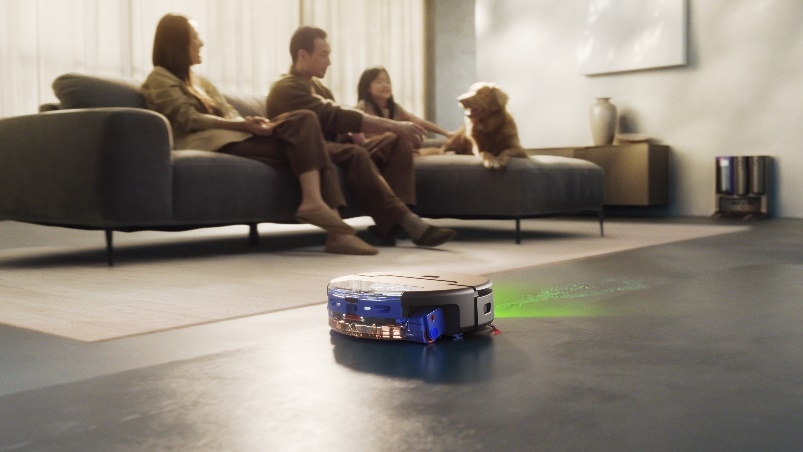
Behind the Dyson True AI Cleaning Robot lies Dyson's commitment to innovation and its vision for the future of smart homes. Jake Dyson has a clear vision: The interconnection between devices will create great value for the home ecosystem, enabling Dyson, users, and devices to form a deeply integrated ecological relationship. "Household appliances should be able to automatically complete tasks according to users' living rhythms when users are away from home - users' living needs are the core," Jake Dyson said. Dyson is promoting the interconnection of all product categories, allowing consumers to control multiple devices through their mobile phones. The autonomous operation of more products will help users save more time and make life simpler.
Official image
Dyson's differentiated path
In the highly competitive Chinese cleaning robot market, Dyson seems to have found a differentiated path: not pursuing simple function stacking, but focusing on solving practical pain points and those overlooked problems. As Jake Dyson said, Dyson was reluctant to enter this market rashly until it found a real breakthrough point. Behind the Dyson True AI Cleaning Robot is Dyson's re - thinking of the essence of cleaning and the inheritance of innovation. Dyson is still persevering on the path of innovation in the fierce competition of the Chinese cleaning robot market, and it is expected to create a new picture of future home cleaning for consumers.