Cherry's Exit, Rise of Domestic Brands, and AI's Entry: The Peripheral Market in 2025 Undergoes a Major Shake-up
If you had to describe the peripheral market in 2025 in one sentence, what comes to mind for Xiaolei is: The old king abdicates, the new king arrives, and AI enters the game.
Although the peripheral market is not large compared to the entire PC market, it is an indispensable part of the PC ecosystem and can also help brands build user recognition more easily. Therefore, many PC brands have increased their investment in the peripheral market this year, hoping to create a product ecosystem around their brand IP.
In addition, many domestic professional peripheral brands have also started to transform. They are no longer satisfied with winning by offering low prices and have begun to enter the high - end market, attracting the attention of peripheral enthusiasts with their unique design concepts and product features. In contrast to the professional keyboard market, the domestic brands in the mouse market have directly reduced the average price of professional - grade gaming mice from hundreds of yuan to dozens of yuan, which is quite astonishing.
Next, let's take a look back at what memorable events took place in the peripheral market in 2025.
Cherry's market value has evaporated by 98%, and the old king is on the verge of passing
The biggest news in the peripheral market in 2025 should be that Cherry, the once - king of mechanical keyboards, is on the verge of bankruptcy. If you don't know Cherry, you might be a player who has only entered or started paying attention to peripherals in the past two years, because four or five years ago, Cherry was the "faith" of many keyboard enthusiasts.
This company, founded in the United States in 1953 and later moved its headquarters to Germany, has witnessed the growth of modern industry. In fact, in the early days, it was not a "keyboard manufacturer" but provided physical switches for manufacturing enterprises and was well - known globally for its high reliability.
With the emergence of computers, people urgently needed reliable input devices for interaction. In 1973, Cherry launched its first keyboard switch, and then in 1983, it released the famous MX shaft, which is the mechanical keyboard shaft. This shaft design has even been used until today.
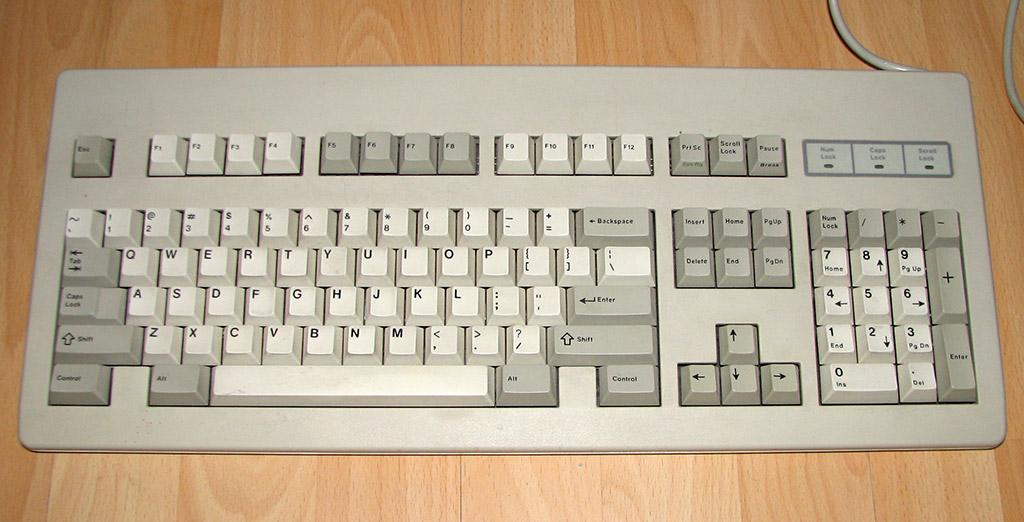
Image source: DES
Therefore, it's no exaggeration to say that Cherry is the pioneer of mechanical keyboards. However, its past glory has faded away, leaving only a desolate situation. According to online information, the retail price of Cherry's mechanical shafts once exceeded $1.1 per piece, and the bulk purchase price for keyboard factories remained above $0.5 per piece for a long time. In many periods, the production capacity could hardly meet the demand of manufacturers.
With the rise of domestic mechanical shaft manufacturers, Cherry soon felt the business pressure. Domestic manufacturers such as Kailh and Gateron entered the market and directly pushed the price of mechanical shafts below $0.3 per piece. After holding on for some time, Cherry also had to follow the trend and reduce the price to $0.35 - $0.45 per piece.
It can be said that Cherry's decline started from this price war. Later, in order to compete with domestic shafts, it once lowered the supply price to $0.2 per piece, which was far lower than its production cost in Germany. Eventually, Cherry decided to dismantle its production line in Germany and only keep the production lines in China and Slovakia.
Cherry did try to maintain its market share. However, compared with domestic manufacturers, it lacked sufficient R & D investment and strong market drive. At the same time, it sacrificed its original "reliability" to reduce costs (the subsequent shafts of Cherry were of poorer quality in terms of materials). As a result, it failed to make a breakthrough in the mid - low - end market and gradually lost its position in the high - end market.
The latest data shows that Cherry's market value has dropped by 98% from its peak in 2021, falling from about 771 million euros to only about 14 million euros. To save the company, they appointed an interim CEO in December and plan to sell some non - core businesses to raise cash flow. The business focus will also shift to digital healthcare. From the current situation, this once - famous global mechanical shaft enterprise may soon become history.
Looking back at Cherry's decline, the key lies in its lack of progress in product development. Although the early domestic shafts were criticized for their quality problems, they could be iteratively upgraded on a monthly basis. Shaft manufacturers can customize different trigger strokes, forces, and materials according to the needs of keyboard brands, and then quickly iterate based on user feedback and popular shafts.
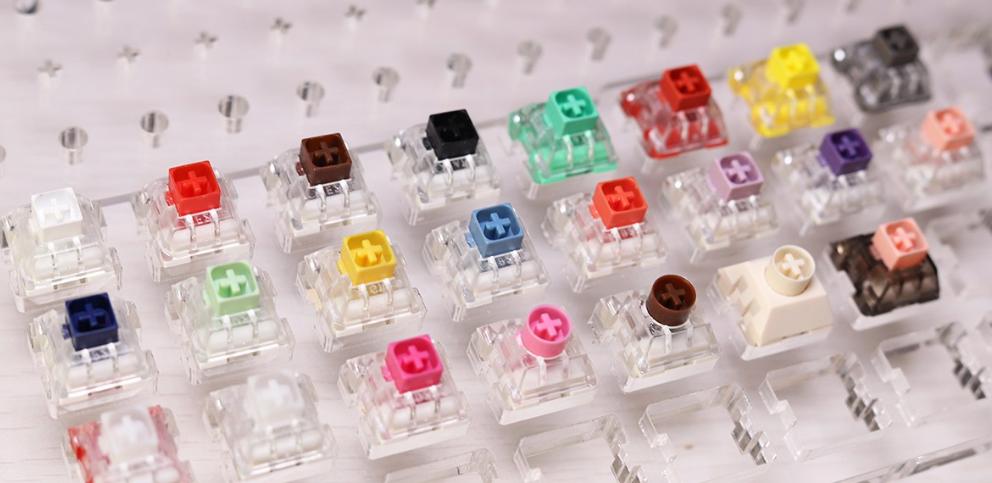
Image source: Peripheral World
Relying on this positive cycle, domestic manufacturers have occupied most of the market in just a few years and even won over a large number of users overseas. Even the most loyal Cherry keyboard enthusiasts have to admit that domestic shafts have their merits.
In addition, since 2024, magnetic shafts (which trigger keys through magnetic changes and can customize trigger strokes and other parameters according to needs, more suitable for gamers) have gradually become the new mainstay in the mid - high - end e - sports market. Domestic manufacturers have quickly followed up and even innovated, occupying a stronger position in the high - end magnetic shaft market.
What about Cherry? They skipped the magnetic shaft and chose another route - the inductive shaft. This route is not original either. Before Cherry, Rapoo had already released the world's first inductive shaft keyboard; Cherry's first authorized and cooperative product was officially launched nearly 4 months later. As the inductive shaft is accepted by players, more and more manufacturers are joining this market, and Cherry still has to face fierce competition.
At present, it is highly likely that Cherry will officially announce the sale of its peripheral business department at the end of this year or early next year. As for which enterprise will take over, it is still unknown. It is not ruled out that, like iRobot, it will be taken over by its OEM partner in China. After all, Cherry still has a high level of recognition in the global PC peripheral market, and the products designed by the Chinese team later have received good feedback from users.
Anyway, we are about to witness another once - industry leader selling its core business due to the impact of Chinese brands.
Domestic keyboards are moving towards the high - end, and "low price" is no longer the only selling point
When it comes to domestic keyboards, many people's first reaction might be "cheap". Early domestic keyboards did open up the market with low prices. However, as domestic keyboards gradually occupy the main share of the market, more and more brands are launching high - end keyboards, squeezing into the market originally belonging to international giants.
For example, the well - known peripheral brand Dareu has successively launched high - end models such as Cupid65 and Thunder 68 this year. The former uses an all - aluminum alloy shell + titanium metal decorative pieces and is equipped with customized large - bead mechanical shafts. Structurally, it uses a leaf - spring Gasket, emphasizing the consistency of feel and sound. The latter, on the basis of a transparent keycap + all - aluminum alloy body, also uses a new generation of self - developed wireless solution and inductive shafts.
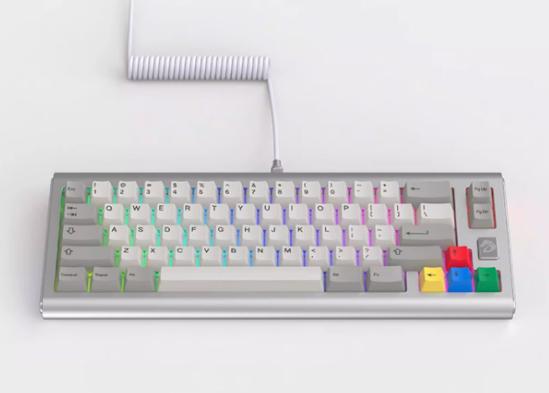
Image source: Dareu
In addition, veteran domestic peripheral manufacturers such as Rapoo have basically launched separate geek sub - brands, showing their determination to enter the high - end market. Of course, whether the brand's determination is effective depends on user recognition. So, how do users view the high - end development of domestic keyboards?
Judging from the feedback on online communities, domestic peripheral brands still need to focus on "cost - effectiveness" to gain user support. In short, Chinese players have the ability and willingness to buy high - end keyboards priced over a thousand yuan, but only if the products "are worth the price". The situation where overseas brands can sell products for two or three thousand yuan just because of brand premium has not occurred yet (and may never occur).
In addition, some manufacturers have also started to explore special keyboard materials. For example, manufacturers like Dareu have tried to use special materials such as ceramics and wood for keycaps and even keyboard shells. This not only makes the keyboards more recognizable but is also unexpectedly popular in the overseas market. However, at present, these special keyboards are mainly for show and have no special features in actual experience.
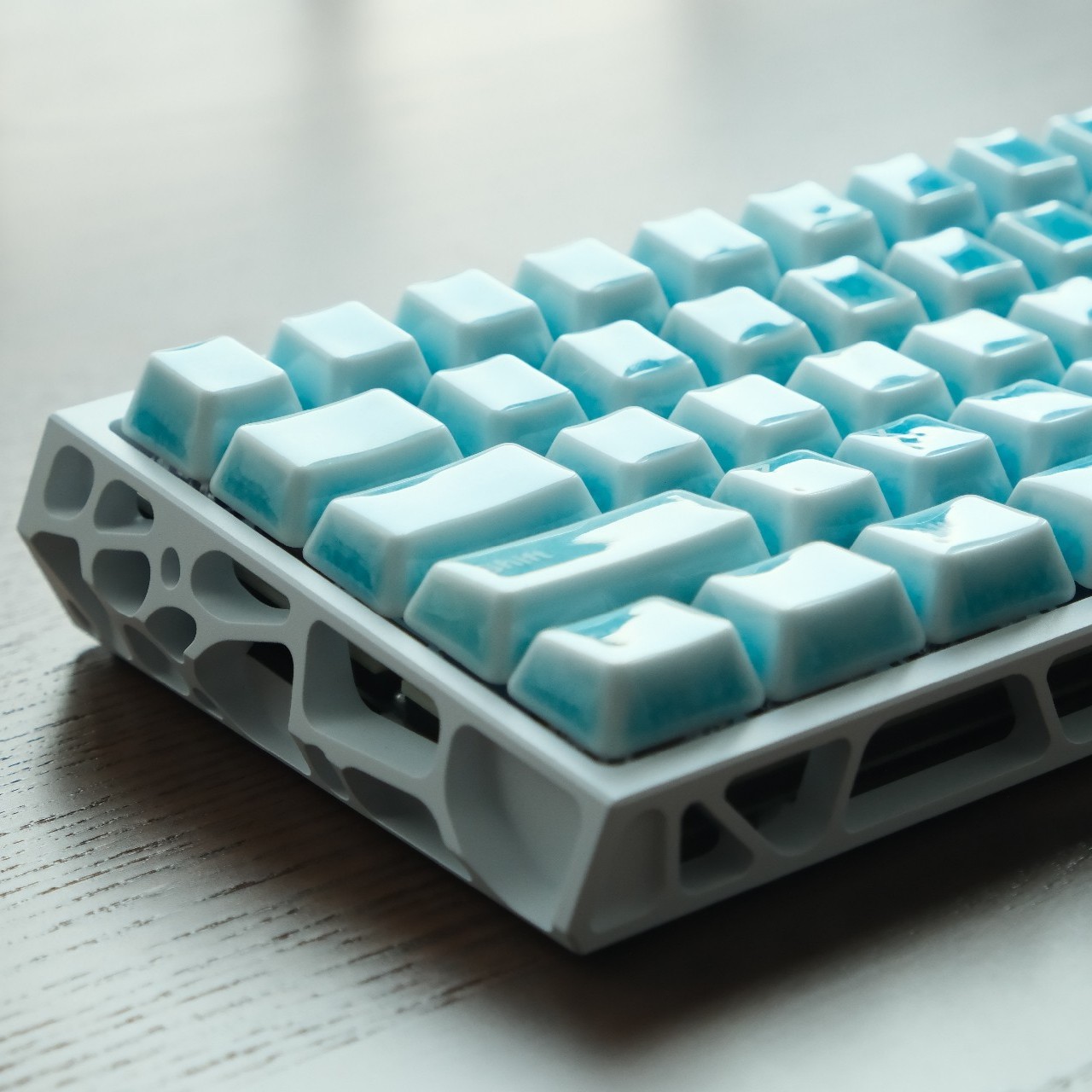
Image source: Taobao
Under the pressure of domestic peripheral manufacturers, mainstream brands such as Logitech are also being forced to make changes. For example, they have established R & D centers mainly composed of Chinese teams and launched many "affordable and high - quality" new products, which have received good reviews from overseas users, indicating that Logitech's product strength has significantly improved recently.
On the one hand, domestic brands are actively moving towards the high - end, and on the other hand, international big brands are being forced to move towards the low - end. The keyboard market in 2025 is undoubtedly undergoing a major reshuffle.
The mouse market is in fierce competition, and AI has become a new selling point
The keyboard market has been "tamed" by domestic manufacturers, and the mouse market is the next target. Throughout 2025, the professional gaming mouse market has shown a state of "overall over - performance, and details determine success or failure". The flagship sensors that were only seen on high - end mice in the past are now common in products priced at two or three hundred yuan or even one or two hundred yuan. Under the extreme competition, even mice priced at dozens of yuan are equipped with high - grade sensors and ergonomic designs.
When sensors are no longer the core selling point, the comprehensive experience becomes the key to attracting users. Last year, many domestic mouse brands were involved in "plagiarism" disputes (imitating classic products of international giants). This year, Xiaolei found that many brands have started to meet the needs of different users through extreme segmentation design based on user feedback and online community discussions.
Taking Rapoo as an example, its VT series of gaming mice launched more than 5 new products this year, covering different hand sizes, different dominant hands, and different types of gamers. Each model has different configuration versions. On the premise of similar basic configurations, they mainly differentiate themselves through parameters such as battery life and wireless transmission rate, with prices ranging from 100 to 400 yuan, directly covering the mainstream price range of gaming mice.
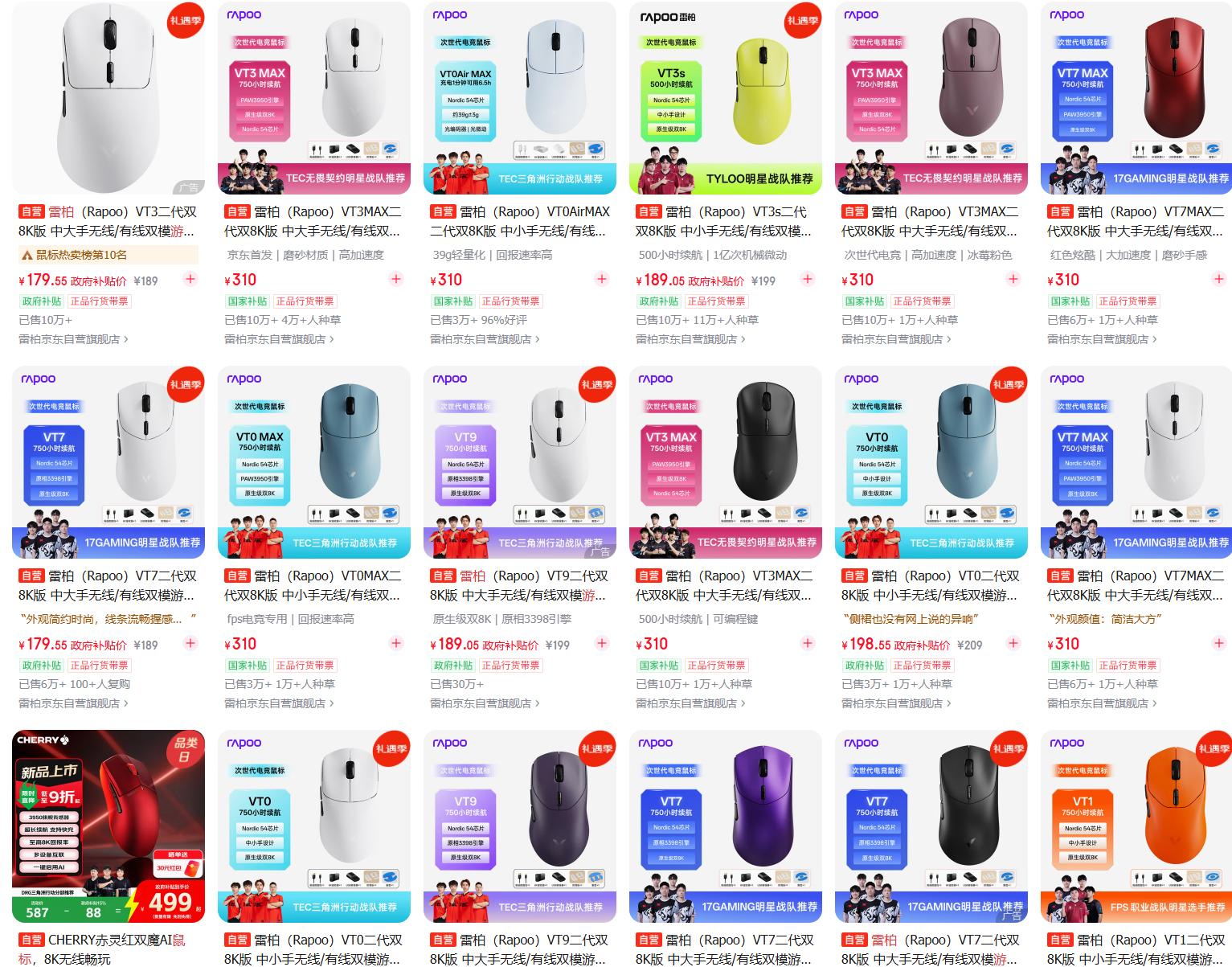
Image source: JD.com
There are many brands adopting a similar product strategy to Rapoo, so the new product launch rhythm of the entire market has been compressed to a monthly basis. In contrast, the product iteration time of brands such as Logitech and Razer is usually one to two years, and some main products are even sold for four or five years before being updated.
However, with the entry of domestic brands, the product update speed of these brands has also accelerated significantly. For example, Logitech released its first - generation GPX in 2020, and the next - generation product was not released until 2023. After the large - scale entry of domestic mouse brands, Logitech launched five iterative products of GPX and GPW in just two years and rarely launched two models for specific user groups: 2c (for users with small hands) and 2SE (for students and other groups).
Although Razer is not as aggressive as Logitech, its product update frequency has also increased significantly this year. Moreover, different from Cherry, Razer and Logitech still have significant unique technological advantages. Coupled with their advantages in molds, they still have a considerable number of fans among players.
It has to be said that the two professional peripheral giants, Logitech and Razer, are very different from Cherry. Whether in terms of R & D strength or product channels, they are different from suppliers like Cherry, which mainly supply parts. Both brands have established separate R & D teams in China, which enables them to withstand the pressure in the current market competition and even maintain their share in the mid - high - end market.
While the professional market is in a mess, the office mouse market is also undergoing a new round of changes. With the popularization of large AI models, many brands have launched AI mice, aiming to occupy the "AI entrance at users' hands". For example, well - known brands such as iFlytek and Lenovo, as well as Misu Technology, which focuses on the AI mouse market, the latter has also gained a certain market share in this unique track.
However, simply writing 'AI' on the packaging and attaching a client to call the model is essentially the same as users installing an AI tool by themselves. Therefore, to truly make a difference, it's not enough to just add an "AI key". It depends on whether AI can be integrated into users' daily work. In this regard, iFlytek has actually done a good job.
They recently released the latest generation of AM50 Ultra. Different from common AI mice, the AM50 Ultra is more similar to a professional gaming mouse in design. Whether it's the hollowed - out magnesium alloy shell or the Omron micro - switch + 4K StarFlash wireless technology, it makes it not just an "office mouse" but more like a mouse that users are willing to use at any time.
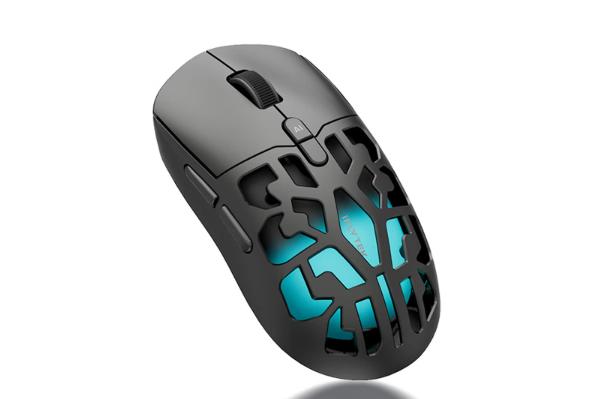
Image source: iFlytek
In terms of AI functions, the AM50 Ultra still maintains high - precision voice input recognition on the device side and supports 23 Chinese dialects and 66 foreign languages for input. It also provides real - time voice transcription and translation, and supports functions such as subtitle projection and intelligent screenshot (directly outputting table files after screenshotting documents and tables). It can be said that these functions are quite practical.
In Xiaolei's opinion, AI peripherals will surely gradually enter the mainstream market in the future. As for who will stand out, it's still unknown. Even leading manufacturers like iFlytek are constantly exploring and launching different types of products to test the market reaction.
However, Xiaolei thinks that hardware is secondary. The key to the success of AI peripherals lies in software. Whoever can deeply integrate AI capabilities with the operating system and office software is more likely to be recognized by users first.