Is it possible to control objects with thoughts? New breakthrough in brain-computer interface!
On December 18th, the National Medical Products Administration held a promotion meeting on brain-computer interface medical devices in Beijing. The meeting heard opinions and suggestions from relevant experts and scholars from universities, research institutions, and medical institutions, as well as representatives from R & D enterprises.
The convening of this promotion meeting means that brain-computer interfaces have long been recognized as medical devices at the legal level and meet clinical conditions. On the same day, China announced a new breakthrough in the application of brain-computer interfaces. The second patient in an invasive brain-computer interface clinical trial, after using this technology, can control a wheelchair and command a robotic dog with their mind in a state of high paraplegia, bringing new life and hope for future life to the patient.

If the success of the first clinical application of a brain-computer interface was accidental, then the successful use of brain-computer interface medical devices by the second patient means that the current technical route has been confirmed and has the potential for large-scale promotion.
China's scientific and technological breakthrough, which has taken nearly 10 years, has finally borne fruit today. Although it started significantly later than Europe and the United States, the gap between domestic brain-computer interface technology and the international leading level has rapidly narrowed in recent years.
01 Brain-computer interface is actually a communication system
A brain-computer interface (BCI) is a direct connection path established between the brain and external devices, and it is a two-way communication bridge built between the biological nervous system and artificial computing devices. So far, the most well-known user of this communication system is the late theoretical physicist Stephen William Hawking.
In terms of its principle, the brain generates brain waves during mental activities. The brain-computer interface directly reads the brain's intentions by recognizing the characteristics of brain waves, converts them into computer instructions, and realizes the interactive connection between humans and machines or the external environment, creating miracles such as enabling the paralyzed to walk, the speechless to "speak", and the blind to "see".
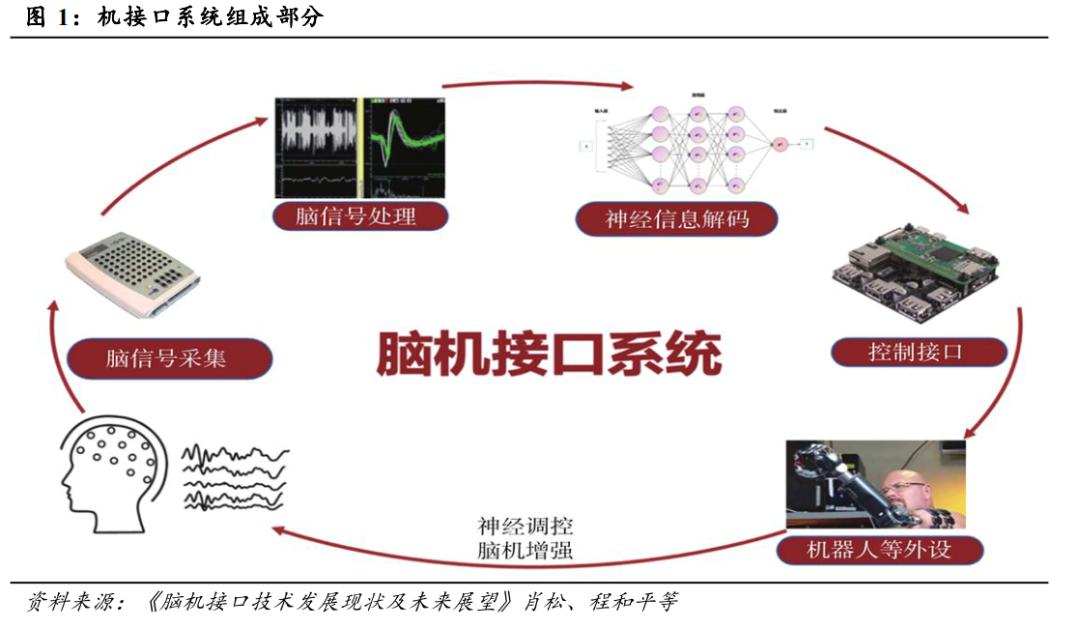
The core of the application of brain-computer interface devices lies in realizing direct information interaction between the brain and external devices through bioelectrical signal acquisition, neural encoding and decoding algorithms, and closed-loop feedback mechanisms.
The brain-computer interface system integrates multiple technologies such as neuroscience, signal processing, computer science, artificial intelligence, and electronic engineering. It is mainly composed of the user (brain), brain signal acquisition, brain signal processing and decoding, control interfaces, peripheral devices such as robots, and neural feedback. The core components are brain signal acquisition, brain signal processing and decoding, and control interfaces.
According to the structure and functional characteristics of the brain-computer interface system, it can be divided into output type, which mainly obtains signals from the brain and converts these signals into control instructions for the external world. For example, people with disabilities can control external devices through brain signals, such as controlling wheelchairs or prosthetics, computer cursors, or input devices.
Input type relies on receiving external stimuli and converting them into internal perception or cognition in the brain to enhance or restore the user's sensory experience, and it is usually used to restore damaged sensory abilities. The two-way interactive type combines the functions of the output type and the input type to further improve the user experience and control accuracy. According to the signal acquisition method and technology, it can be divided into invasive, semi-invasive, and non-invasive types.

Regardless of the classification, the brain-computer interface system aims to form a closed loop between brain perception technology and brain regulation technology to jointly act on the user.
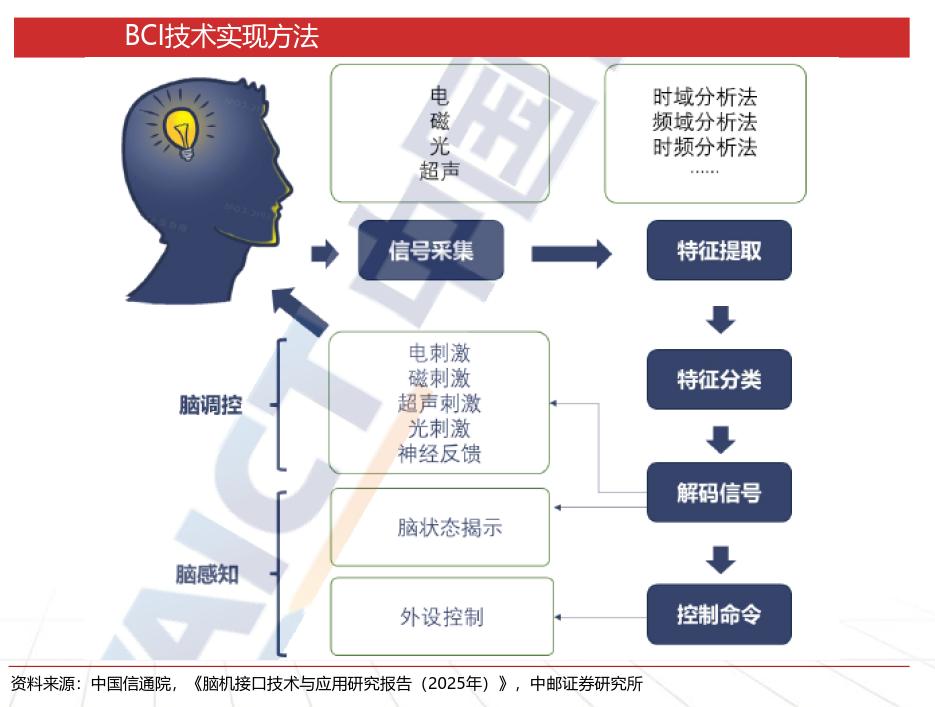
Before 2013, brain perception and brain regulation technologies developed independently, lacking two-way interaction and closed-loop capabilities. From 2014 to 2023, the interactivity of brain perception was improved, and brain regulation moved towards a closed loop. Since 2024, the integration and development of perception, stimulation, and control technologies have not only enabled accurate perception of brain activity signals but also regulated the brain state based on these signals while achieving effective control of peripheral devices, providing users with a more natural and intelligent interaction experience. The development of brain-computer interface devices has officially entered the fast lane.
02 The inevitable Sino-US competition and great power game
Since 2018, industries that China focuses on developing cannot avoid the influence of the United States. In the tracks where China is accelerating development, there will definitely be American companies blocking the way. Brain-computer interfaces are no exception.
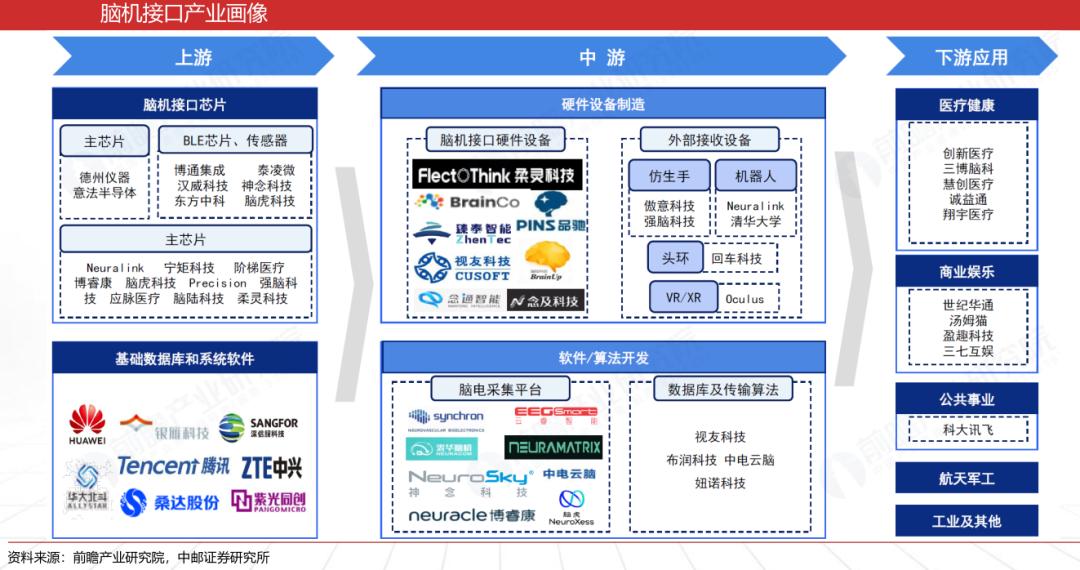
Looking at the upstream, midstream, and downstream of the brain-computer interface industry, European and American enterprises dominate the main chip market. Chinese enterprises such as BrainCo still face encirclement from multiple parties, as well as off-field moves such as contract manufacturers restricting production for some reason at any time. The competition pattern in the midstream is similar to that in the upstream. Although there are well-known enterprises such as Innovation Medical, Sanbo Brain Hospital, Tom Cat, and Iflytek in the downstream application layer, the application effect is obviously restricted by the R & D progress of the upstream and midstream.
Further looking at the R & D situation in China and the United States, at present, the difference between the brain-computer interface industries in China and the United States is that the United States leads in the overall invasive field, while China has local advantages in new material fields such as flexible electrodes and has opened up a technical path with Chinese characteristics in the semi-invasive track. The specific competition is reflected in core components and key technical bottlenecks, such as new materials and flexible electrodes, neural chips, and electroencephalogram acquisition equipment.
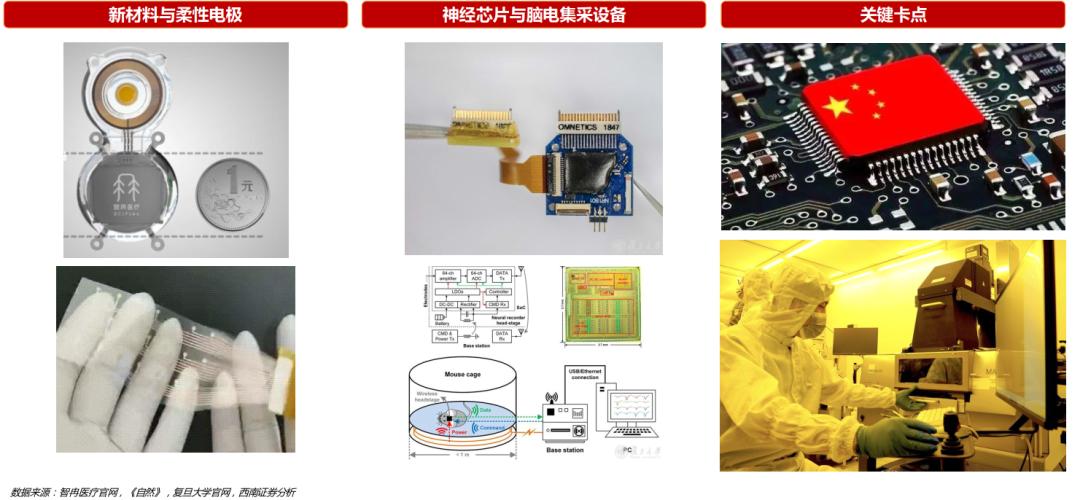
Focusing on the advantageous branches of China's brain-computer interface, domestic research teams have shown strong innovation capabilities in the field of flexible electrodes. The team from the Chinese Academy of Sciences has developed the world's smallest and most flexible neural electrode, with a cross-sectional area only 1/5 to 1/7 of that of similar products from Neuralink in the United States, which can minimize damage to brain tissue.
In the field of the new paradigm of dynamic electrodes, the Shenzhen Institute of Advanced Technology of the Chinese Academy of Sciences in collaboration with Donghua University has successfully developed a "neural worm" electrode that can autonomously adjust its forward direction in the brain, breaking the "static" tradition of implanted electrodes. This electrode is as thin as a hair, has both flexibility and stretchability, and can be freely driven.
The research first proposed the new paradigm of "dynamic electrodes" in the field of brain-computer interfaces, breaking through the limitation that traditional implanted electrodes have long been in a "static" state and expanding new paths for the research and application of brain-computer interface electrodes.
After five years of technological breakthroughs, the research team developed a neural fiber electrode with a diameter of only 196 microns, which is soft and stretchable, and successfully integrated 60 independent signal channels through multiple precise process steps such as ultra-thin flexible film preparation and conductive pattern design. To achieve the "dynamic" regulation of the electrode, the team integrated a high-precision magnetic control system and real-time imaging tracking technology, enabling the electrode to autonomously adjust its forward direction in rabbit brain tissue and stably collect high-quality bioelectrical signals.
In terms of electrode implantation technology, in response to the problem of difficult implantation of flexible electrodes, the Institute of Semiconductors of the Chinese Academy of Sciences developed a "neural tentacle" probe with adjustable stiffness, achieving low-damage implantation and long-term high-quality neural signal recording.
This probe adjusts the pressure through an internally integrated micro-hydraulic system, maintaining rigidity at the initial stage of implantation to accurately puncture brain tissue and then restoring its soft characteristics after implantation to better adapt to the microenvironment of brain tissue. This method can achieve both the goals of low-trauma implantation and long-term high-quality neural signal recording without relying on hard introduction tools.
The experimental results show that compared with the traditional implantation method, this technology can significantly reduce acute damage by more than 74% and reduce chronic immune response by about 40%. In the long-term in-vivo recording experiment on mice, the probe continuously showed excellent neuron signal quality and signal-to-noise ratio, and the functionality and unit number of its signal channels were significantly better than those of the control group.
The United States still has advantages in the long-term biocompatibility of materials and system integration. For example, Neuralink has relatively rich experience in electrode integration and large-scale implantation. However, China has shown unique competitiveness in the innovative structural design and dynamic performance of flexible electrodes.
In terms of neural chips and electroencephalogram acquisition equipment, the United States temporarily leads in system-level products and chip integration, while China performs well in specific scenarios and algorithms. In terms of technical bottlenecks, China and the United States have different focuses. China currently focuses on the autonomy and reliability of high-end chips, while the United States balances technological radicalness and safety and stability.
Taking Neuralink in the United States as an example, its fully invasive technical route requires removing part of the skull and implanting a large number of electrodes. Although it aims to pursue the highest performance, it also brings higher surgical risks. The US FDA's approval of invasive brain-computer interface devices is extremely strict, and it has rejected Neuralink's application for human trials due to safety concerns. Therefore, the application speed of fully invasive brain-computer interface devices in the United States is significantly slower than that of semi-invasive and non-invasive ones.
In the semi-invasive field, Precision Neuroscience and Synchron in the United States are representatives of this path. The former has been approved for short-term commercial implantation, and the latter has obtained clinical trial permission through vascular intervention.

Focusing on China, in June this year, the Center for Excellence in Brain Science and Intelligence Technology of the Chinese Academy of Sciences, in collaboration with Huashan Hospital Affiliated to Fudan University and relevant enterprises, successfully carried out China's first invasive clinical trial, marking that China has become the second country in the world to enter the clinical trial stage in invasive brain-computer interface technology. The GCP multi-center clinical trial of "Beijing Brain No. 1" was officially launched in October this year, which is the first time in the world to achieve a semi-invasive brain-computer system with more than 100 channels, high throughput, wireless full implantation, and quasi-practical application. The domestic enterprise Xinzhida also participated in this experiment.
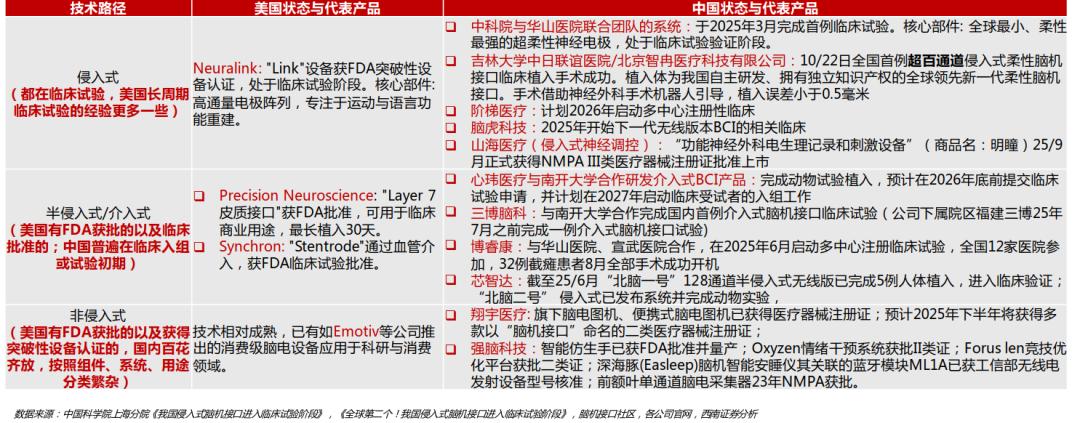
In addition to the teams led by the Chinese Academy of Sciences, domestic enterprises such as Sanbo Brain Hospital, Xinwei Medical, and Xiangyu Medical are all working hard to consolidate the foundation for clinical applications in their respective fields and accelerating the research on relevant businesses for follow-up development. Enterprises such as Suishi Intelligence and Pengrui Brain Hospital have also recently obtained approval to use their brain-computer interface devices. China's brain-computer interface technology is rapidly narrowing the gap with the international leading level.
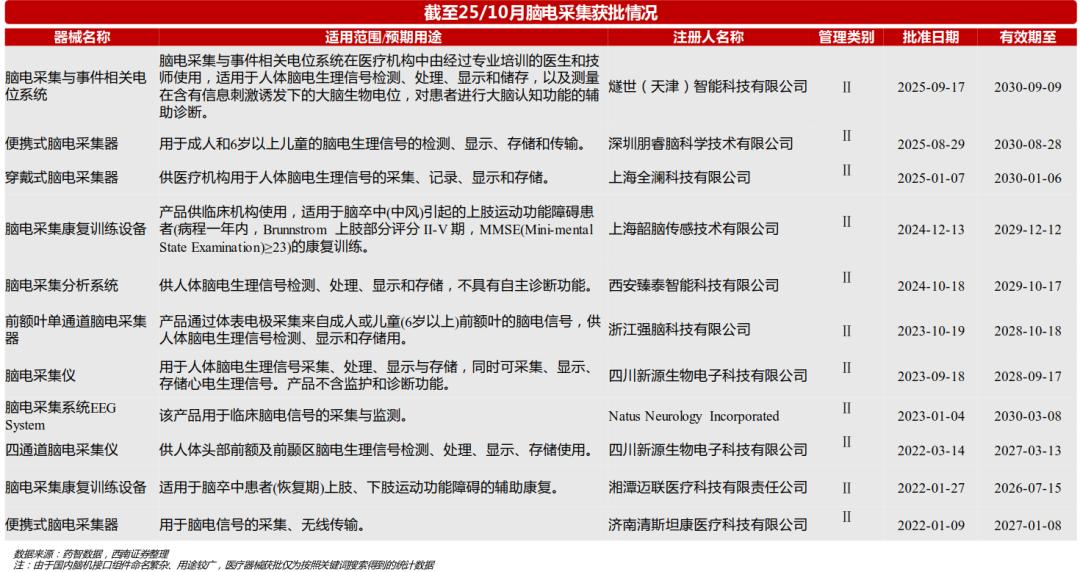
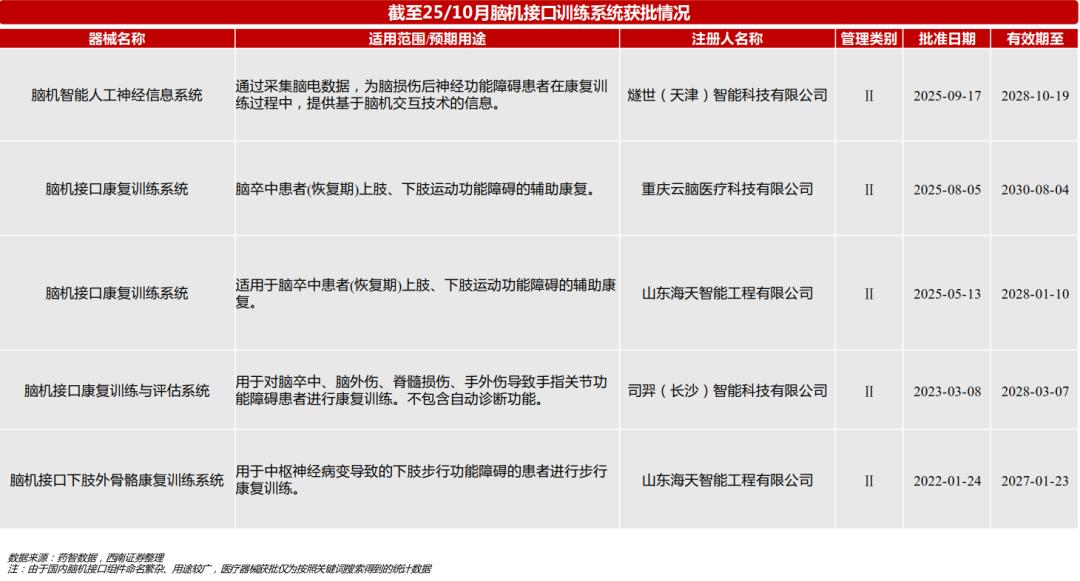
In terms of neural signal detection, the 256-channel flexible electrode array of Shanghai Brain Tiger Technology has achieved a maximum information transmission rate of 4.15 bits per second, and its performance is comparable to the publicly available data of Neuralink's subjects. As mentioned above, the Chinese Academy of Sciences has developed the world's smallest and most flexible neural electrode.
It can be said that in today's brain-computer interface field, China and the United States are in the first echelon, and other major countries are actively catching up.
03 The reasons behind the rapid development of brain-computer interface devices after ten years of hard work
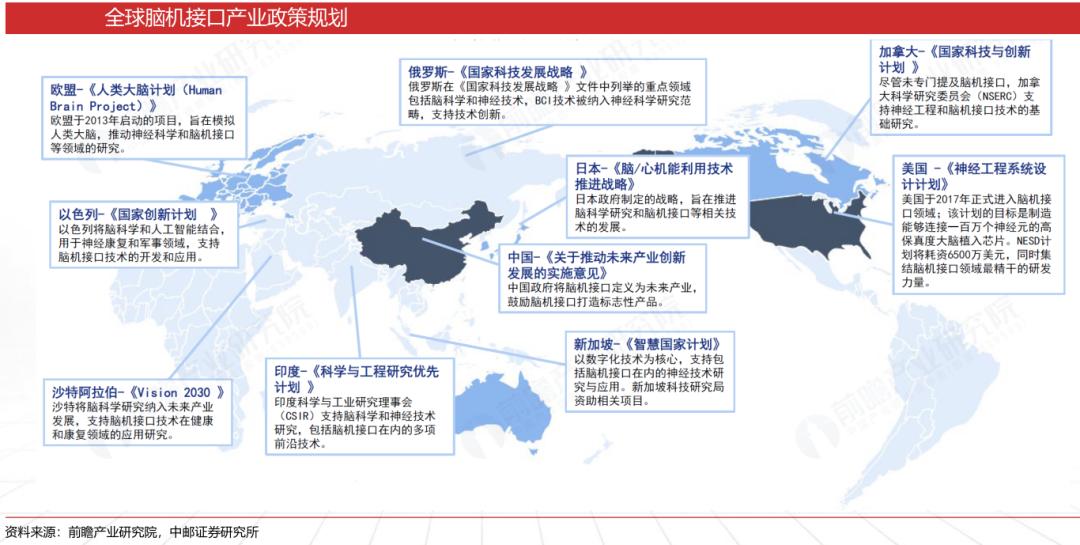
The rapid development of China's brain-computer interface industry stems from 2016 when the decision-making level included brain science and brain-like research in the national strategy. In 2018, the "regional plan" for brain science was determined, and brain science and brain-like research centers were established in Beijing and Shanghai respectively.
In 2021, the decision-making level clearly stated again that artificial intelligence and brain science are the national strategic scientific and technological forces