Still "drifting" in first-tier cities? This generation of workers prefers to come to Foshan.
To get to know Foshan, there's no need to start with a rigid definition. Instead, you can first feel its rhythm.
In Foshan, a pot of slow - cooked soup needs to simmer over a low flame for three hours to be just right; for Spring Festival couplets, one has to spread out the paper, grind the ink, and write each character painstakingly by hand. Only then can the effort put into it be considered "up to par". The clay blanks of Shiwan figurines are repeatedly carved by craftsmen, and they can sit there for an entire afternoon. This kind of slowness is not procrastination but an understanding that some things are worth taking time to brew.
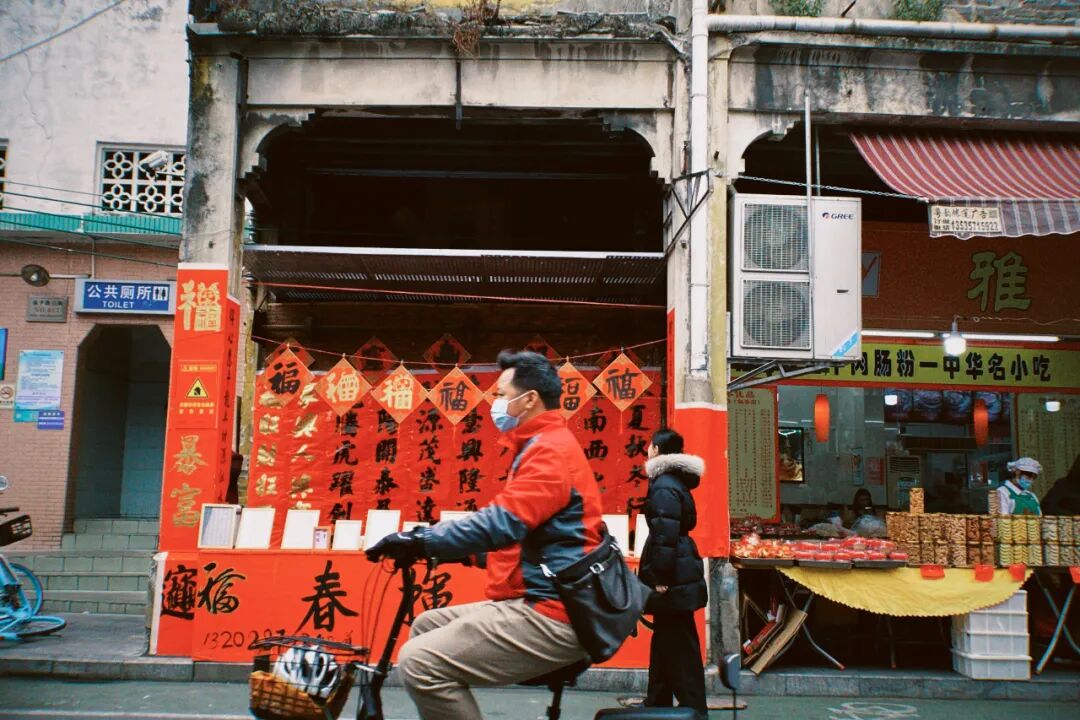
✎"Spring Festival Couplets" on Kuaizi Road in Foshan. Photo source: Provided by the interviewee
But don't think that "slowness" is the only characteristic of Foshan. The city also pulses with a passionate "quickness".
In Foshan, in martial arts duels, one has to strike first; in dragon boat races, one has to cross the gate first; in business, one has to seize the opportunity first. This "quickness" represents the perseverance to break through oneself, the courage to be the first, and the practical ability to be rooted in the real economy.

✎The freight terminal in Foshan. Photo source: Tuchong Creative
The combination of quickness and slowness, relaxation and striving, forms the city's character of Foshan.
In Foshan, quickness and slowness are never opposing choices but two sides of the same coin. It allows you to slowly cook a pot of soup and write a pair of couplets by hand, and also enables you to take the lead and seize opportunities in the industrial wave.
What it offers is not only the possibility of a well - balanced life but also a survival philosophy of "knowing when to relax and when to strive". Between perseverance and innovation, between hard work and life, between tradition and modernity, Foshan always maintains its own rhythm. It is not a "lying - flat city" that avoids the intense competition but provides a more sustainable model of hard work.
01
There's a kind of relaxation called living in Foshan
In recent years, the criteria for young people to choose a city have changed significantly.
In the past, choosing a city was like a math problem of calculating "opportunity cost". Top - tier companies, glamorous positions, and visible "room for advancement" were the reasons that attracted a generation to drift from place to place. The standard answer always seemed to point to those super - cities with highly concentrated resources.
For the "drifting generation", enduring high prices, cramped living spaces, and long commutes was a necessary price to pay for career development.
However, this "philosophy of hard work" is hard to resonate with the "Generation Z", who value individual feelings more.
Contemporary young people's criteria for choosing a city are no longer limited to "surviving". They want both a promising career, a relaxed life, and an interesting daily routine.
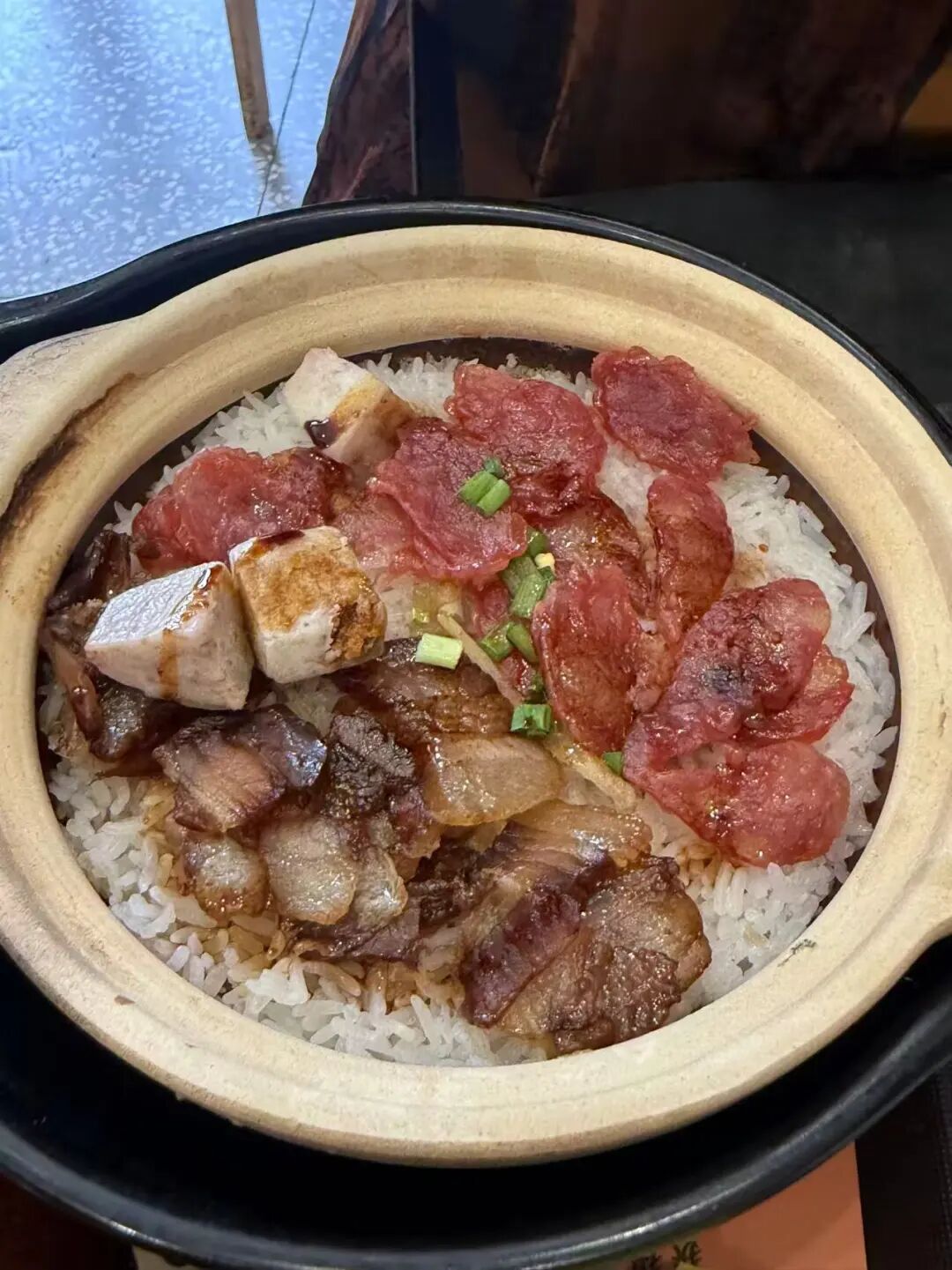
✎Delicious food is an important factor for contemporary young people to choose a city. Photo source: Provided by the interviewee
Against such criteria, cities like Foshan, which can both carry dreams and retain a comfortable and lively atmosphere, have become the choice of more and more people.
Wang You, a native of Chaozhou, is one of them.
After graduating from university, although he worked in Guangzhou, he planned to live in Foshan early on. "A single - room apartment with a balcony in Tianhe, Guangzhou, costs 3,000 yuan per month. With the same amount of money, I can rent a two - bedroom apartment in Foshan." His 40 - minute subway commute is even shorter than that of his colleagues in Guangzhou who commute across districts. His "dual - city life" has never been hindered by distance.
More importantly, as a Chaozhou native with a picky palate for food, Wang You frankly said, "In my criteria for choosing a city, 'delicious food' is very important." From authentic Shunde cuisine to Cantonese snacks on the streets, Foshan has won him over with its food.
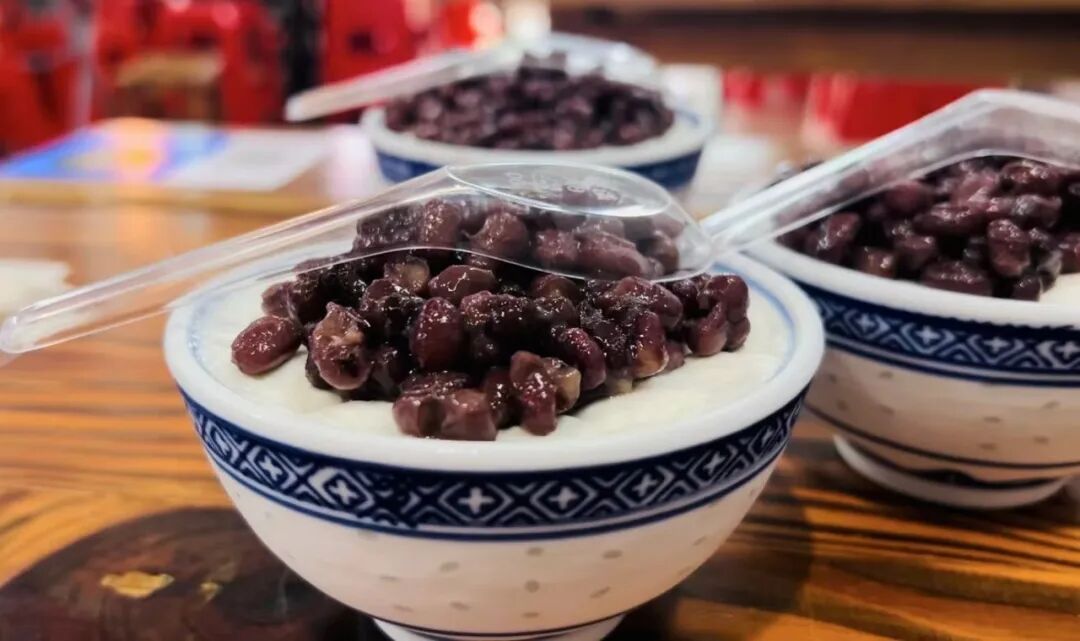
✎Shunde double - skin milk. Photo source: Provided by the interviewee
Buying a house in Foshan after getting married made him deeply feel the livable charm of this city. Although his work requires him to travel between Guangzhou and Foshan frequently, his home is only a 15 - minute drive from his wife's workplace.
Different from the "hasty" rhythm of big cities, Foshan gives people a feeling of "being calm and in control".
Wang You described his daily life in Foshan: There is a small park downstairs, and he often sees neighbors leisurely walking their kids or playing chess; on weekends, there are always groups of young people fishing for small fish by the river, and the lawns in every park are full of people camping in tents.
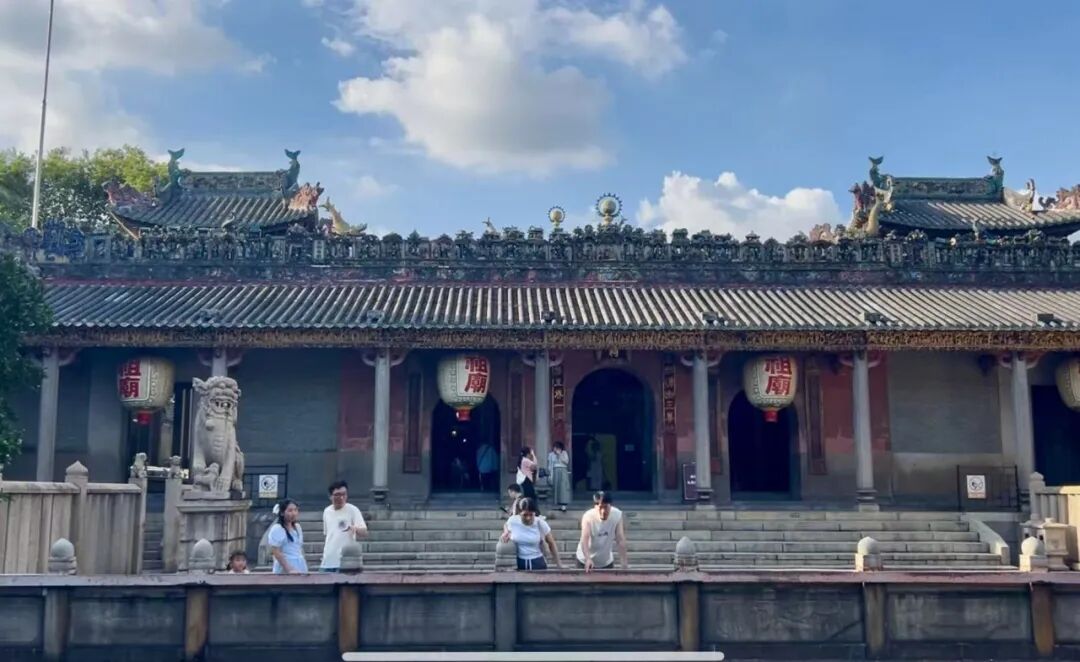
✎Foshan Ancestral Temple. Photo source: Provided by the interviewee
"Here, you can truly feel what it means to 'live vividly', not just survive," Wang You said.
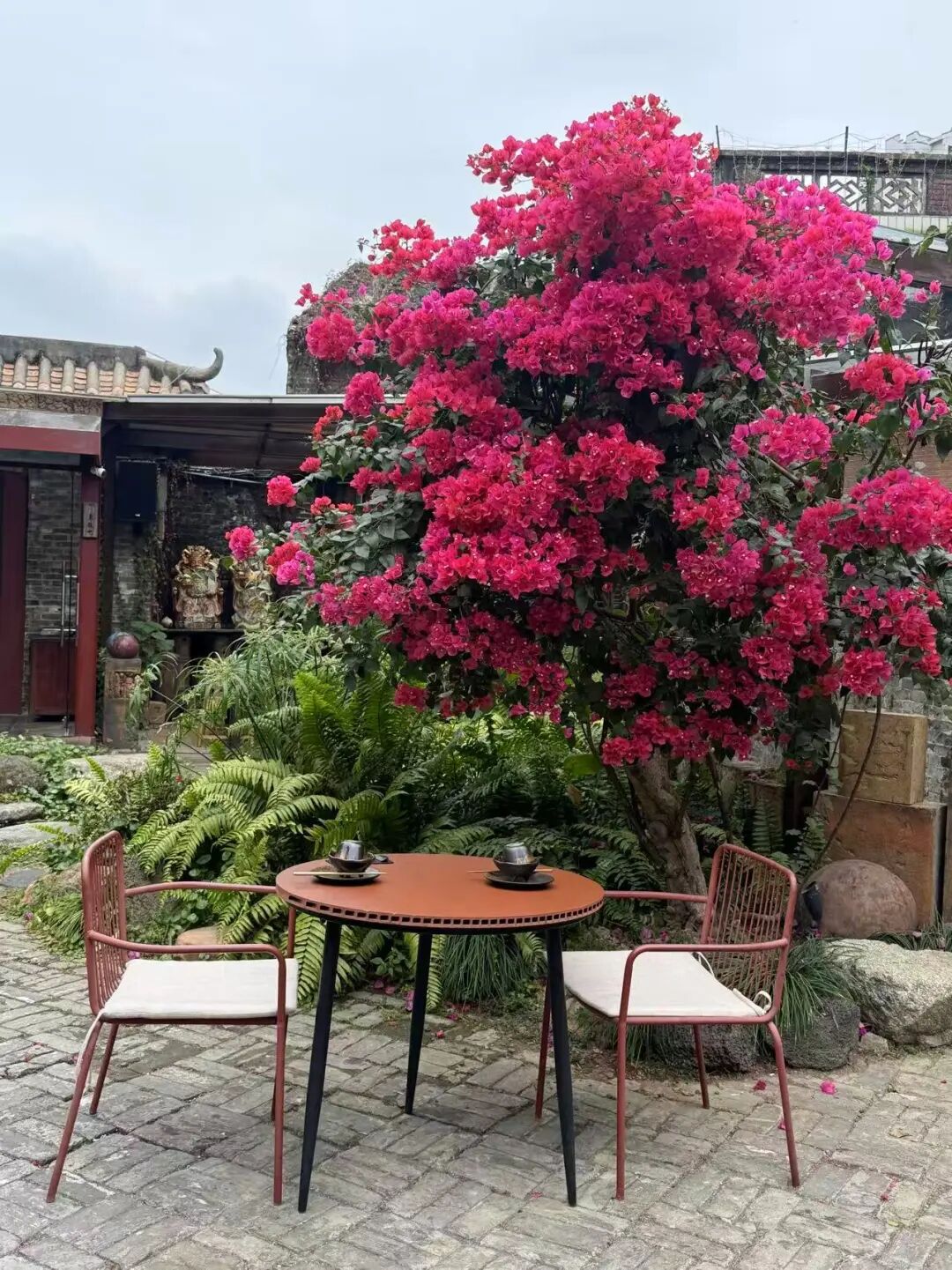
✎A restaurant in Foshan. Photo source: Provided by the interviewee
These seemingly trivial daily scenes constitute Foshan's unique urban temperament - a kind of "relaxedness" that allows for a balance between hard work and life.
In recent years, Foshan has frequently appeared in various city rankings. From being listed as one of the "Cities with the Highest Happiness Index" to ranking 14th in the country in the "Ranking of Chinese Cities in Terms of Talent Attraction among the Post - 95s: 2024", this major manufacturing city is attracting the attention of young people with its unique lifestyle.
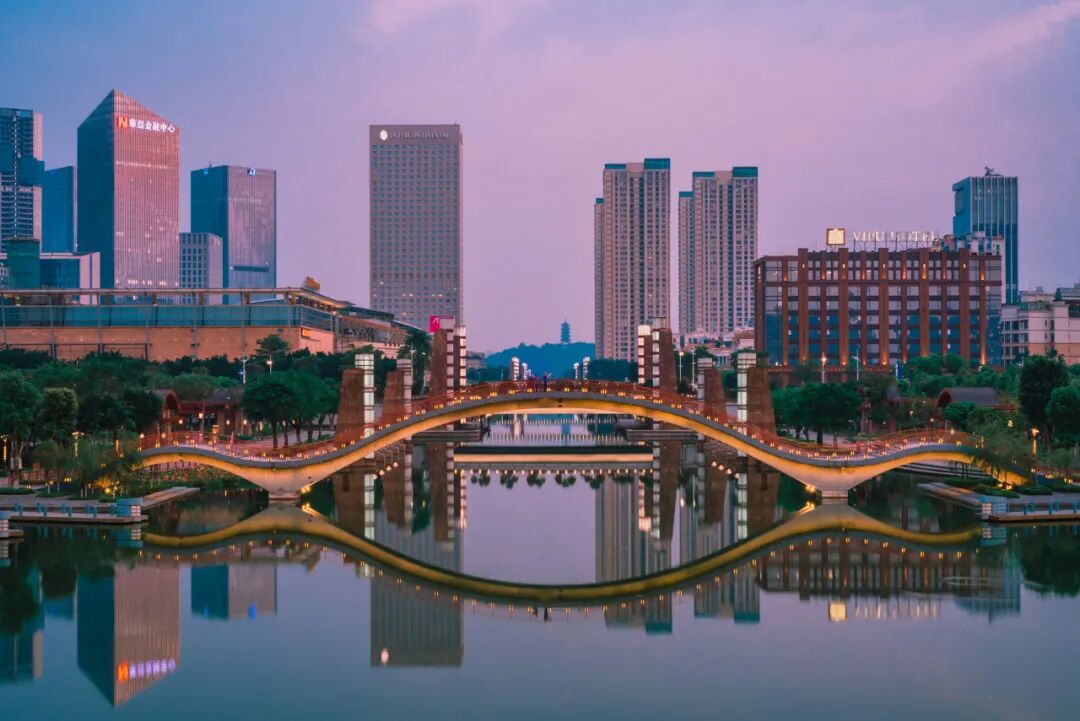
✎Foshan. Photo source: Tuchong Creative
Statistics confirm this trend. In 2023 and 2024, the population of Foshan increased by 63,100 and 83,500 respectively. In 2024, the permanent population of Foshan was 9.6989 million, only 301,100 short of 10 million.
The young people who vote with their feet are redefining what a "good city" is.
Choosing Foshan is not choosing to lie flat but choosing a more sustainable way of hard work. Here, working hard and enjoying life are no longer a dilemma. This wisdom of balance is Foshan's answer to the era of intense competition.
02
In Foshan, a fighting spirit is the "standard equipment"
Foshan is a relaxed city, but it has never been a "Buddha - like" (laid - back) city.
During the Ming and Qing dynasties, Foshan, with its four pillar industries of smelting, ceramics, pharmacy, and textile, was known as one of the "Four Famous Towns" in China, along with Hankou Town in Hubei, Jingdezhen in Jiangxi, and Zhuxian Town in Henan. In the early days of the reform and opening - up, Shunde seized the policy opportunity of "processing with supplied materials, samples, and designs and compensation trade", leveraging its advantages of being adjacent to Hong Kong and Macao and having a large number of overseas Chinese, and developed labor - intensive industries such as home appliances, furniture, and hardware.
Today, Foshan has an above - scale industrial output value of over 3 trillion yuan, with 2 trillion - level and 100 - billion - level industrial clusters. It is the 17th city in the country and the 3rd in Guangdong Province with a GDP exceeding 1 trillion yuan.
Here, each town and street has a distinct industrial calling card: home appliances in Beijiao, high - end equipment in Shishan, flowers in Chencun, furniture in Lecong, ceramics in Shiwan... Together, they support the golden signboard of the "Capital of Manufacturing".

✎Foshan. Photo source: Tuchong Creative
The prosperous industries have naturally given rise to a large group of "bosses" in Foshan.
Calculated by the permanent population, one in every six people in Foshan is a "boss", and they are all "all - round players".
The boss of a furniture store can not only bargain with you but also talk about new ways of cross - border e - commerce; the boss of a building materials factory monitors the production line during the day and studies live - streaming sales at night; even the boss of a fish soup shop at the alley corner is thinking about selling pre - made dishes across the country.
This "all - roundness" is an in - born business instinct and a "vigorous" attitude of always being ready to take a chance.
This "vigorous" spirit is not exclusive to the older generation of entrepreneurs. When we look at the young "second - generation factory owners" and "second - generation entrepreneurs", we can find that this practical fighting spirit continues in a more flexible and adaptable way.
Li Dongming, the brand manager of "nhrattanworks" for rattan weaving in Nanhai, Foshan, is one of the young entrepreneurs in Foshan.
His story is closely related to the industrial context of Nanhai, Foshan. In the 1990s, like many local families, his parents engaged in rattan weaving processing, and they have been doing it for thirty years.
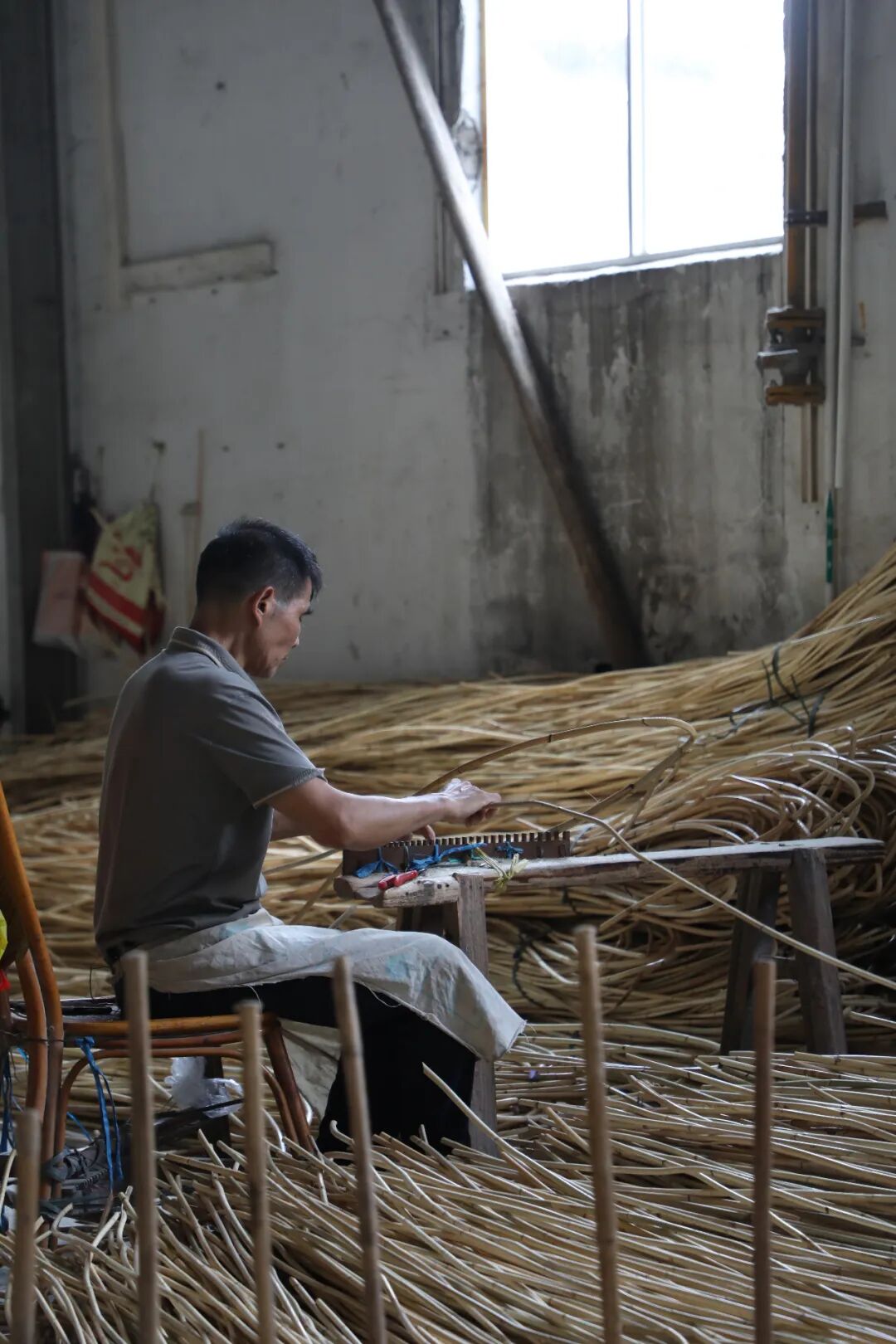
✎Workers sorting rattan by size. Photo source: Provided by the interviewee
However, in 2020, due to the double pressure of the pandemic and factory relocation, the factory was at a crossroads of whether to continue. "At that time, our family often discussed whether to keep the factory going."
What finally made Li Dongming decide to take over was a very simple idea. "Mainly, I wanted my parents to have something to focus on. This craft that they have been doing for half a lifetime can't be lost. On the other hand, I also wanted to ensure the future of the old masters who have been working with us for many years."
He invested his savings. At first, it was mainly out of a sense of responsibility, but in the process, he gradually discovered new opportunities in the old industry.
"Building my own brand means standing on my father's shoulders and reaching a little further." This "reaching" is a flexible exploration of design, brand, and channels on the basis of what the older generation has achieved, and it is also an extension of the practical spirit in the new era.
This exploration first manifested in the change of production methods. In the past, for rattan weaving, more than twenty processes, from dealing with knots, peeling to weaving, were all done by hand. "Maybe only a few hundred catties of materials could be processed in a day." After introducing machines, "thousands of catties can be processed in a day, and the efficiency has increased by at least ten times."

✎Rattan weaving with a decorative pattern. Photo source: Provided by the interviewee
In addition to making traditional products, Li Dongming also began to look further. He realized that the current market values not only practicality but also individuality and aesthetics.
He was no longer satisfied with following in his parents' footsteps. He started new attempts, collaborating with designers to develop products that suit the aesthetic taste of young people, and constantly participating in exhibitions and testing user preferences through social media. Gradually, more and more people came to him through these new channels.