Four common tricks are hard to guard against. Digital products have become a major area of "fraud" in e-commerce. How can consumers safeguard their rights?
The Apple AirPods Pro 2 features a USB-C interface. So, what kind of interface does the AirPods 3 have?
These days, a friend told Xiaolei such a story:
He bought a pair of AirPods 3 on an e - commerce platform for over 600 yuan. He thought it was quite a bargain. However, after unpacking and using them, he felt "cheated." It turned out that he thought the AirPods 3 should also have a USB - C interface, but in fact, it has a Lightning interface. This is such an old interface. Why is it still being promoted? (Note: The official AirPods 3 is equipped with a Lightning interface. It wasn't until the AirPods 4 that it was upgraded to the more compatible USB - C interface.)
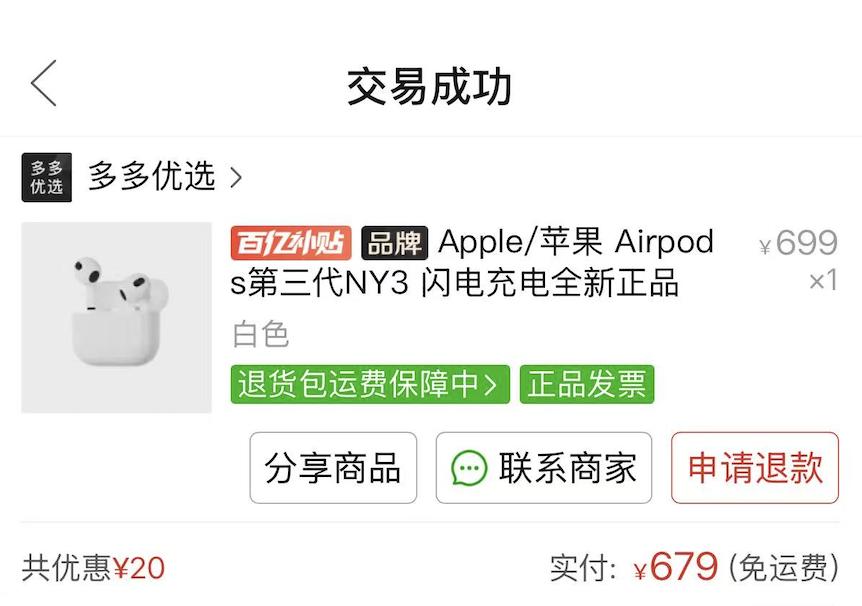
(Image source: An e-commerce platform)
On the relevant pages of the e - commerce platform, from the product name to the detailed page, there is no mention of the Lightning interface. The reason is that when many users see the English name "Lightning", they can't immediately associate it with the Lightning interface. So, like Xiaolei's friend, they just place an order "unknowingly."
Actually, it's understandable that these users are "confused." In the years when the Lightning interface was most popular, Apple mainly promoted the name "Lightning" in China. As a result, over the years, many consumers only recognize the name "Lightning" for this interface and don't associate it with the Chinese translation "Flash."
In recent years, Apple has started to promote the "Sinicization of English names." Against this background, the old Lightning interface is now officially presented uniformly with the Chinese name "Flash." In this case, e - commerce platforms can actually add a description of "Lightning" to the product name of the AirPods 3.
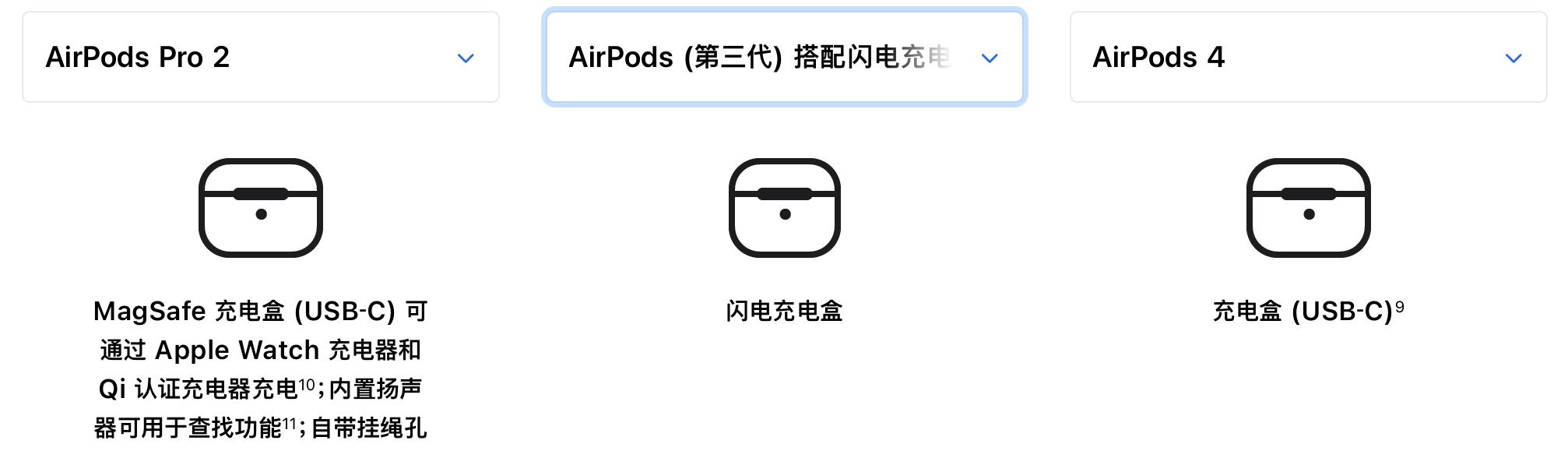
(Image source: Apple)
Xiaolei can still understand his friend's situation as a result of not reading the product name carefully. However, another thing Xiaolei encountered was a real attempt to "cheat" consumers into placing orders.
How careful should you be when buying products from third - party merchants?
Recently, Xiaolei wanted to buy an entry - level M4 MacBook Air, so he compared prices on various platforms.

(Image source: The 10 - billion - yuan subsidy on an e - commerce platform)
As a result, he found that the prices offered by some third - party merchants on an e - commerce platform were even lower than the 10 - billion - yuan subsidy prices on the platform. As shown below, what on earth is going on?

(Image source: An e - commerce platform)
After clicking in, on the actual order page, the price of the entry - level M4 MacBook Air (16 + 256GB) was indeed as shown above, only a little over 4,900 yuan. The 16 + 512GB version was only a little over 6,100 yuan, and the 24 + 512GB version was only a little over 7,300 yuan. All of them were several hundred yuan lower than the 10 - billion - yuan subsidy prices.
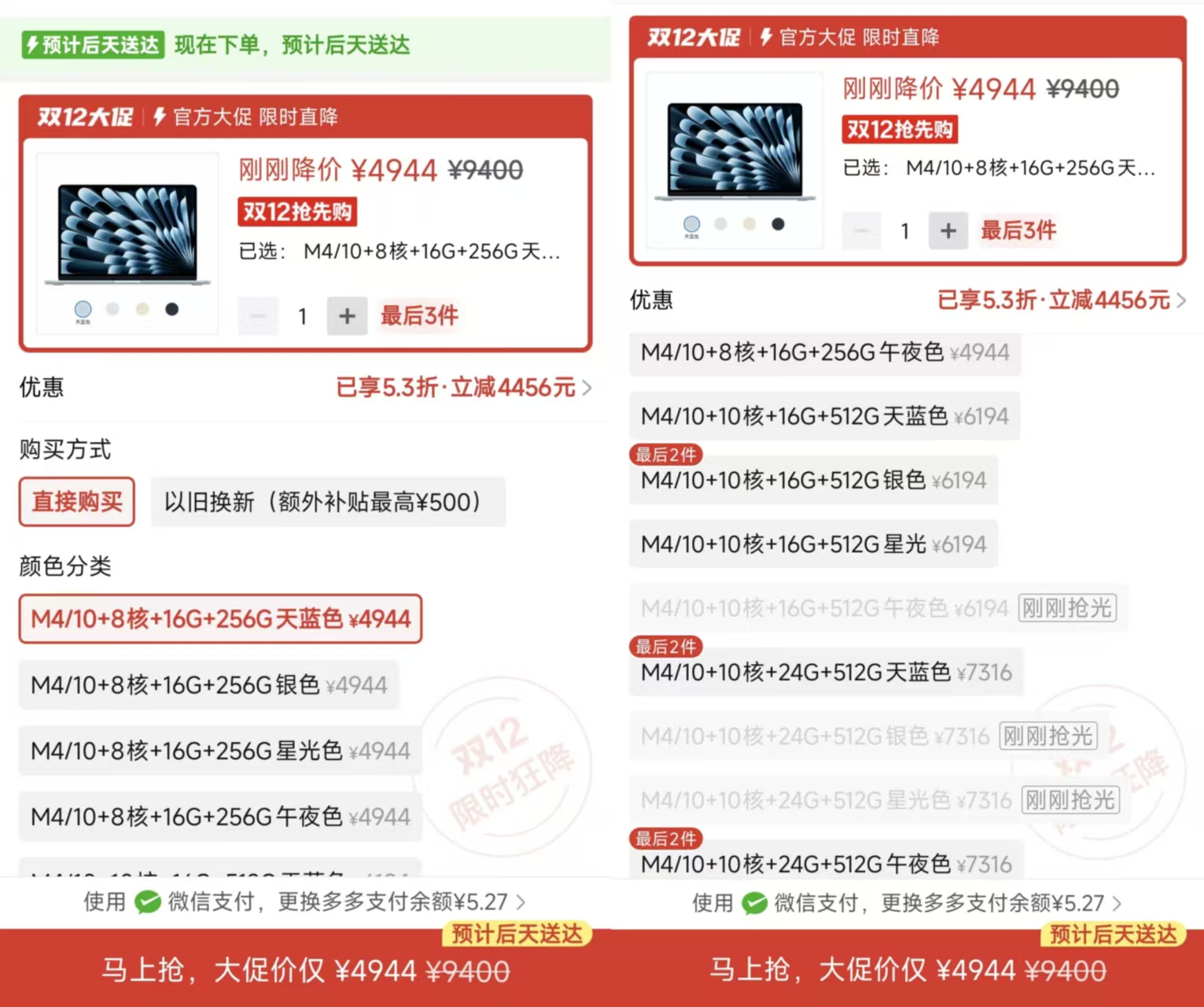
(Image source: A merchant on an e - commerce platform)
Looking at the product name and the detailed page again, after scrolling down, Xiaolei didn't find any "problems." These products also support "no - questions - asked returns within 7 days."
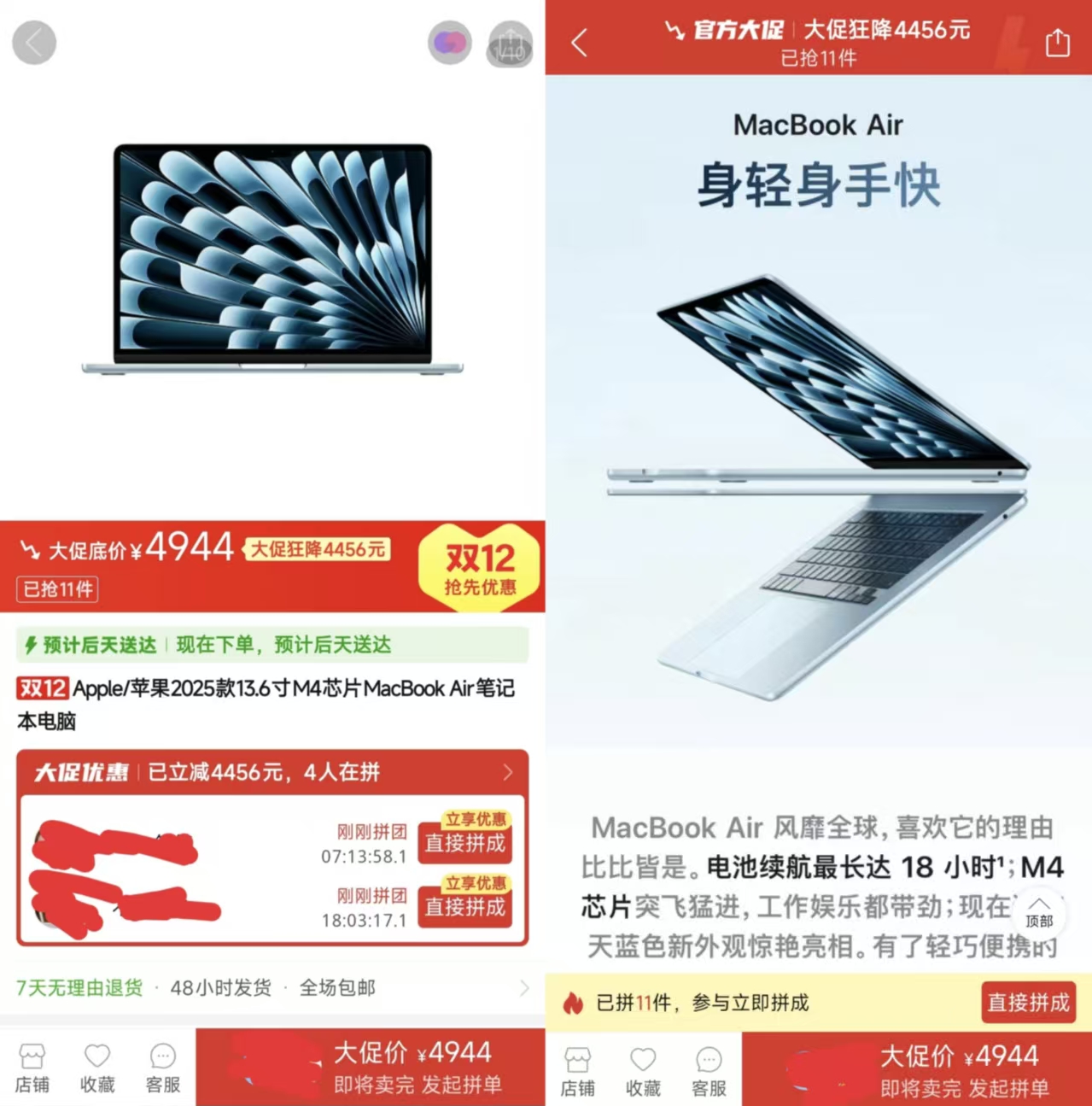
(Image source: A merchant on an e - commerce platform)
However, after careful inspection, Xiaolei still found a "situation." That is, the merchant spent a considerable amount of space in the detailed page explaining the "return and exchange process," "express delivery and shipping fees," and "situations that do not fall within the scope of return and exchange."
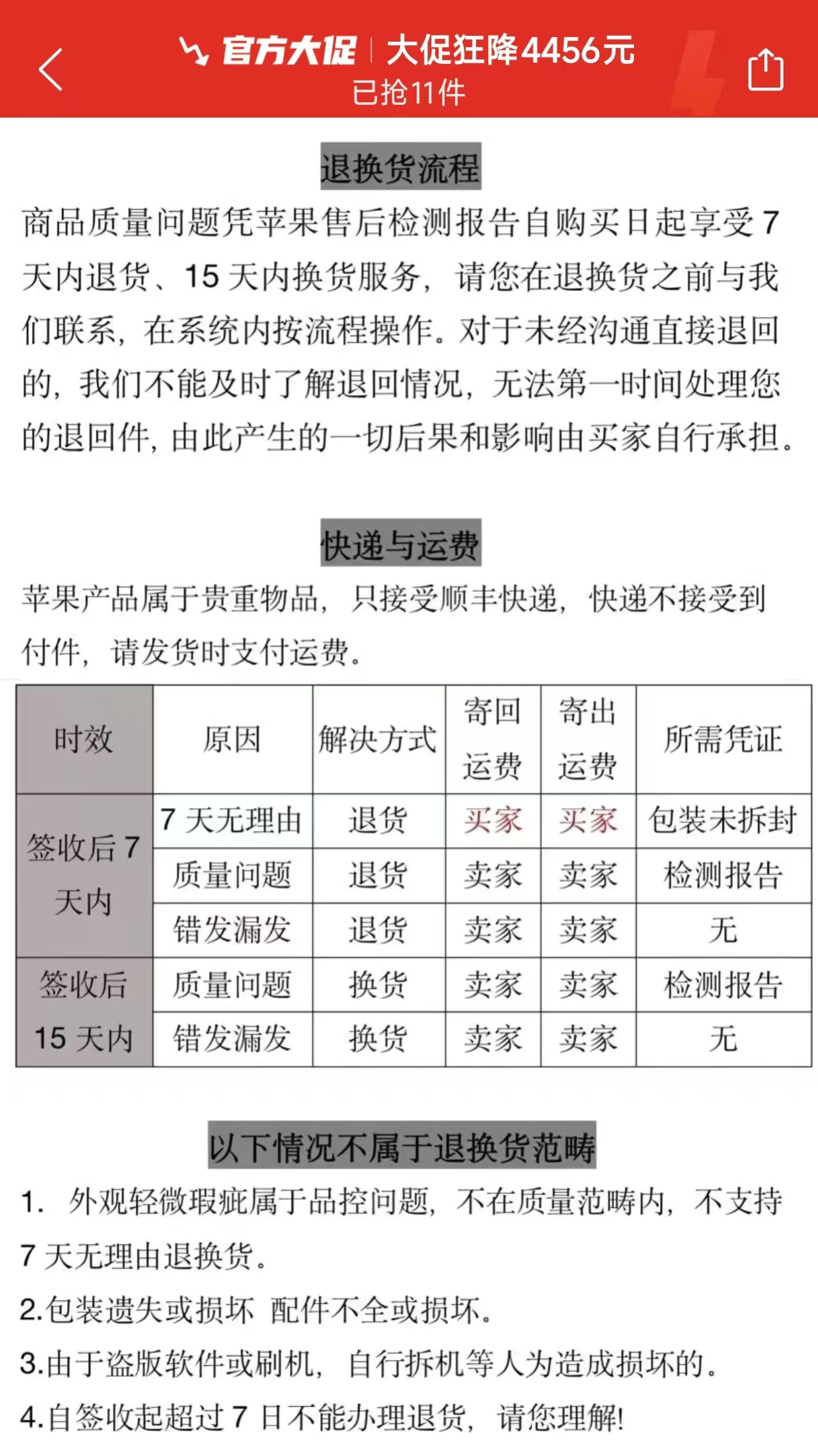
(Image source: A merchant on an e - commerce platform)
If it were just the text information prompts above, there would be nothing wrong. But the key is that the merchant also specifically used illustrations to elaborate on the "situations that cannot be returned or exchanged," as shown below:
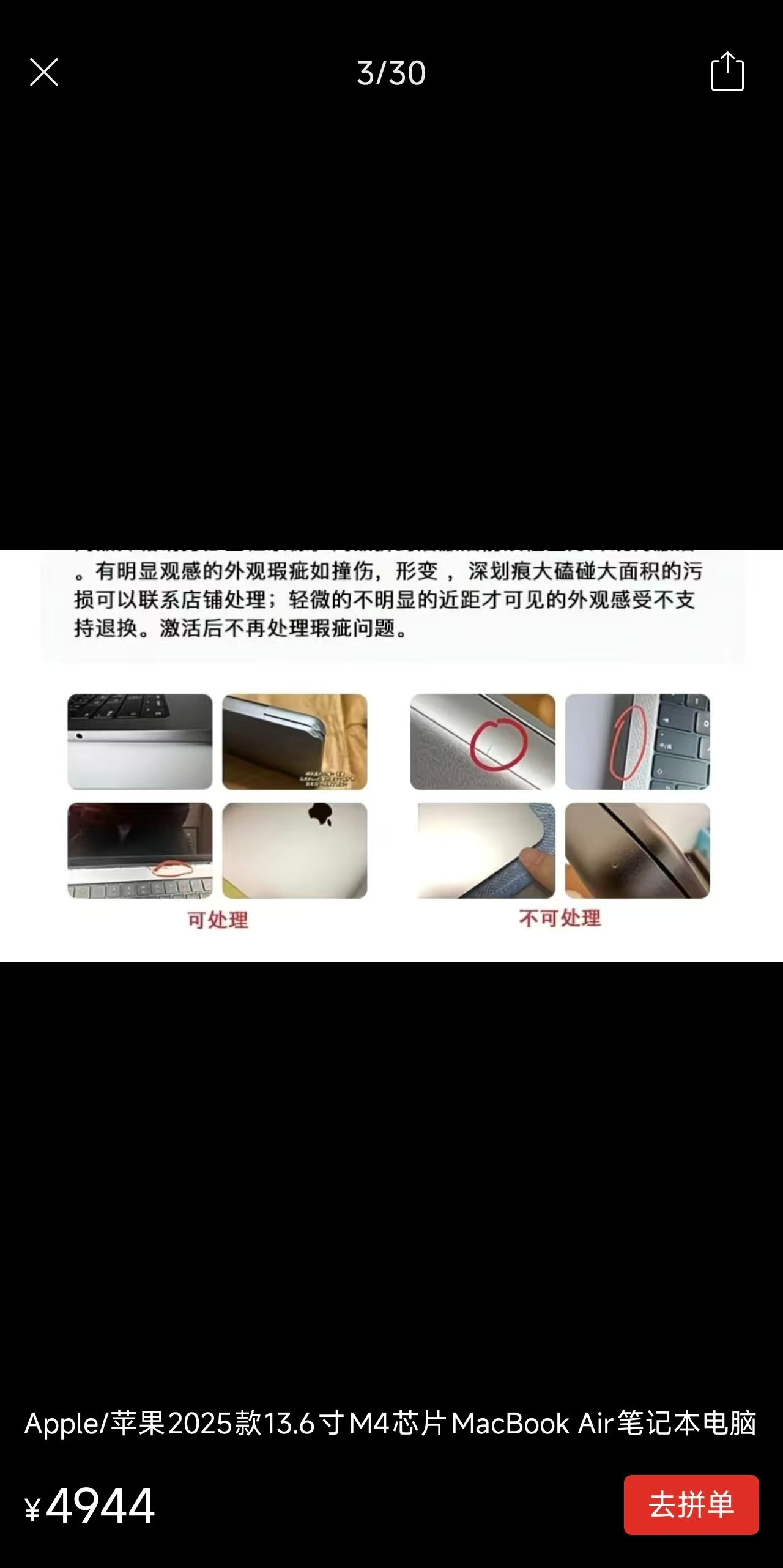
(Image source: A merchant on an e - commerce platform)
You'll be shocked when you see this: "Minor and barely noticeable cosmetic issues that are only visible up close do not support returns or exchanges. After activation, issues with defects will no longer be handled."
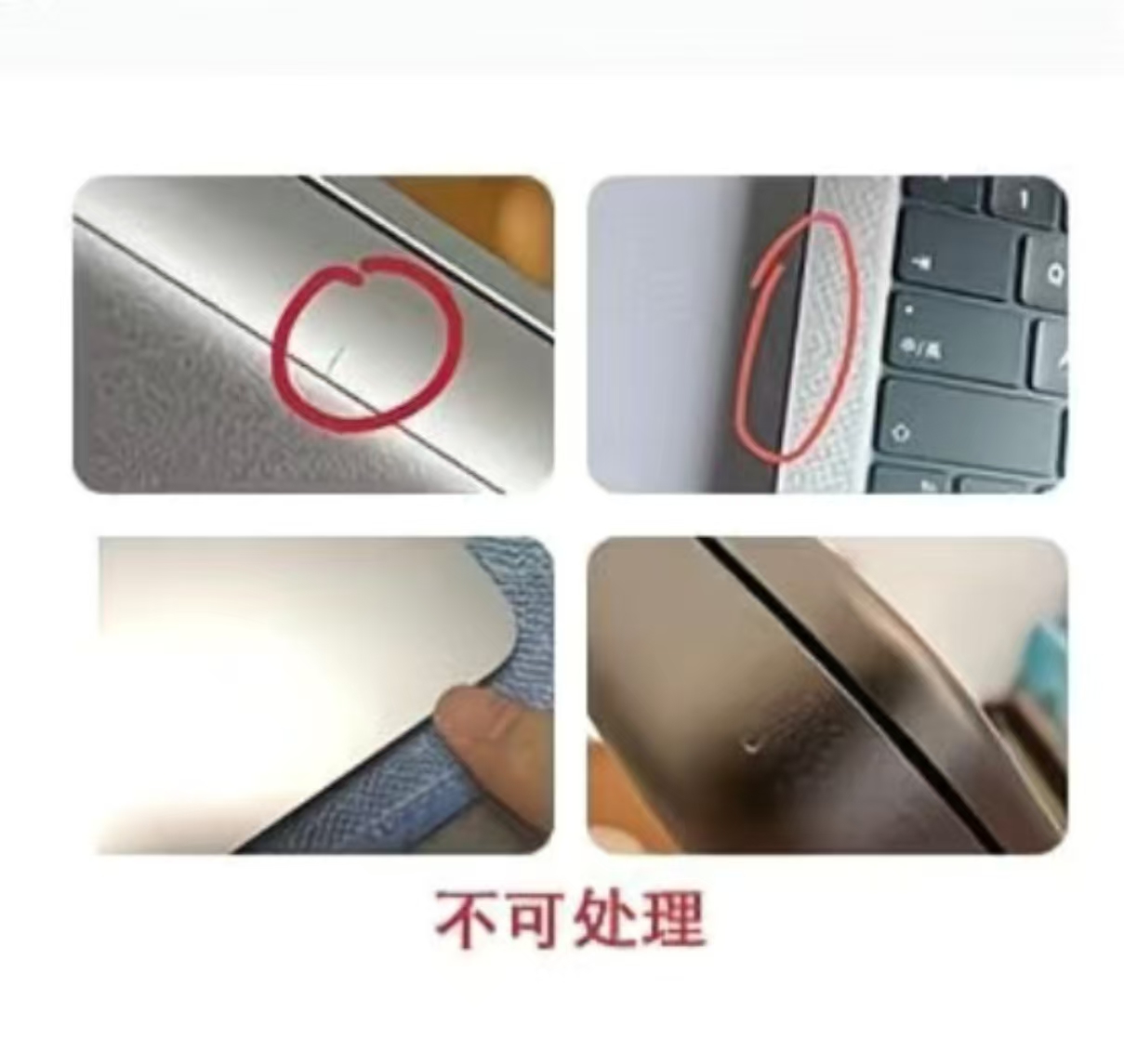
(Image source: A merchant on an e - commerce platform)
Is there really no trickery? Xiaolei thought of asking the store's customer service. As soon as he sent the product page, without even asking a question, the customer service "confessed" on their own:
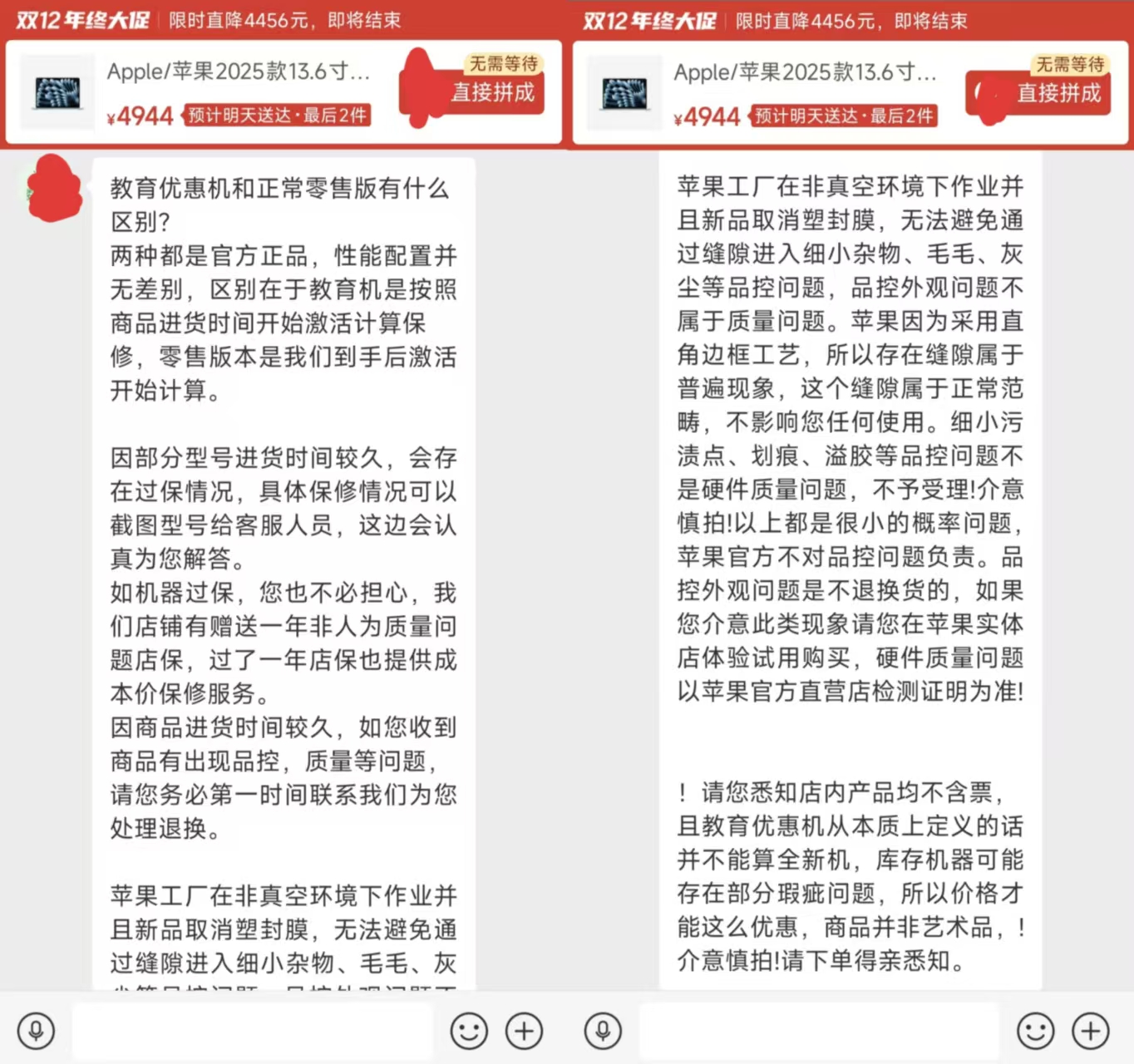
(Image source: A merchant on an e - commerce platform)
The main information, summarized:
We are selling educational discount machines. They are the same as the normal retail version, both are official genuine products, and there is no difference in performance and configuration. The difference is that the warranty of the educational machines starts from the time of purchase, while the retail version starts from the time of activation after we receive it.
Due to the long purchase time of some models, there may be situations where the warranty has expired. If the machine is out of warranty, our store offers a one - year store warranty for non - human - caused quality issues. After the one - year store warranty, we also provide warranty services at cost price.
Educational discount machines cannot be considered brand - new machines in essence. There may be some minor issues with the inventory machines. That's why the price can be so discounted. The products are not works of art!
Why doesn't the merchant mention the reason for "this great discount" on the product detail page?
If the key information about the "educational discount machine" could be placed in the product name, the order entry, or even in the product detail page, it would be understandable. But they didn't say it until the customer service page.
Do these merchants think that all customers will take the initiative to ask them before placing an order? Moreover, even if the merchant sends such information after the customer places an order, the customer has already made the purchase. Isn't this just "annoying" the customers?
To "cheat you" into placing an order, merchants are getting more and more "sneaky."
Actually, the above situation is just one of the many chaotic situations where merchants "cheat you" into placing orders.
Leikeji has summarized the main types of chaotic situations where merchants "cheat consumers" into placing orders on e - commerce platforms and online platforms, especially third - party merchants (in ascending order of severity):
1. Playing "word games" in the product name or detail page to deceive consumers into placing orders.
This kind of situation mainly depends on whether consumers have "shrewd eyes." For example, the classic case of "buy 3 pairs and get 3 pairs."
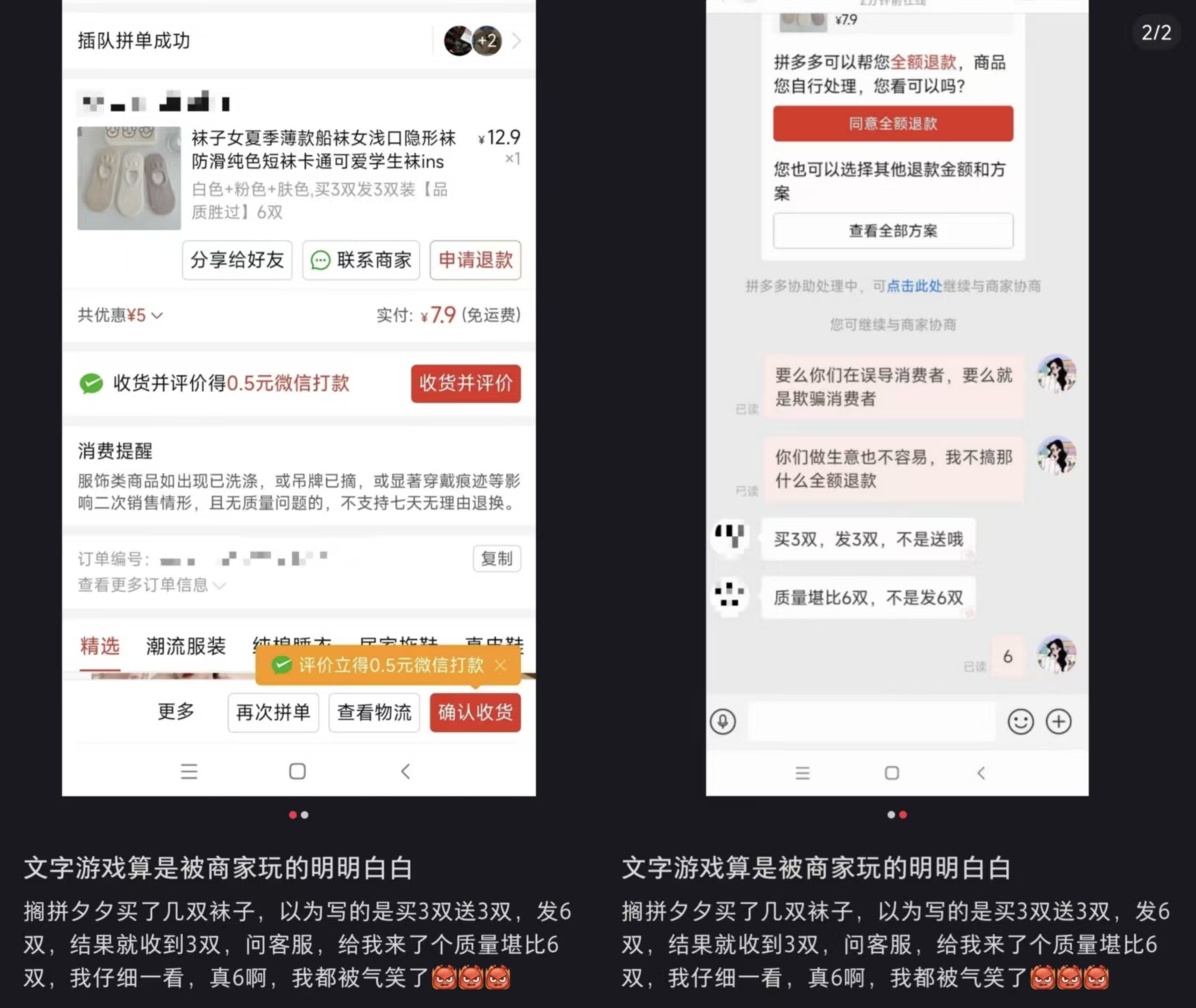
(Image source: Xiaohongshu)
At the same time, Xiaolei's friend's case shows that consumers need to have a certain understanding of the basic information of the products they are purchasing, including the "new names" and "new terms" of some old technologies. They should confirm these details before placing an order.
2. Not mentioning the "special attributes" of the product at all in the product name or detail page to deceive consumers into placing orders.
This is a relatively bad behavior. The so - called "educational discount machine" M4 MacBook Air that Xiaolei encountered was "packaged" to look the same as the normal retail model on the front page. The information was only revealed at the customer service stage.

(Image source: A merchant on an e - commerce platform)
3. "Bait - and - switch" tactics to deceive consumers into placing orders.
If the product received doesn't match the description or involves false advertising, consumers will also feel "cheated." This kind of behavior can be classified as online fraud. However, it's necessary to distinguish whether the merchant did it intentionally or just sent the wrong product.
In addition, products in categories such as digital technology and household appliances that are "downscaled" or have "replaced parts" usually have lower prices.
For this kind of product, first, it's necessary to check whether the merchant's behavior is compliant. Second, it's important to see if the merchant has actively informed consumers, and whether this information is prominently displayed on the product page. If the "downscaled" products being sold are compliant, and consumers are clearly informed, and the price is lower than the regular version, then it doesn't belong to "fraud." Otherwise, it does.
For example, some household appliance products mainly sold on e - commerce platforms, the so - called "e - commerce version products," do have some "configuration downgrades" in terms of functions and technologies compared to the offline versions of the same type. However, the prices are also significantly lower than the offline versions. At the same time, the product configuration parameters and product information are also presented on the page. This doesn't belong to "fraud."
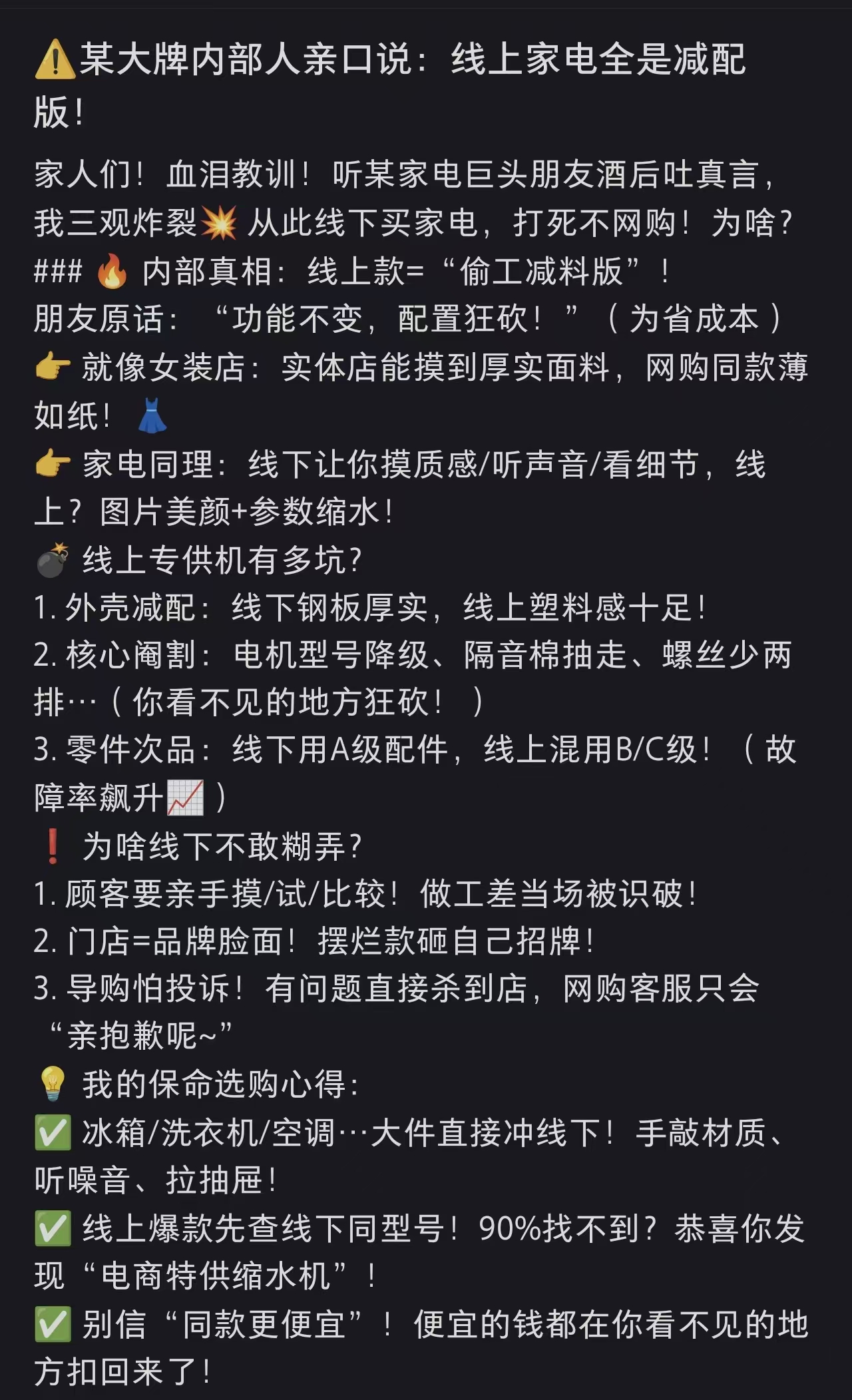
(Image source: Xiaohongshu)
4. Using fake products to deceive consumers out of their money.
This may be the most serious type of chaotic situation where merchants "cheat consumers" into placing orders. In essence, it belongs to online scams.
Due to the high unit price of digital technology products, they have become the "best" category for online scams. Searching for keywords such as "cheated when buying